3-bet hands need structure
Premium AAxx, high double-suited rundowns, and blocker-heavy hands perform better than disconnected hands that hate most flops.
Strategy Hub
How to 3-bet and 4-bet in PLO with the right hands, stack depths, blockers, position, and postflop plans.
Ask first
Does this 3-bet create a lower-SPR pot my hand wants to play?
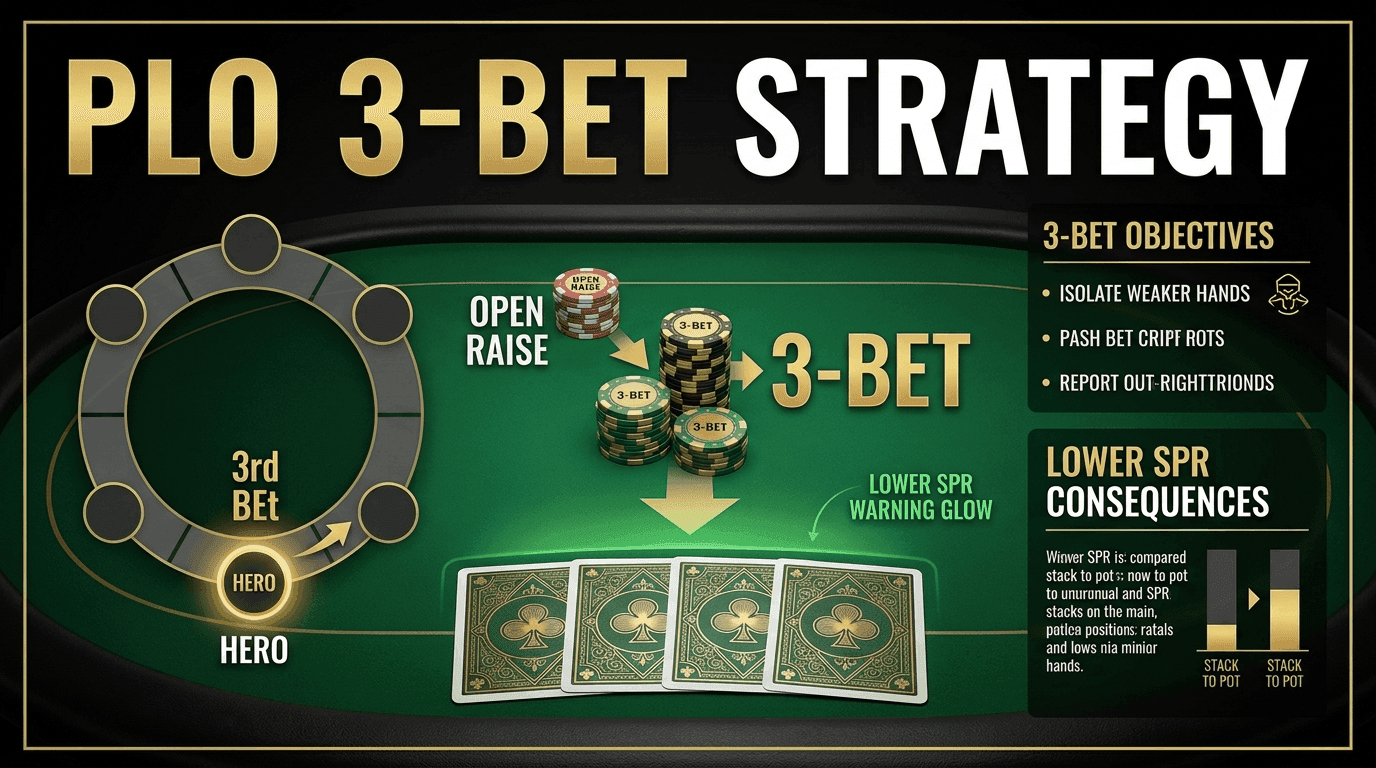
PLO 3-betting is not a trophy for strong-looking hands. It is a way to isolate, deny equity, shape SPR, and build pots with hands that realize well when called.
Strategy frame
Premium AAxx, high double-suited rundowns, and blocker-heavy hands perform better than disconnected hands that hate most flops.
In position, you can 3-bet more hands that realize equity well. Out of position, weak side cards and poor suits become much more expensive.
A squeeze can punish loose callers by creating fold equity and isolation, but it backfires with hands that play badly when everyone continues.
Decision path
These checks keep the topic tied to an actual action, not just a definition.
Are you isolating a loose opener, punishing a caller, or building value?
Ask how many boards let the hand continue confidently after a call.
Make sure the resulting pot size helps your hand instead of trapping it.
Common leaks
Reading path

Learn when to 3-bet in Pot-Limit Omaha, which hand classes work best, and how stack depth and position should guide aggression.

Understand when calling is better than reraising in PLO and how hand playability, position, and SPR affect the choice.

Build better 4-bet pots in PLO with clearer hand filters, stack-depth defaults, and postflop plans for AAxx and elite non-AA hands.
Practice spots
Strong AAxx, high double-suited rundowns, blocker-heavy premiums, and hands that benefit from lower SPR are common 3-bet candidates.
Often, but it also isolates weaker ranges, denies equity, attacks dead money, and controls SPR.