Why Deep-Stack PLO Tournaments Reward Patience More Than Heroics
Learn deep stack PLO tournament strategy with a three-bucket execution diagnostic, a 130BB hand test, and rules for patience under pressure.
The solver room · now open to everyone
Thirty-five decoded MonkerSolver solutions — 6-max and heads-up, 12bb to 200bb, rake-adjusted — with a live spot-study screen, conditioned villain ranges, and a practice mode that deals you real decisions. Free account, no card.
35
Decoded solves
12–200bb
Stack depths
96
Strategy studies
Live readout · 6-max · 100bb · 5% rake
SolvedButton opening frequency by hand class
UTG
18%
HJ
22%
CO
31%
BTN
49%
SB
34%
Opening range by position
Real numbers, read node-by-node from our decoded solve — not illustrative.
Flagship · free account
Thirty-five decoded Monker solves with spot study, conditioned ranges, and tree navigation.
Enter room
Daily reps
Get dealt real solver spots at the table view and guess the GTO action. Accuracy tracked.
Enter room
Exact numbers
Run exact PLO4, PLO5, and PLO6 equities with board and dead-card control.
Enter room
Equity lab
Build exact PLO equities in the browser, jump between variants, and save the texture of a hand while the decision is still fresh.
Quick starts
PLO4 / PLO5
Board cards
Flop, turn, river
Dead cards
Remove known blockers
Range presets
Hand vs. range spots
Thursday, July 16
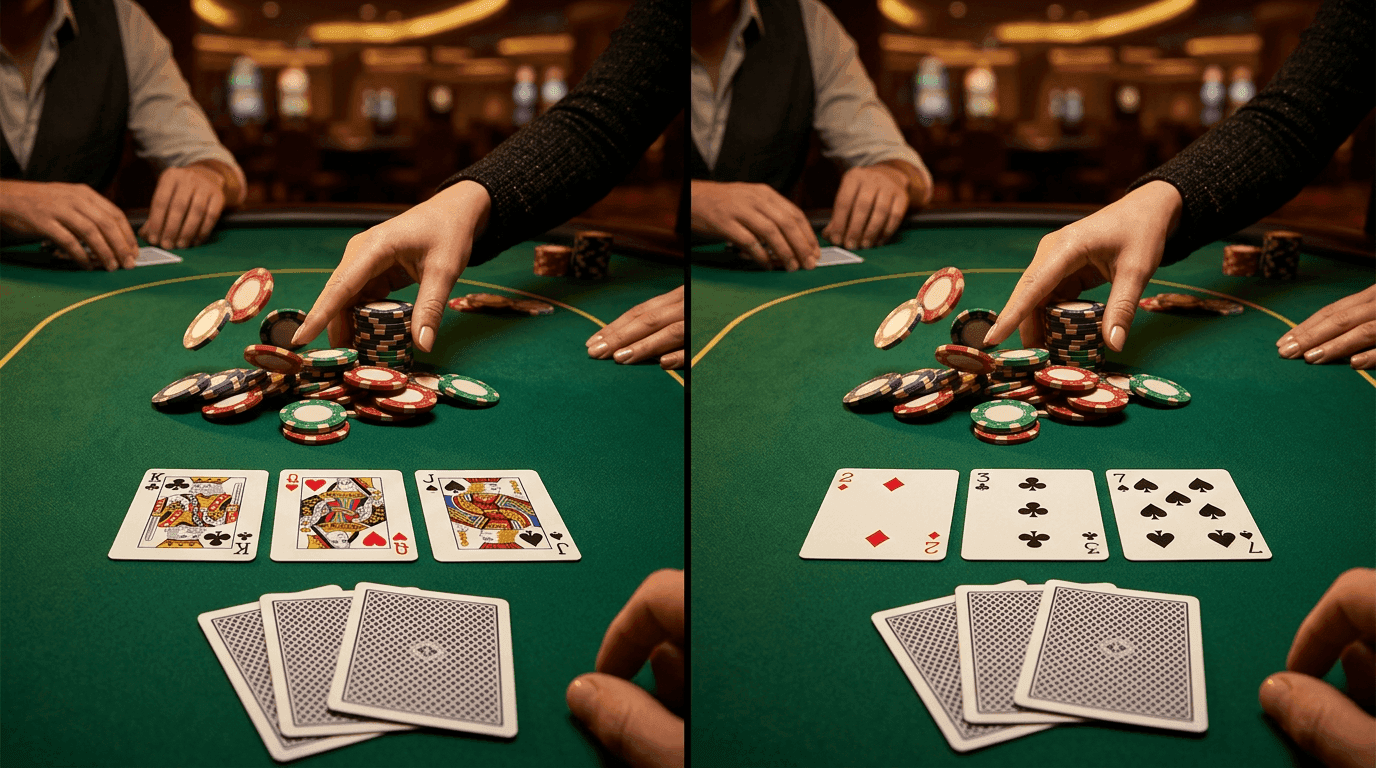
Top two pair on a two-tone flop against a hand with both straight and flush outs. How vulnerable is two pair?
Strategy Notes
Top two pair looks strong because it is near the top of many hold'em hand rankings, but in PLO it is often a hand that wants to charge draws immediately rather than invite them along. Against a hand with both straight and flush routes, two pair becomes a protection-heavy value hand, not a hand that can coast.
Visual guides
Use these when the shape of the spot matters as much as the answer.

Learn deep stack PLO tournament strategy with a three-bucket execution diagnostic, a 130BB hand test, and rules for patience under pressure.

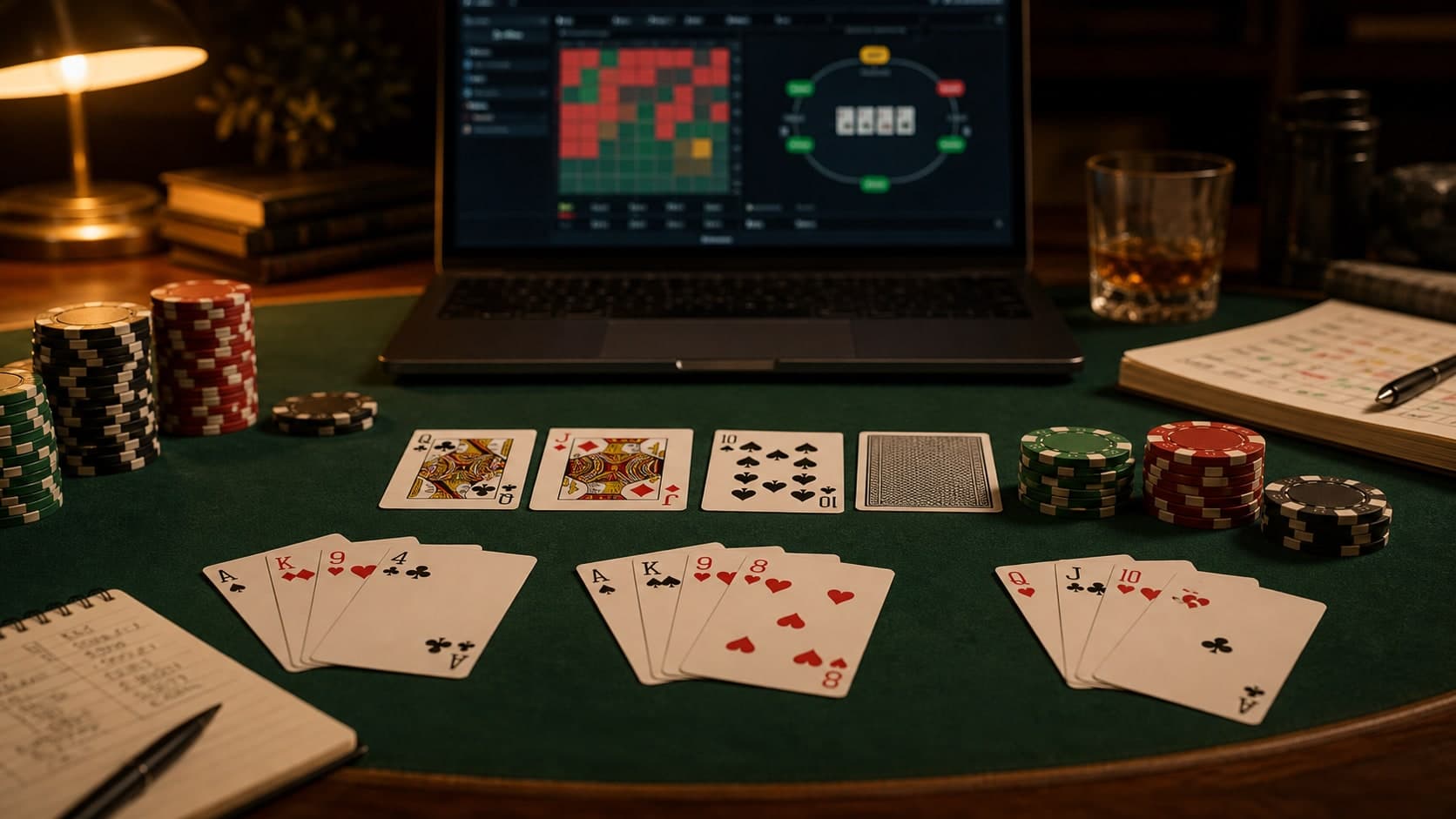
A tier matrix for double-paired PLO hands: why K♠K♥Q♠Q♥ is a pure open, why QQTT beats QQ88 by more than its 2% equity edge, and when to just fold preflop.

Use nut advantage, redraw ownership, position, and SPR to make better betting decisions in multiway PLO pots.
Study workflow
The fastest improvement loop is narrow, exact, and repeated while the hand is still recognizable.
Latest articles
Fresh strategy pieces, capped here so the homepage stays sharp.

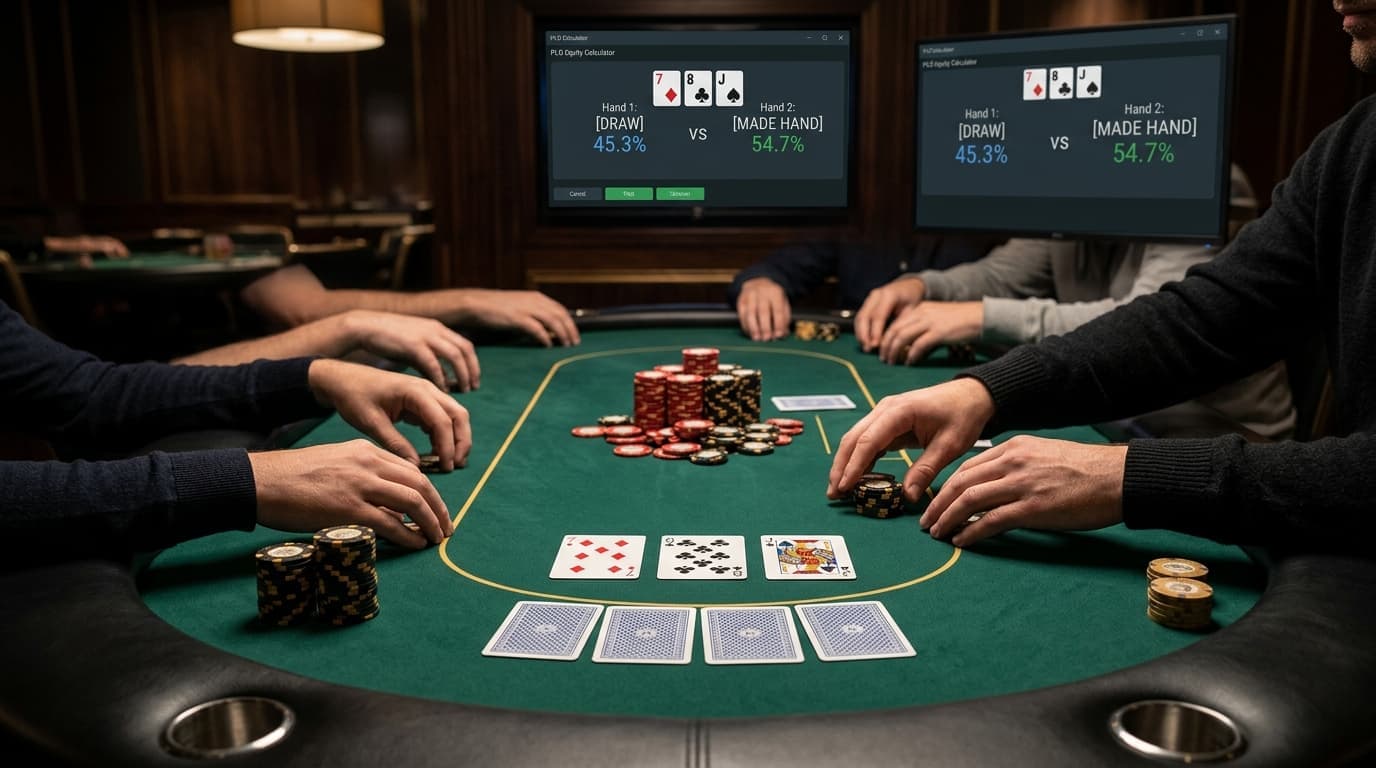
Read practical PLO strategy for plo equity calculator draw vs made hands, with concrete examples and clear table adjustments.

Decide when to late-register a WSOP PLO event by weighing stack depth, re-entry risk, freshness, bankroll, and your actual table edge.

Which five-card PLO hands actually open: why A♠K♠Q♥J♥7♦ plays and K♣J♣T♦9♦4♠ folds, with default action tables at 100bb, 45bb, and 28bb tournament stacks.

Learn live PLO rake strategy with position-by-position open-raise filters, worked examples, and a bad-rake checklist for casino games.

Upgrade from PLO4 to PLO5 with practical hand filters, exact equity examples, and a study routine for five-card Omaha decisions.

Learn PLO straddle strategy for UTG straddles and single-blind games with stack conversion, live preflop defaults, and worked examples.

Review a PLO database with focused filters, decision tags, representative hands, and one clear adjustment for your next session.

Learn how to respond to river check-raises in PLO by reading pool tendencies, blockers, and the value-to-bluff ratios that matter.

Use the 2026 WSOP $5,000 PLO event to build better 8-handed preflop formations, opening frequencies, and 3-bet adjustments.

Learn how to beat nitty live PLO players with wider isolates, precise flop stabs, disciplined turn give-ups, and thinner river value.

Use a practical live PLO bomb pot strategy for single-board and double-board pots: player count, SPR, sizing, nut coverage, and scoop equity.

Build a 2026 WSOP PLO prep plan by format: full-ring, 6-handed, five-card, mixed games, bomb pots, stack depth, and live-field adjustments.