Start with the value range
Before calling or bluffing, name the hands villain can credibly value bet. If that range is too dense, a pretty bluff-catcher is still a fold.
Strategy Hub
How to make better PLO river decisions with blockers, nut advantage, bluff-catchers, value bets, and pot odds.
Ask first
What value hands and bluffs does this line actually contain?
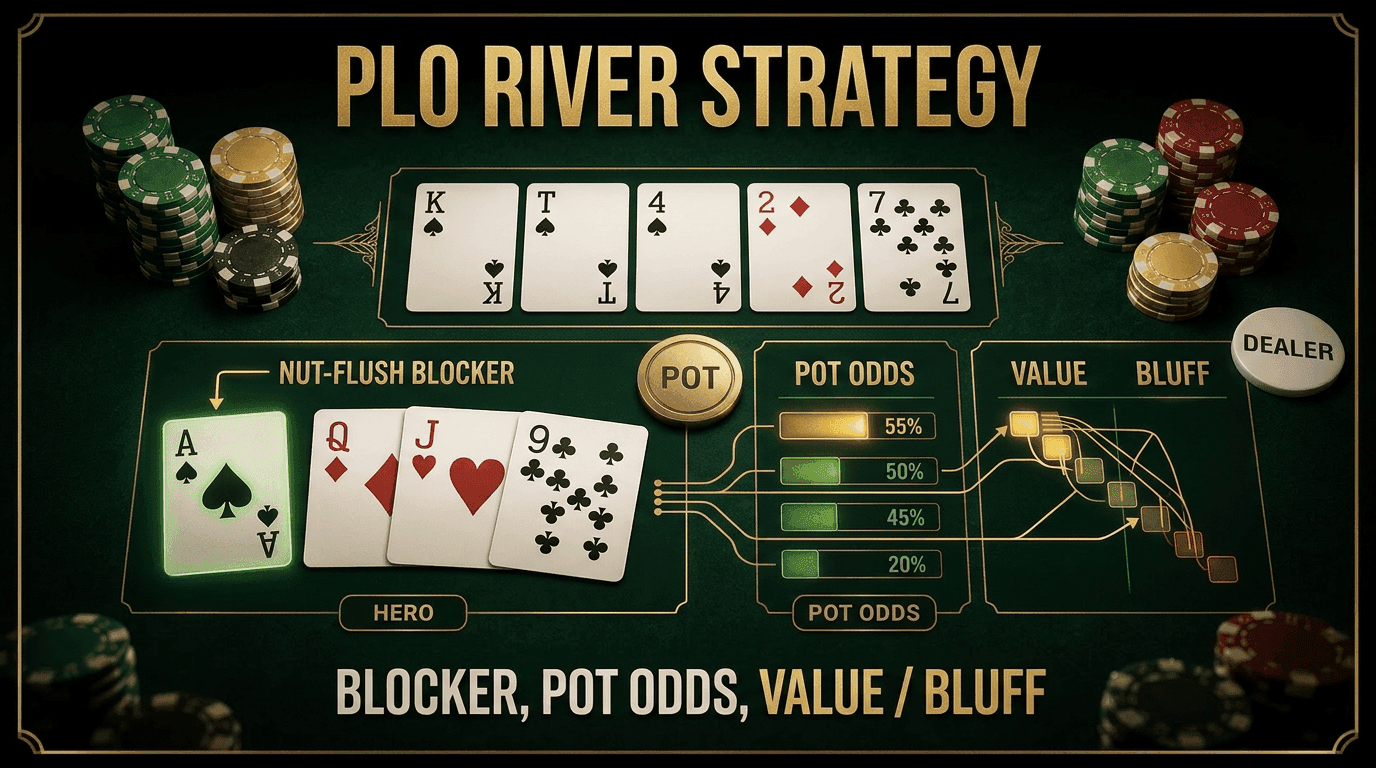
River decisions in PLO are blocker and range problems. Absolute hand strength matters less than what villain represents and what your cards remove.
Strategy frame
Before calling or bluffing, name the hands villain can credibly value bet. If that range is too dense, a pretty bluff-catcher is still a fold.
The ace of the flush suit is useful on flush-completing rivers. A random blocker that does not affect villain's value range is mostly noise.
PLO players overcall in many pools, but thin value still depends on board texture, opponent type, and how many better hands remain.
Decision path
These checks keep the topic tied to an actual action, not just a definition.
List the nut and near-nut hands consistent with the line.
List realistic missed draws and blockers that can arrive here.
Use pot odds and removal instead of calling because the hand looks too strong to fold.
Common leaks
Reading path

Improve your river decisions in PLO by understanding blockers, thin value, nut-heavy runouts, and bluff-catching limits.

Learn when bluffing is profitable in Pot-Limit Omaha and why random aggression fails on coordinated boards.

Understand how blockers work in Omaha and how nut blockers improve river bluffing and hand reading.
Practice spots
A bluff-catcher is a hand that usually loses to value but beats missed draws and bluffs often enough at the offered price.
Often yes, because four-card holdings create many nut combinations and removal can meaningfully change river range density.