
The Hand History That Should Haunt You
$2/$5 PLO, six-handed. You hold Q♠8♠J♥T♣. The flop comes K♠9♠4♥. You call a bet with your flush draw and gutshot. The turn is 3♠. Your flush arrives. Your opponent bets pot. You raise. They re-pot. You call all-in.
They show A♠3♦K♥7♣. Nut flush. You lose a 250 big blind pot with the second-best flush.
This is not unusual. It is not a bad beat. It is the most predictable disaster in Pot-Limit Omaha, and it happens at every stake, every day.
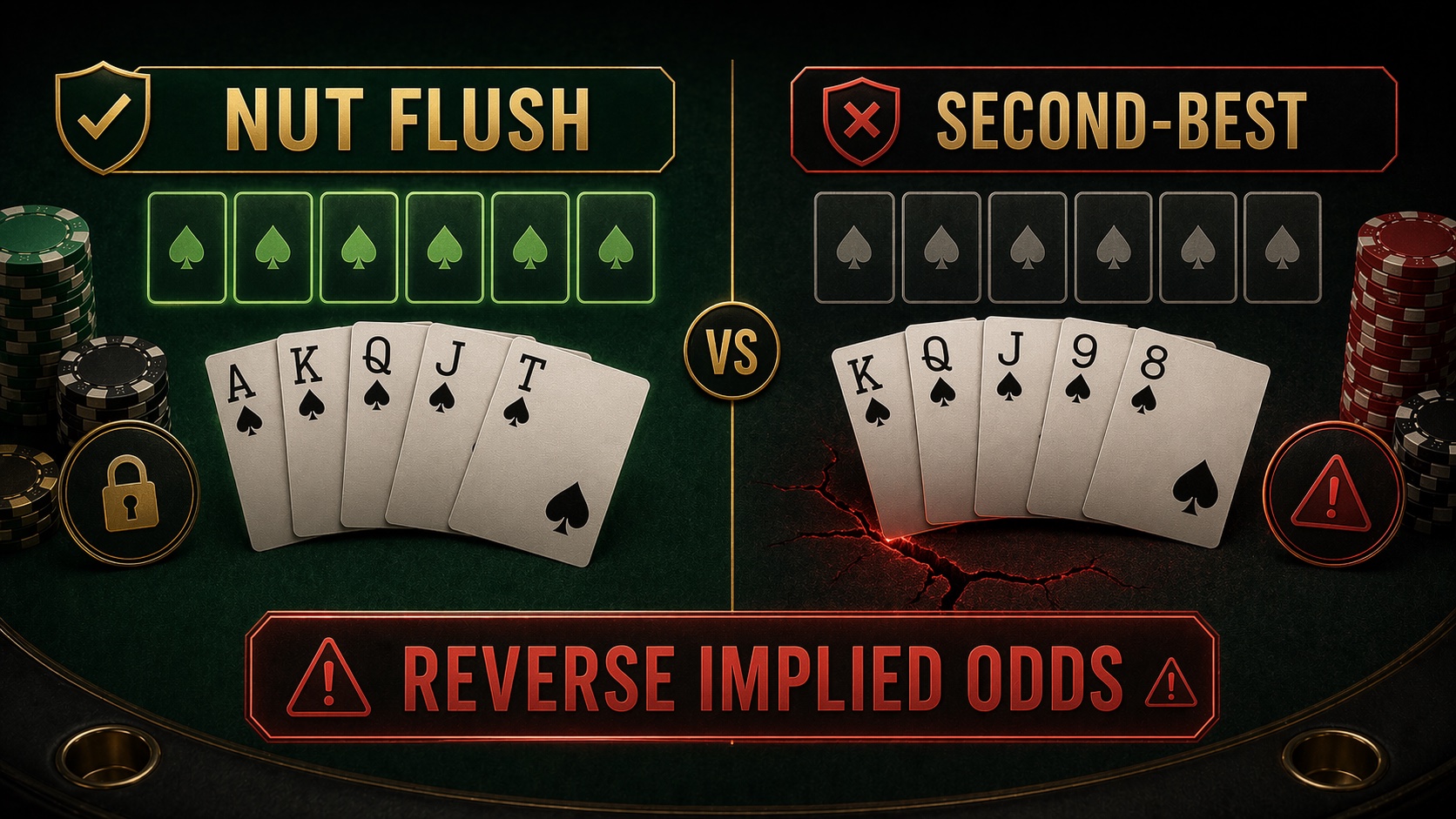 Inline visual: the second-best flush often wins small pots and loses the biggest ones. That is the reverse implied odds problem.
Why Second-Best Flushes Lose So Much
In Hold'em, making a flush is usually safe because only two other cards could beat you. In PLO, every player has four cards. In a multiway pot, the chance that at least one opponent holds the ace of the flush suit is much higher than many players expect. Even heads-up, second-best flushes run into the nuts often enough to be expensive.
And the problem is not just that they have it -- when they do, they bet big, and your second-best flush looks too good to fold. This is the reverse implied odds death spiral: you invested to make a flush, you made it, and now it costs you your stack.
The River Decision Framework
The single most profitable adjustment most PLO players can make is improving river discipline with non-nut flushes.
Opponent bets pot on a flushing river: What hands bet pot here? Usually the nut flush or a bluff. Rarely the second-nut flush (most players check that). Against low-stakes opponents who bluff too infrequently, your non-nut flush is not calling profitably.
Heavy action throughout the hand: A flop bet, turn raise, and river pot bet on a completed flush board means your opponent built this pot for three streets. Players do not build pots with the third-best flush. Fold.
Third-best flush or worse: Fold to any significant river action. A jack-high flush in PLO is not a calling hand.
The Multiway Multiplier
In multiway pots, everything gets worse. When three or four players see a two-tone flop, the probability someone holds the nut flush draw approaches certainty. If the flush completes and there is action, your non-nut flush is almost always behind.
The counterintuitive truth: the bigger the pot, the more tempting the call, but the more opponents there are, the more likely one has the nuts. Pot odds lie to you here.
The Numbers Tell the Story
On a completed board of K♠9♠4♠7♥2♦:
Nut flush vs. set. The nut flush is a lock against everything except a full house.
Second-nut flush vs. nut flush. Zero equity. You made a flush. You are drawing dead. Maximum loss.
The nut flush extracts value from the table. The second-nut flush pays off the nut flush and gets nothing from anyone else.
When Non-Nut Flushes Have Value
They are not always worthless. Specific circumstances:
Heads-up with position. Against one opponent, a king-high flush can be a reasonable bluff-catcher against a single bet, especially if the line does not scream nutted value.
Small river bets. A one-third or half-pot bet often means blocking with a hand afraid of the flush. Your non-nut flush beats that range. Pot-sized bets signal the nuts.
Paired boards. On K♠9♠4♠7♥4♦, flushes lose to full houses. Paradoxically, this can make non-nut flushes more playable as bluff-catchers, since a pot bet might represent a full house bluff.
Strong player reads. Against a known maniac, king-high flush becomes profitable. But that is player-specific, not general strategy.
Building the Discipline
The hardest part is psychological. You waited for the flush, made the flush, and now must fold it. The mental trick: think of your non-nut flush as a bluff-catcher. A bluff-catcher's job is to catch bluffs. If your opponent is not bluffing, fold. Reframing makes the decision easier.
FAQ
How do I know when my flush is "good enough" to call? Start with position, player type, and sizing. The nut flush is usually a comfortable continue. A king-high flush can bluff-catch heads-up against aggressive players, but loses value quickly multiway or against tight opponents. Lower flushes generally need smaller sizing and cleaner reads to continue.
Should I even draw to non-nut flush draws on the flop? It depends on side equity. A non-nut flush draw combined with a wrap or strong pair is worth continuing because flush outs are only part of your equity. A bare non-nut flush draw (say J♠5♠ with no pair, no straight draw) is usually a fold facing any significant bet.
What if the ace of the flush suit is on the board? Then nobody has the nut flush draw -- K♠ becomes the best possible draw. This changes everything. King-high flush draws become premium, and reverse implied odds shrink because nobody can hold a higher flush. Board aces make non-nut flush draws more playable.
The Lesson That Saves Stacks
Every session, you will face this decision: pay off with a non-nut flush, or fold? The players who pay off consistently fund the game. The players who fold consistently profit from it. River discipline with non-nut flushes is not glamorous, but it might be the single highest-value skill in Pot-Limit Omaha.