Visual guide

Fundamentals7 min read
Why Position Matters Even More in PLO
The solver opens 17.6% of hands UTG and 48.6% on the button -- same stack, same cards. What position is really worth in PLO, in verified numbers.
Article archive
Browse the full PLO.com strategy library. Use topic pages when you want a focused path, or page through everything here in publish order.
The solver opens 17.6% of hands UTG and 48.6% on the button -- same stack, same cards. What position is really worth in PLO, in verified numbers.

Review Omaha hand rankings, learn how to read changing board textures, and understand why second-best hands lose so much in PLO.

In PLO someone almost always holds the nuts. See how a $2,000 pot ships to the ace-high flush, why sucker straights print losses, and how to draw nut-side.

Avoid the most common beginner PLO mistakes, including overvaluing aces, chasing weak draws, and stacking off with second-best hands.

Learn why PLO is hard: four-card combinations, exactly-two-card rules, close equities, nut pressure, multiway pots, and variance.

Seven concrete PLO vs NLHE shifts: why bare aces like A♦A♣9♦3♣ turn into bluff-catchers, when draws are actually favorites, and which Hold'em habits to drop.

How Pot-Limit Omaha works: the exactly-two-hole-cards rule that voids fake flushes, the pot-raise formula (pot + call + call), and how to read a showdown.
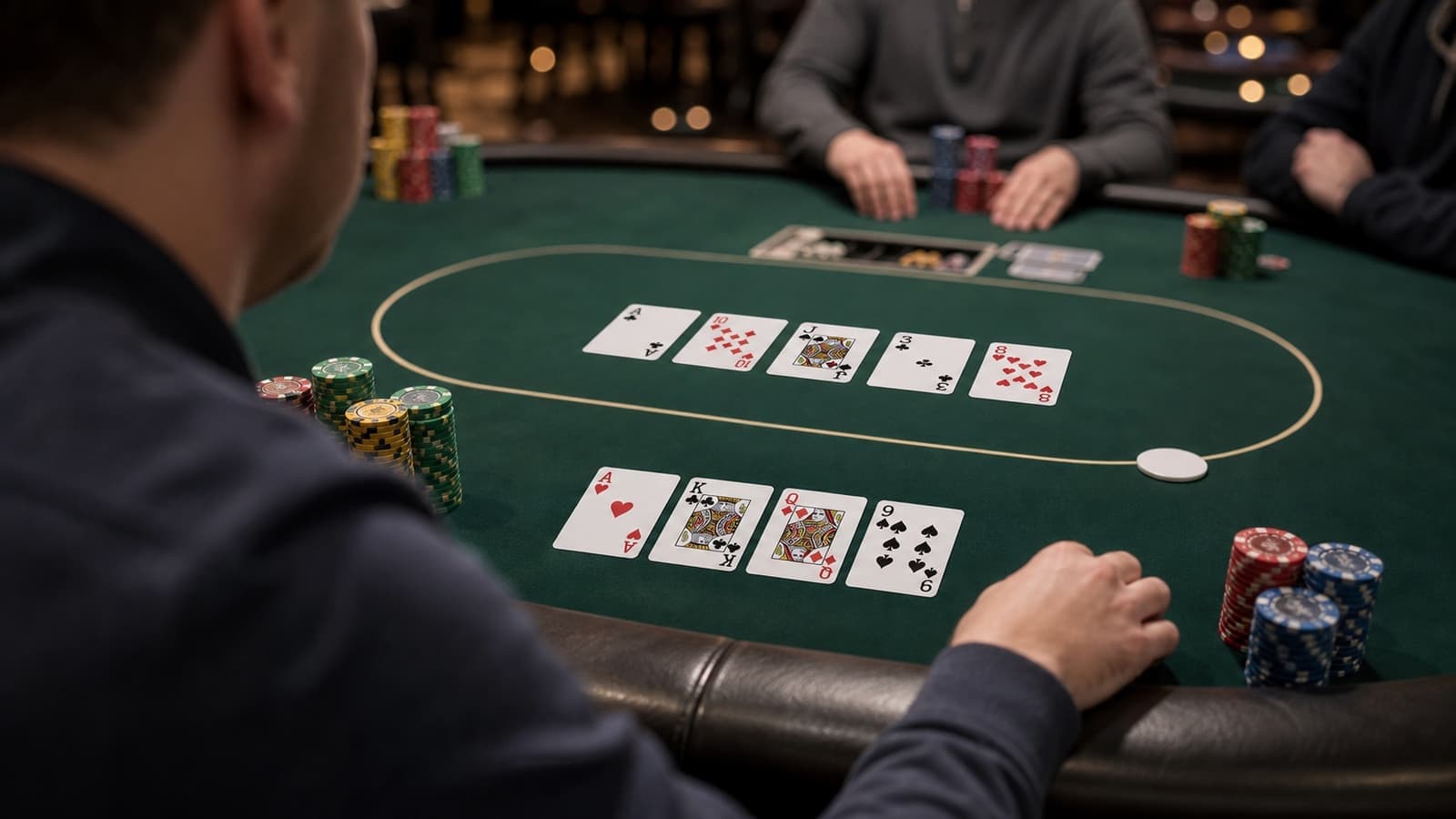
Learn what Pot-Limit Omaha is, how it differs from Hold'em, and why hand selection, nuttiness, and postflop play matter so much.