
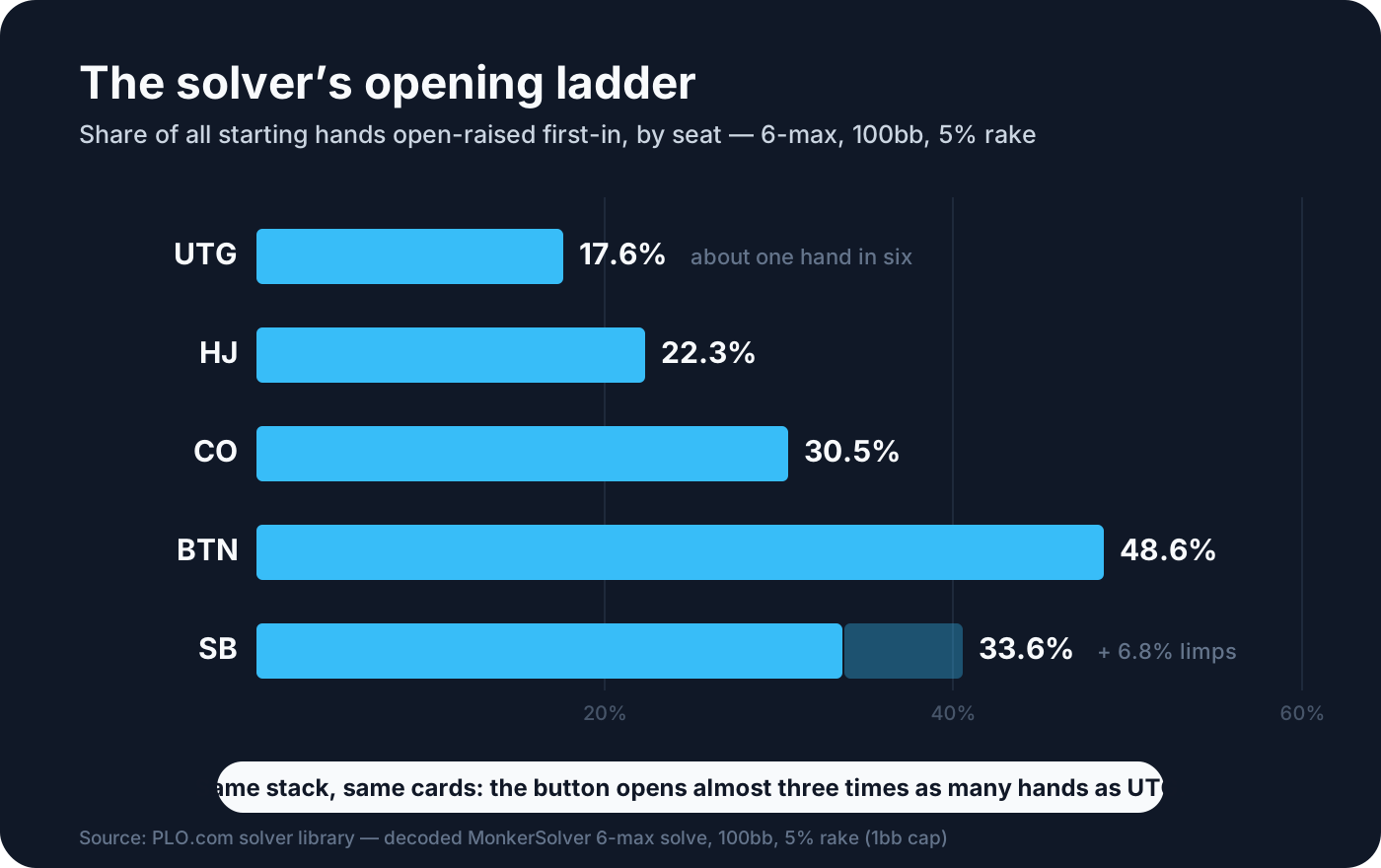
You can argue about playing styles all day. You cannot argue with the solver's opening ranges. In our decoded 6-max 100bb solve, the first-in open-raise rate climbs from 17.6% of starting hands under the gun to 48.6% on the button. Same stack, same deck, same rake. The only thing that changed is how many players are left to act -- and who acts first on every street after the flop.
That gap is what position in PLO is worth before you even see a flop. Almost one hand in three sitting in your muck pile UTG becomes a raise once the button reaches you.
Same Hand Class, Different Seat
The ladder gets more interesting when you split it by hand class. These are open-raise rates from the same solve, quoted from the public solver data pages:
| Hand class | UTG | HJ | CO | BTN |
|---|---|---|---|---|
| AAxx | 100% | 100% | 100% | 100% |
| Broadway rundowns (K-Q-J-T type) | 94.5% | 100% | 100% | 100% |
| Rundowns | 61.2% | 65.9% | 76.5% | 83.8% |
| One-gap rundowns | 43.5% | 54.2% | 66.9% | 79.8% |
| Small pairs (99 or lower + side cards) | 9.1% | 12.1% | 18.4% | 38.0% |
| Junk | 8.6% | 11.2% | 16.2% | 30.7% |
Two lessons hide in that table.
Premium structure is position-proof. Aces open everywhere. Broadway rundowns open almost everywhere. If a hand is genuinely strong, the seat barely matters.
The marginal middle is position-priced. One-gap rundowns nearly double from UTG to the button. Small pairs quadruple. The entire argument between "this is playable" and "this is a fold" is settled by the seat, not the cards. That is why memorizing opening ranges by position -- or drilling them in the free preflop charts -- pays off faster than any other preflop study.
Why PLO Amplifies Position
Three structural features make position worth more here than in Hold'em.
The pot-limit cap keeps streets coming. In No-Limit Hold'em, an out-of-position player can shove the flop and delete the positional advantage for the rest of the hand. In PLO the bet is capped at pot, so there is almost always a turn and river left to play -- more decisions, and every decision favors the player who acts last.
Four cards create margins everywhere. Each player holds six two-card combinations, so boards connect with ranges constantly and close decisions pile up. Acting last means making those close decisions with more information every single time.
Close equities get decided by realization. Preflop PLO matchups are tight. Run a good double-suited rundown into a strong pair:
One Hand, Two Flops
Put yourself on the button with T♠9♠8♥7♥ against that same A♠A♥K♦4♣ after a preflop raise and call. Two flops show what position actually buys you.
In position with that draw, the hand plays itself: continue against a bet, pot a favorable turn, shut it down when the board pairs. Out of position, the same 45.7% becomes a guessing game -- check-raise and bloat the pot blind, or check-call and hand over the initiative.
The Blinds: Where the Solver Refuses to Call
The small blind is the purest demonstration of positional discipline in the whole solve.
First in from the small blind, the solver raises 33.6%, limps just 6.8%, and folds the rest -- no other seat ever just calls at all. And facing a button open, it gets ruthless: 3-bet 8.9%, call 5.7%, fold 85.4%. The solver flat-calls a button raise from the small blind with roughly one hand in eighteen. Calling there means playing a bloated pot, out of position forever, with a capped range -- the three worst properties a PLO hand can have, stacked.
The big blind is different: facing the same button open it calls 30.4% and 3-bets 9.4%, defending about 40% of hands. Better price, and it closes the preflop action. If your small-blind strategy looks anything like your big-blind strategy, start with the big blind defense guide and move your small-blind hands into 3-bet-or-fold.
Position discipline applies in position too. Even the button -- facing a cutoff open with the best seat guaranteed -- continues only about one time in five: 8.1% 3-bet, 13.1% call, 78.8% fold. Good position widens your range; it does not make everything playable.
Five Rules the Numbers Support
-
Let the seat break ties. The whole zone between 17.6% and 48.6% is hands that are opens in one seat and folds in another. If a hand feels borderline UTG, it is a fold; the same feeling on the button is usually a raise.
-
Stop flat-calling in the small blind. The solver does it with one hand in eighteen against a button open. If you call there several times an orbit, that is not a style difference -- it is a leak.
-
Defend your big blind wider than feels comfortable. Forty percent continuance against a button open looks loose until you remember the price and the closed action.
-
Use position to buy cheap information. The J♣T♦4♠ / J♣4♠2♥ pair above is the pattern: the same hand continues on one flop and escapes the other for free -- but only when you act last.
-
Value bet thinner in position. Seeing the check first is information; information is money. Rivers you check back out of position become profitable thin value bets in position.
FAQ
How much wider can I play on the button than under the gun?
Nearly three times wider by the solver's count: 48.6% of hands versus 17.6% first-in at 100bb. The extra width comes almost entirely from the marginal middle -- one-gap rundowns, small pairs with working side cards, suited semi-connected hands -- not from junk, which mostly stays folded even on the button.
Is position more important at deep stacks or short stacks?
Deeper stacks amplify position. More chips behind means more streets with meaningful bets, and every extra decision compounds the informational edge. Short stacks compress the game toward preflop and flop commitment, where acting last matters less.
Should I ever cold-call a 3-bet out of position?
Rarely, and only with hands that flop strong and clear -- premium aces and the best double-suited structures. A bloated pot, a strong range against you, and the worst seat is the exact combination that punishes the most common beginner mistakes. Most hands should 4-bet or fold instead.