Variance is structural
PLO produces more close all-ins than many formats. A good player can lose many buy-ins while making profitable decisions.
Strategy Hub
How to handle PLO variance, bankroll requirements, stop-loss rules, tilt control, and table selection.
Ask first
Can my bankroll and mindset absorb normal PLO variance at this stake?
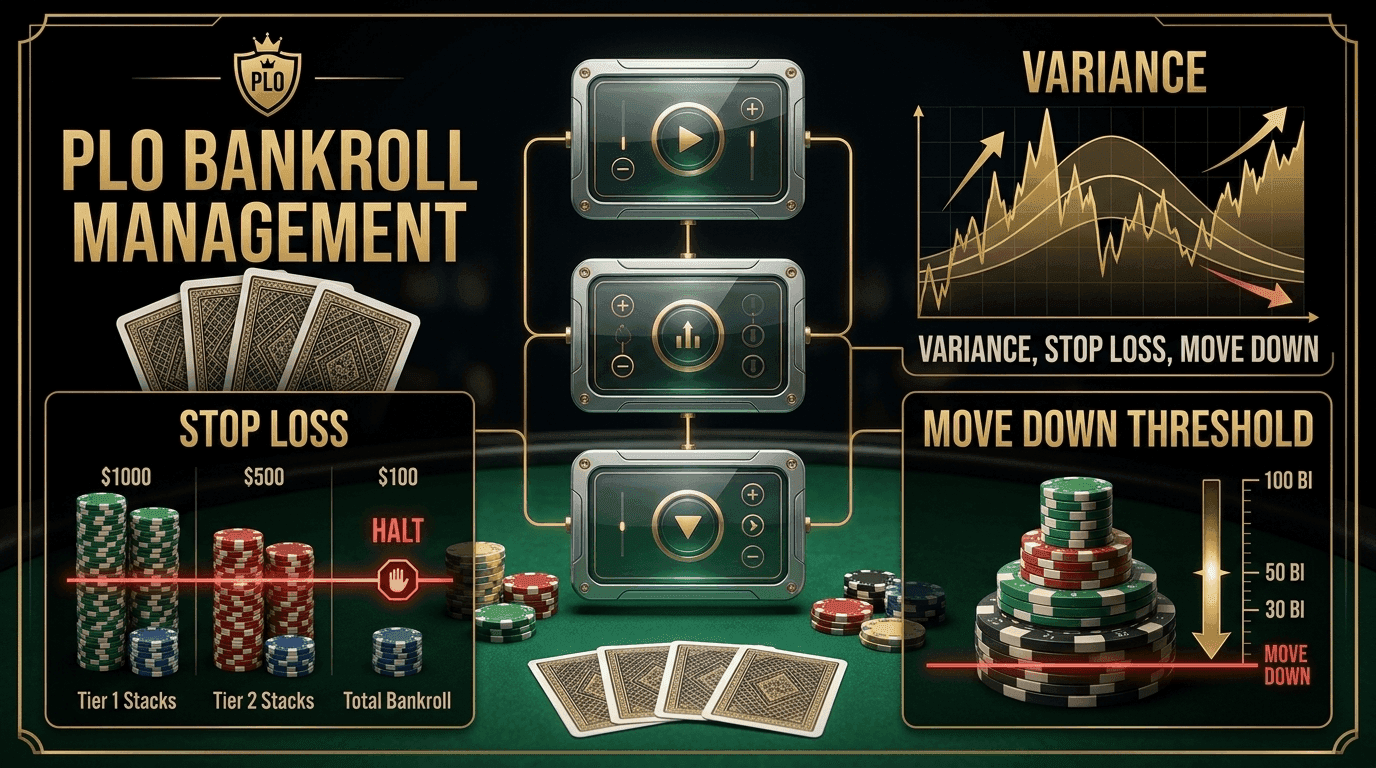
PLO bankroll management must be more conservative than many players expect because close-equity all-ins and large pots are part of the game, not evidence that something is wrong.
Strategy frame
PLO produces more close all-ins than many formats. A good player can lose many buy-ins while making profitable decisions.
A stop-loss is not a superstition. It is a guardrail for fatigue, frustration, and bankroll risk.
Choosing softer seats reduces variance pressure and increases hourly expectation more than forcing volume in tough lineups.
Decision path
These checks keep the topic tied to an actual action, not just a definition.
Choose a bankroll threshold before emotions enter the session.
Define stop-loss and stop-win review points around decision quality.
Move tables when the seat is no longer worth the variance you are taking.
Common leaks
Reading path

PLO swings harder than NLHE. Get a stake-by-stake bankroll table ($6,000-$8,000 for $1/$2), a 30-buy-in shot-taking rule, and why 20 buy-ins goes broke.

Learn why PLO variance is so intense, how close equities create wild sessions, and how to judge decisions instead of short-term results.

Use stop-loss rules in PLO without quitting profitable games. Separate bankroll rails from execution decay with a practical in-session checklist.
Practice spots
It depends on win rate, stake, game format, and risk tolerance, but PLO usually needs a deeper bankroll than Hold'em because variance is higher.
Yes. Many strong PLO hands run close in equity, so downswings can happen even with good decisions.