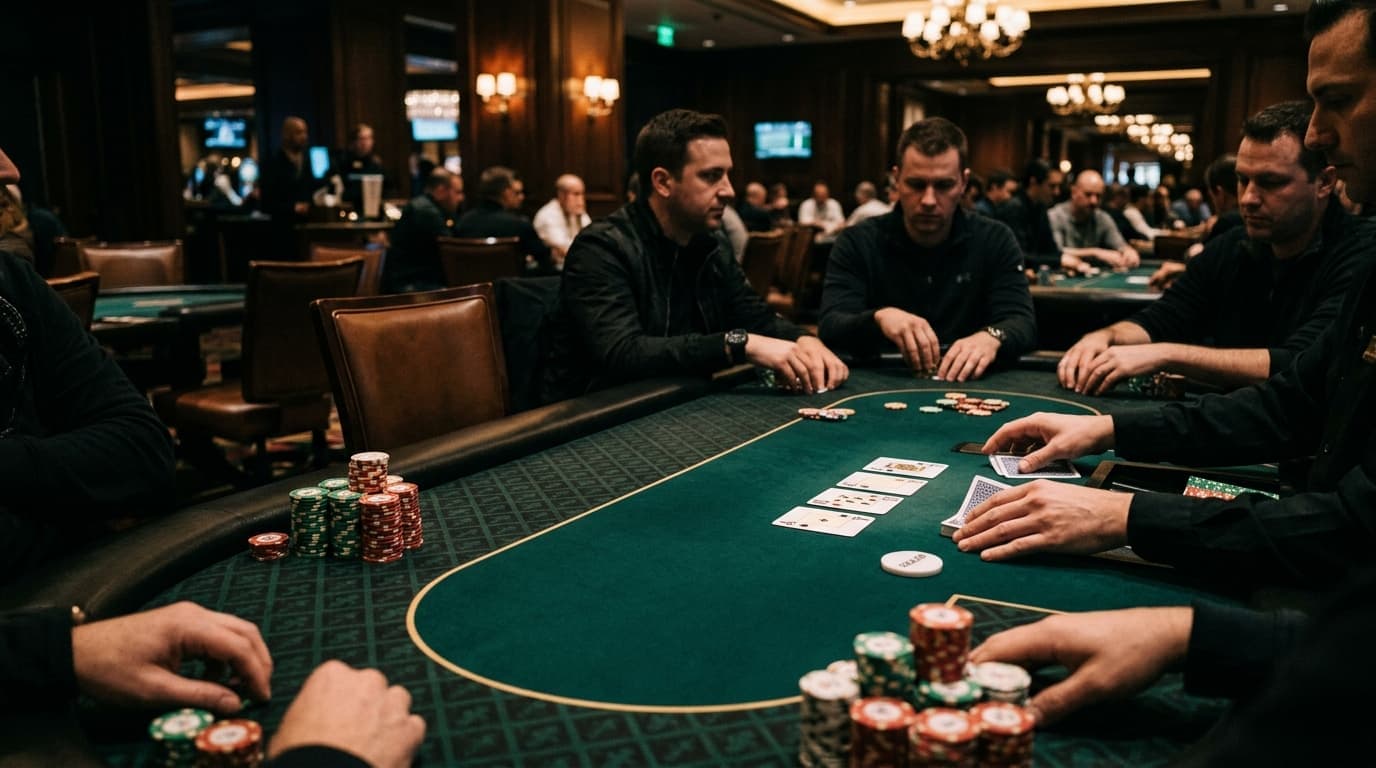
The Easiest Money You Will Ever Make
You just sat down at a $1/$2 PLO table. Six players are nursing short stacks, nobody is straddling, and the average pot is $15. Two seats over, there is another $1/$2 game where a loud tourist is open-limping every hand, three players have 300bb+ stacks, and the pot is rarely under $60. You chose the first table because the seat was open. That decision just cost you more than any bad river call ever will.
Table selection is one of the most underrated edges in Pot-Limit Omaha. It is not glamorous. Nobody posts highlight reels about it. But the difference between a great table and a bad one can dwarf many technical strategy tweaks.
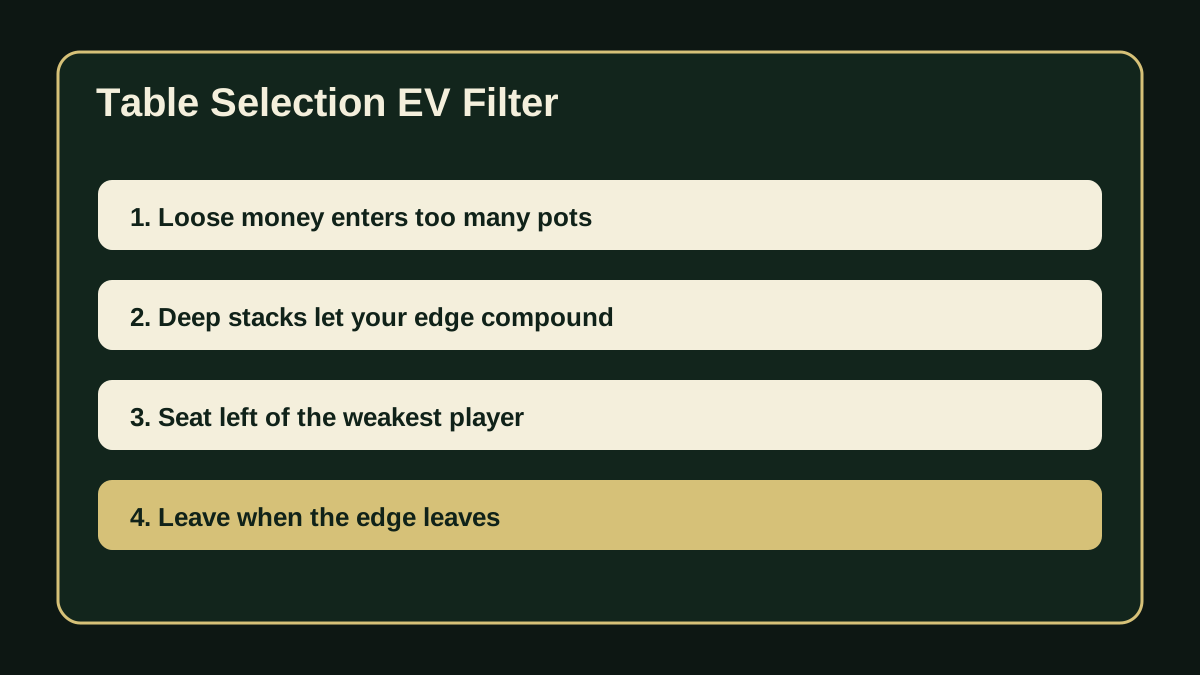 Inline visual: choose the table for loose money, stack depth, seat position, and a clear exit trigger.
What Makes a PLO Table Profitable
The traits of a profitable table are straightforward once you know what to look for.
Loose players. In many PLO environments, a player entering far too many pots is showing up with disconnected junk and dominated structures much too often.
Passive players (low aggression frequency). The player who limps A♠A♥7♦2♣, then just calls your pot-sized bet on T♠8♥4♦, is giving you a massive informational edge. When passive players raise, you can fold confidently. When they call, you can value bet relentlessly.
Deep stacks. PLO is a game of implied odds. When effective stacks are 200bb+, your suited rundowns and double-suited hands skyrocket in value. Short-stacked tables neutralize many of your postflop edges.
Recreational players. Straddles, splashy action, and visibly casual table behavior are useful signals live. Online, look for players who enter too many pots, avoid aggression, and do not seem to be table-selecting carefully.
What to Avoid
Tables full of regulars. If you recognize four or more screen names (or faces) as competent players, leave. Your edge against other regs is razor-thin, and rake eats whatever margin remains.
Short-stacked tables. When everyone buys in for 40-60bb, PLO turns into a preflop shove-fest. The skill edge evaporates because there are not enough chips to make postflop decisions matter. If you cannot table-change, use a tighter short stacked live PLO plan instead of playing your normal deep-stack range.
Nit-fests. A table where everyone is playing tightly and avoiding marginal spots is usually much worse for your hourly than a loose, deep lineup.
Seat Selection Matters Too
Once you find a good table, do not just take whatever seat is open. You want position on the loose, splashy players. If the whale is in seat 5, you want seat 6, 7, or 8 -- so you act after them as often as possible. This lets you isolate them in position and play bigger pots with a structural advantage.
Consider this: you hold K♠Q♠J♦T♥ on the button. The loose player in the cutoff open-limps. You pot it. Everyone folds back to them. They call. You are now heads-up, in position, with a premium hand against a player who enters far too many pots. This is how money is made in PLO.
Online Table Selection: Use Your Tools
Online, table selection is almost mechanical. Most tracking software shows average pot size, players per flop percentage, and average stack depth at each table. Filter for:
- Average pot size clearly above the stake norm
- Players-per-flop meaningfully above average
- At least one player with a stack over 150bb
If you use Hand2Note or PokerTracker, keep a HUD with basic looseness and aggression stats. Scan the lobby for tables with clear loose-passive targets and good seat position on them.
Live Table Selection: Trust Your Eyes
Live PLO requires more observation, but the signals are obvious if you pay attention.
Walk the room before sitting down. Watch for tables where chips are moving, players are laughing, and pots are being raised preflop and on the flop. Straddles are a strong positive indicator. A table with a mandatory straddle and loose action is exactly where you want to be.
Avoid the table where six players are wearing headphones, staring at their phones between hands, and min-raising with only premium holdings.
The Ego Trap
The hardest part of table selection is not analytical. It is emotional. Your ego will tell you that you can beat any table. It will tell you that leaving a tough lineup is weakness. It is not. The best professionals in the world -- the ones winning millions -- are ruthless about game selection. They refuse to sit in bad games, and they are the first to move when a good game dries up.
If the recreational player busts and reloads at another table, follow them. If the table tightens up after a big pot, open your lobby and look for a better seat. Never let pride override profit.
FAQ
How quickly should I leave a table that has turned reg-heavy? Give it one orbit. If the loose players have not returned and no new recreational players have sat down, leave immediately. Every hand you play at a bad table costs you expected value compared to finding a better one.
Does table selection matter as much online as live? It matters even more online because you have access to lobby stats and can switch tables instantly. Live players are often stuck at whatever table has an open seat, but online you can sit at three tables simultaneously and drop the worst one as soon as you identify it.
Should I ever play at a tough table for the experience? Only if you are deliberately studying how strong opponents play and you have accepted you will likely lose that session. For bankroll-building purposes, always choose the softest table available.
The Bottom Line
Before your next session, spend five minutes choosing the right table instead of just sitting at the first open seat. Look for loose players, deep stacks, and passive action. Sit to the left of the weakest player. Leave when the game gets tough. This single habit will do more for your win rate than any strategy article you will ever read -- including this one.