Player Types & Exploits7 min read
How to Beat Tight ABC PLO Players
See how to pressure predictable PLO players, steal more pots, and value bet efficiently against capped ranges.
Article archive
Browse the full PLO.com strategy library. Use topic pages when you want a focused path, or page through everything here in publish order.
See how to pressure predictable PLO players, steal more pots, and value bet efficiently against capped ranges.

Learn how to handle hyper-aggressive PLO opponents by widening carefully, trapping well, and avoiding ego battles.

Exploit loose passive PLO players with stronger value betting, disciplined bluffing, and better nut selection.

Learn why value thresholds rise in multiway Omaha pots and why nut potential matters even more.

Learn why made hands with redraws dominate so many PLO spots and how redraws affect stack-off decisions.

Understand how blockers work in Omaha and how nut blockers improve river bluffing and hand reading.

Learn when bluffing is profitable in Pot-Limit Omaha and why random aggression fails on coordinated boards.

Improve your river decisions in PLO by understanding blockers, thin value, nut-heavy runouts, and bluff-catching limits.
Learn how turn cards shift equities in Omaha and why good turn play separates winning players from guessers.
See why non-nut flushes cost players so much money in PLO and how better river discipline saves stacks.
Learn the difference between nut and non-nut flush draws in Omaha and how to avoid reverse implied odds mistakes.

Learn why overpairs shrink in value in PLO, which overpairs can continue profitably, and when one-pair hands become traps.
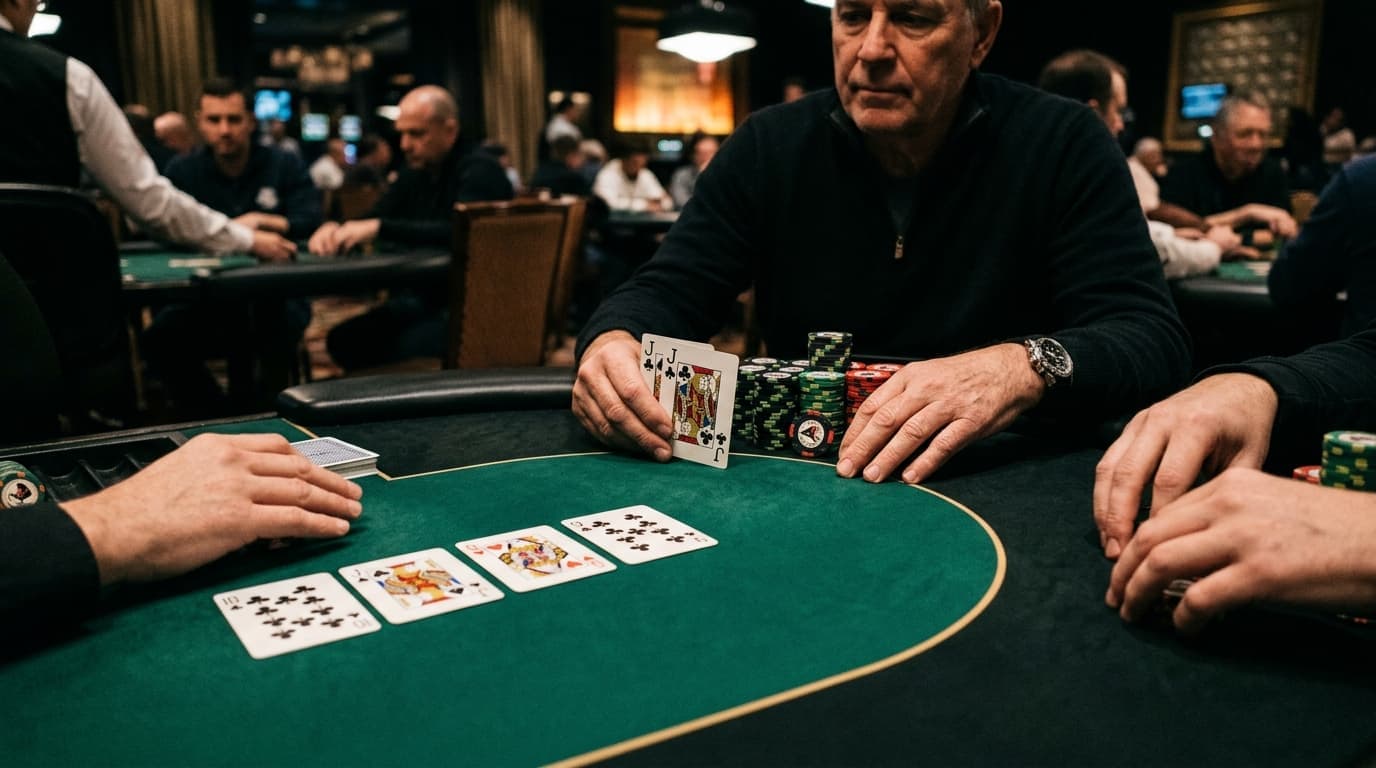
See why top set is not always invincible in Omaha and how board texture and redraws determine set value.
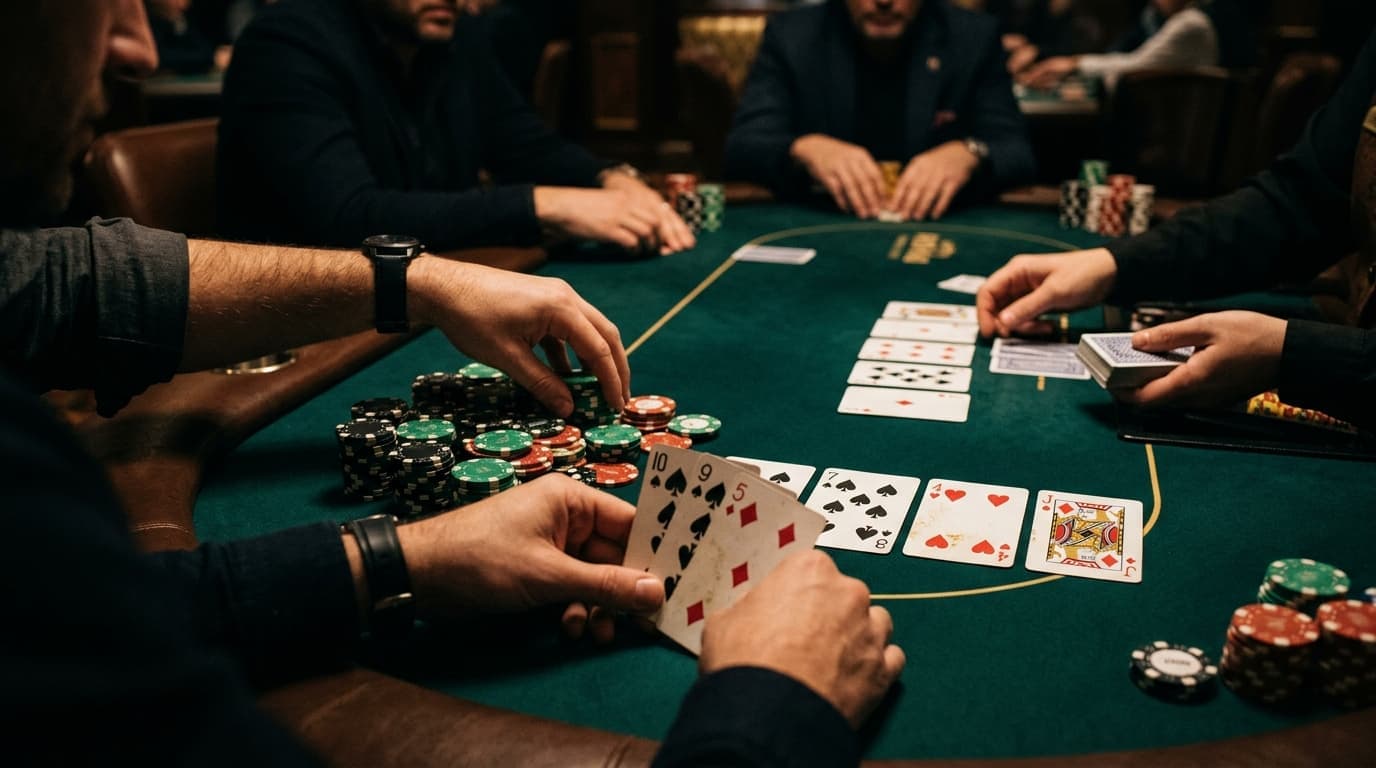
Learn why combo draws are so strong in PLO and how redraws and blockers make these hands powerful stack-off candidates.

A wrap is a straight draw with extra outs because your hole cards surround the board: J-T-7-6 on 9-8-2 has 20. See which outs are clean and which lose stacks.

Learn how to play straight draws, flush draws, and combo draws in Omaha without overcommitting with weak equity.
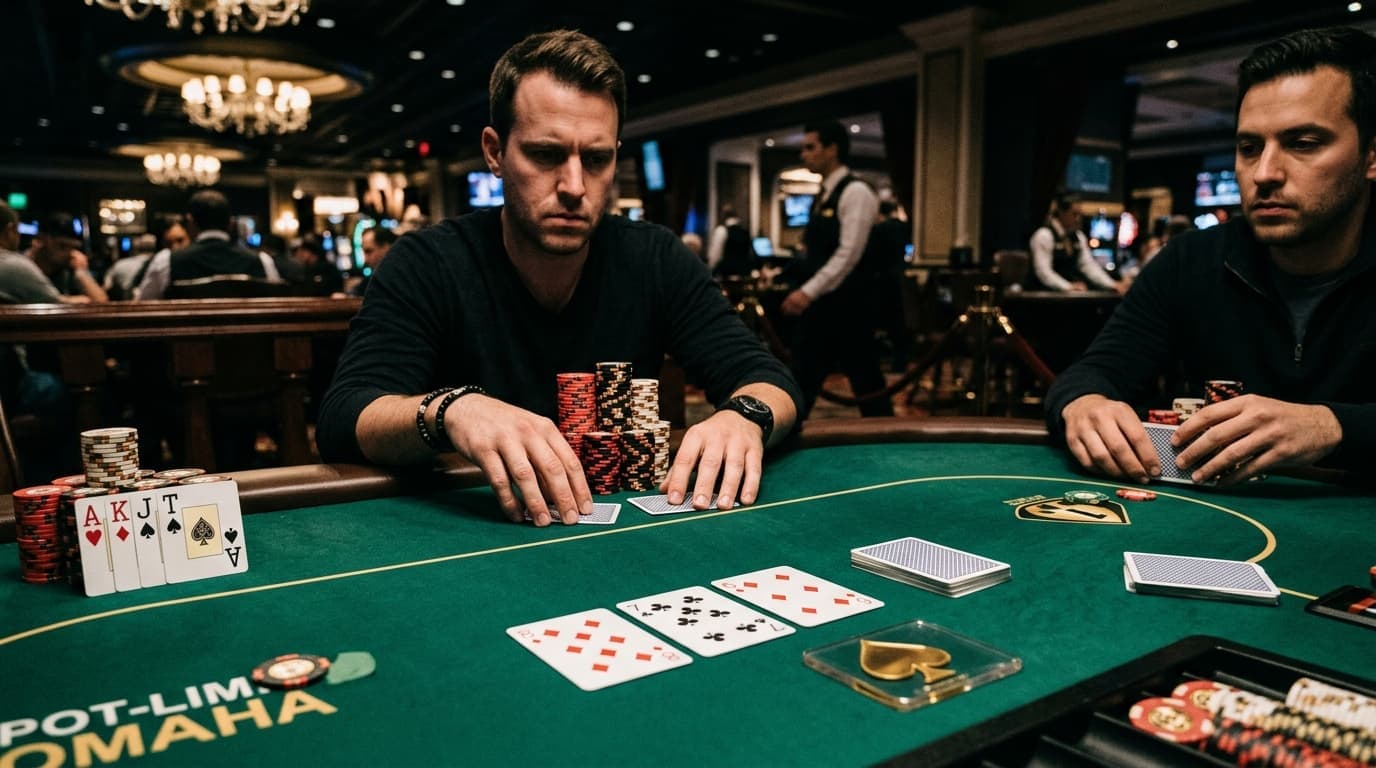
Avoid auto c-betting on dynamic connected boards that heavily favor callers and create massive equity overlap in PLO.

Discover the flop textures that favor the preflop raiser in Omaha and why dry or paired boards often play differently.