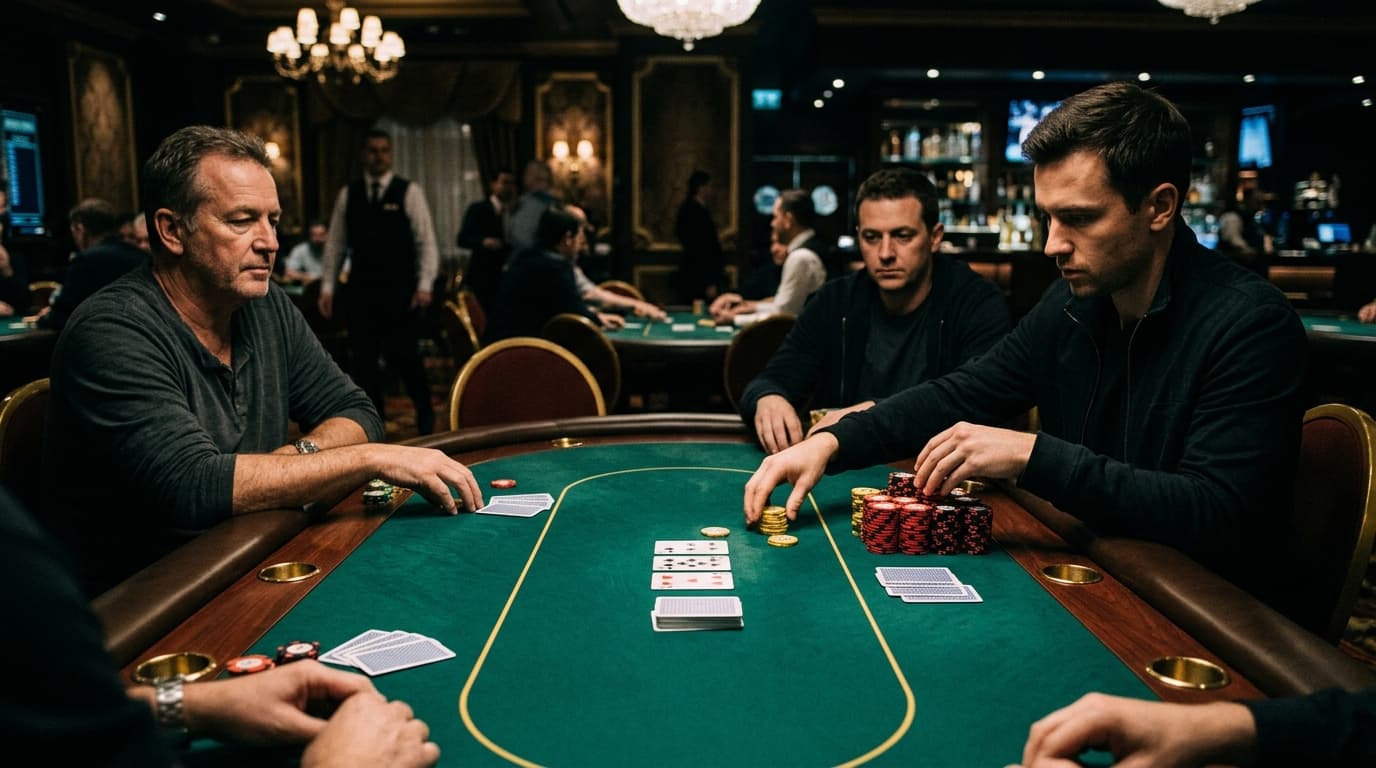
The Most Profitable Opponent You Will Ever Face
You are sitting at a $1/$2 PLO table. The player in seat 7 has called every single raise preflop for the last hour. He called a pot-sized flop bet with bottom pair and a gutshot. He called a turn barrel with a naked flush draw. He never raises unless he has the absolute nuts -- and even then he sometimes just calls.
This player is your ATM. But only if you stop trying to be clever.
The loose passive player is the most common opponent type in low-stakes PLO, and also the most misplayed. Not because they are tricky -- they are the opposite of tricky. The problem is that most players fail to adjust their strategy to extract maximum value from someone who simply will not fold.
Why Bluffing Is Burning Money
The first and most important adjustment against loose passive opponents: stop bluffing them. Entirely.
This sounds obvious, but watch yourself at the table. You will be tempted. The board will come all low cards, you will have position with a hand that missed completely, and you will think "surely this person cannot call with whatever garbage they have." They can. They will. They probably have some piece of the board, and they are going to call.
A loose passive player who calls preflop with K♠8♥6♦3♣ and sees a flop of 8♦5♠2♥ has middle pair and will not fold to one bet, maybe not even two. They do not think about what you have. They look at their own cards, see a pair, and call.
This means every bluff you fire is a donation. Every "thin value bet" that is actually closer to a bluff -- also a donation. Against this player type, your bluffing frequency should approach zero.
Value Bet Relentlessly and Fearlessly
If bluffing is useless, the counter-adjustment is obvious: value bet thinner and more frequently than you would against any other opponent type.
Here is a spot most players leave money on the table. You have A♠Q♥J♦T♠ and the board runs out A♥9♦4♣-3♠-K♥. You have top pair with a mediocre kicker. Against a good player, checking the river is reasonable. Against a loose passive player, you should bet. They are calling with any pair, any busted draw they decided to peel with, anything.
Size your bets for value, not for folds. Pot-sized bets are fine because these players call pot-sized bets at nearly the same rate as half-pot bets. Do not give discounts to someone who is not price-sensitive.
Check how loose preflop calls create dominated situations:
Even a simple top pair with a better kicker situation gives you massive equity against the types of hands loose passive players show up with.
Isolate Them in Position
Loose passive players love seeing flops cheaply. Your job is to make sure those flops cost them maximum money while you have position.
When a loose passive player limps and you are on the button with a reasonable hand, raise. When they call a raise from early position and it folds to you in the cutoff, 3-bet with your strong hands. The goal is to build a pot where you have position, initiative, and a better hand.
The dream scenario is heads-up in position against a calling station. You can value bet three streets with impunity, check back when you miss, and never worry about getting bluff-raised.
What you should not do is try to limp behind and see a cheap multiway flop. That eliminates your edge. Your edge against this player is not seeing more flops -- it is playing bigger pots in position with better hands.
Hand Selection Against Calling Stations
Adjust your hand selection toward hands that make obvious, strong top-pair or better holdings:
- Big pairs with suits (A♠A♥K♠T♥) dominate because they flop overpairs that you can value bet comfortably three streets
- Nutted rundowns (T♥9♠8♥7♠) dominate because they flop straights and wraps that calling stations will pay off
- Big suited aces (A♦K♦Q♠J♥) dominate because nut flushes are impossible for calling stations to fold against
Avoid hands that make weak pairs or non-nut draws. J♠8♥6♦4♣ might be playable in an aggressive game where fold equity matters, but against someone who never folds, you need hands that win at showdown, not hands that make opponents fold.
See the equity difference between premium and junk against a loose caller:
Premium hands crush random hands preflop, and that edge holds up through all streets.
Stop Making Fancy Plays
Against loose passive opponents, the optimal strategy is boring. Embarrassingly boring. Here is the entire playbook:
- Play strong hands in position
- Bet when you have value
- Check when you do not
- Never bluff
- Never slow-play (they are going to call anyway, so bet your monsters)
No check-raises as bluffs. No floating the flop to steal the turn. No overbetting to represent a hand you do not have. These plays work against thinking opponents who can find folds. Loose passive players do not think and do not fold.
The one exception to the "never slow-play" rule: if you flop an absolute monster on a board with no draws (like top set on K♥7♦2♠), checking to let them catch up can be correct because they might fold to a bet with complete air but continue on later streets when they pick up a pair or draw.
The Patience Tax
The hardest part of playing against loose passive opponents is not strategic. It is emotional. You will run into stretches where you card-dead for an hour, finally pick up a decent hand, value bet three streets, and get shown the nuts. This will happen multiple times per session.
This is the patience tax. You are playing a strategy with a high win rate but unavoidable variance. The loose passive player will occasionally hit their two-outer, their miracle runner-runner, their one-card flush draw. When that happens, you must not adjust. Do not start bluffing out of frustration. Do not start tightening up because "they always have it." The math is on your side. Stay the course.
FAQ
Should I ever check-raise a loose passive player? Rarely, and only for value. If you flop a set and the loose passive player bets (which they occasionally do with top pair or a draw), raising for value is correct. But check-raising as a bluff is pointless -- they called because they have something, and they are going to call your raise too.
What if there are multiple loose passive players at the table? Tighten your starting hand selection because more callers means more people connecting with flops. Focus on hands that make the nuts. The overall strategy remains the same -- value bet, do not bluff -- but you need stronger hands to value bet confidently into multiple calling stations.
How much of my win rate comes from this one player type? At low-stakes live PLO, loose passive players are often responsible for most of a winning player's profit. If there are no loose passive players at your table, you may want to find a different table. Game selection is one of the most underrated skills in PLO.