
The best PLO starting hands are not just the four prettiest cards. They are hands that can make the nuts, keep redraws, and continue profitably after the pot gets big.
That is the adjustment most Hold'em players miss. In No-Limit Hold'em, a preflop premium often stays easy to understand after the flop. In Pot-Limit Omaha, a hand can look powerful before the flop and become a dominated guessing game by the turn.
The short version, assuming normal 100bb stacks and no extreme table dynamics:
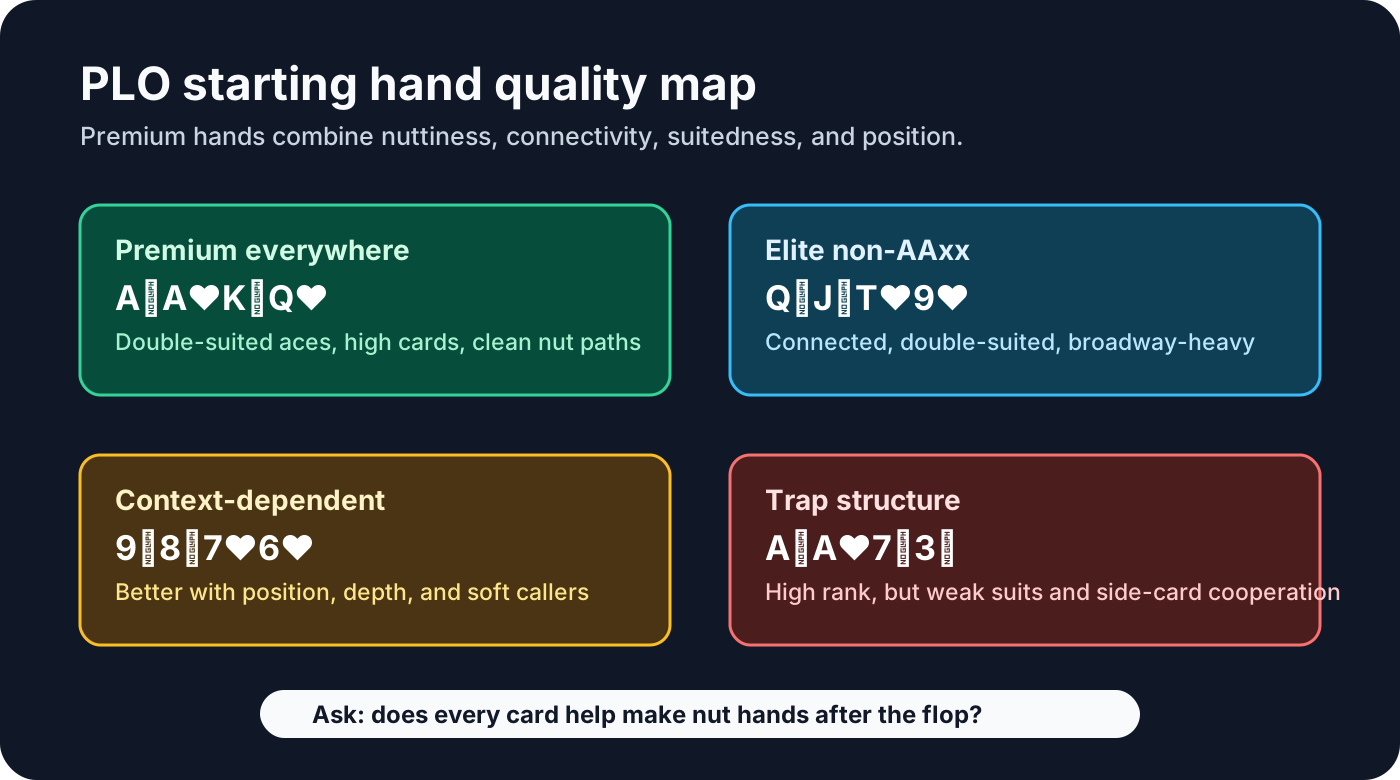
- Premium connected AAxx: A♠A♥K♠Q♥, A♠A♥J♠T♥, A♠A♥K♠T♥
- Elite high rundowns: K♠Q♠J♥T♥, Q♠J♠T♥9♥, J♠T♠9♥8♥
- Nut-suited broadway structures: A♠K♠Q♥J♥, A♠Q♠J♥T♥, A♠K♠J♥T♥
- Strong but context-sensitive hands: T♠9♠8♥7♥, 9♠8♠7♥6♥, A♠K♠Q♥J♦
These are hand families, not a fixed top-10 list. A double-suited AAKQ with clean side-card cooperation belongs near the top in most normal formations. A rainbow AAKQ, a lower double-suited rundown, or a high-card hand with one dead side card can move up or down depending on position, stacks, rake, and how often the pot goes multiway.
The best PLO starting hands share the same deeper traits: all four cards cooperate, the suits are useful, the hand makes nut straights and nut flushes, and it does not need one exact flop to continue.
What Makes a PLO Hand Premium
A premium PLO hand has three forms of equity working together.
Raw equity is how the hand performs all-in before the flop. AAxx usually starts ahead here, but raw equity alone is not enough.
Realization is how often the hand can actually reach showdown or apply pressure without making expensive mistakes. Position, connectivity, and suit quality drive realization.
Nuttiness is how often the hand makes the best possible version of a strong hand. In PLO, second-best strong hands are where stacks disappear. A king-high flush, bottom straight, or weak two pair can look playable while being a reverse-implied-odds problem.
The real premium hands combine all three. A♠A♥K♠Q♥ has raw equity, nut suits, broadway coverage, top-set potential, and clean continuation routes. K♠Q♠J♥T♥ lacks aces, but it makes high straights, strong wraps, and coordinated pressure on many boards. A♠9♠8♦2♣ has a nut suit, but the side cards do not support enough profitable futures.
Use this filter before you call a hand premium:
| Trait | Good sign | Warning sign |
|---|---|---|
| Suit quality | Ace-high suit or two live suits | Non-nut suit carrying most of the hand value |
| Connectivity | Four cards work together | Three-card hand plus a dangler |
| Rank structure | High cards make top straights | Low cards make dominated straights |
| Backup equity | Pair plus draw, wrap plus redraw, nut draw plus blockers | One-pair hand with no clean improvement |
| Position sensitivity | Plays well from early seats | Needs button, soft blinds, or deep stacks |
That is why any list of "top 10 PLO hands" is incomplete. The real answer is structural.
The Three Questions That Rank a Starting Hand
When two good-looking hands are close, use this order:
- How often does it make the nuts? A hand that makes top-end straights and ace-high flushes has more room to value bet and call pressure.
- How well does it realize equity from this seat? Position turns medium rundowns and suited connectors into profit. Out of position, those same hands can become expensive.
- What happens when the pot gets big? Premium PLO hands keep redraws. Trap hands make one strong-looking hand and then hate every raise.
This is why A♠K♠Q♥J♦ and T♠9♠8♥7♥ can be close preflop but play very different games after the flop. The broadway hand wants high-card boards, blocker pressure, and cleaner heads-up pots. The rundown wants connected boards, position, and room to realize. For the direct hand-class breakdown, use the broadway vs rundown PLO guide.
AAxx Is a Hand Family, Not One Hand
In Hold'em, pocket aces is one hand. In PLO, AAxx is a family with huge internal gaps.
A♠A♥K♠Q♥ is a premium from every seat at 100bb. A♦A♣8♦3♣ is not. Both contain aces. Only one is built to make nutted hands across many board types.
The divider is backup equity.
Premium aces have connected side cards, nut suits, and broadway coverage:
- A♠A♥K♠Q♥
- A♠A♥K♠J♥
- A♠A♥J♠T♥
- A♠A♥K♠T♥
These hands can open, 3-bet, and 4-bet because they do not collapse when called. They flop top set, overpair plus nut-flush draw, broadway wraps, blockers, and credible turn-barrel equity.
Fragile aces have weak side cards, poor suits, or disconnected shapes:
- A♠A♥8♦3♣
- A♦A♣7♦2♣
- A♠A♦T♣4♥
These hands still have value, but they are not automatic stack-building hands in every formation. They often create one-pair pots where opponents have live wraps, two pair, sets, or redraws.
For the full aces playbook, pair this with how to play AAxx in PLO.
The Best Non-AAxx Starting Hands
The best non-paired hands usually come from high, connected, suited structures.
Double-Suited Broadway Rundowns
These are elite because they dominate the top straight tree.
- K♠Q♠J♥T♥
- Q♠J♠T♥9♥
- K♠Q♠T♥9♥
They make nut or near-nut straights, strong wraps, and flush draws that can continue aggressively. They especially shine in position and in deeper pots where weak AAxx hands struggle to realize.
The risk is suit quality. K♠Q♠J♥T♥ is excellent, but it does not make ace-high flushes. In multiway pots, that matters. The hand is premium because of its total structure, not because every draw it makes is invincible.
Nut-Suited Broadway Hands
These hands bring ace-high flush potential and high-card board coverage.
- A♠K♠Q♥J♥
- A♠Q♠J♥T♥
- A♠K♠J♥T♥
They perform well because they can make nut flushes, broadway straights, top-pair-plus-draw hands, and blocker-driven pressure. They are often more robust than medium rundowns when the pot goes multiway.
High and Medium Rundowns
Hands like J♠T♠9♥8♥ and T♠9♠8♥7♥ can be excellent, especially on the button or in deep, soft games. But the lower the hand gets, the more careful you must be.
J-T-9-8 owns more top-end straight paths than 8-7-6-5. 9-8-7-6 can still be profitable, but it runs into more dominated straight and flush situations. The hand wants position, good suits, and opponents who make postflop mistakes.
For deeper rundown structure, see rundowns in PLO, gaps and connectivity, and double-suited hands.
Best Hands by Pot Shape
The "best" hand class changes once you predict the likely pot.
| Likely pot | Hands that gain value | Hands that lose value | Why |
|---|---|---|---|
| Heads-up 3-bet pot | Connected AAxx, nut-suited broadways, high-card blockers | Low rundowns and weak non-nut suits | Lower SPR rewards raw equity and nut blockers |
| Multiway single-raised pot | Double-suited high rundowns, nut-suited broadways, set-mining pairs with backup | Bare overpairs, non-nut flush hands, disconnected aces | You need nutted equity that survives several ranges |
| Deep 200bb+ pot | Hands with nut suits and redraws | Bottom straights, dominated flushes, weak two-pair hands | Reverse implied odds get larger |
| Short 40-60bb pot | Premium aces, high-card double-suited hands | Speculative medium hands that need maneuvering | Equity must realize quickly |
This table is why a hand can be a profitable button open and still be a bad early-position open. The cards are only half the answer. The formation tells you how much of that equity you can actually use.
Position Changes What "Best" Means
The same hand can be a slam-dunk open on the button and a disciplined fold under the gun.
That is not inconsistency. It is PLO.
From early position, the hand must survive calls and 3-bets while often playing out of position. You should favor premium aces, nut-suited broadways, high rundowns, and hands that can continue across many flops.
From the cutoff and button, more hands become profitable because position improves realization. T♠9♠8♥7♥, 9♠8♠7♥6♥, and A♠K♠Q♥J♦ gain value when you can act last, control pot size, and punish capped blind ranges.
The PLO Preflop Charts are the fastest way to turn this from theory into decisions. Use them as a baseline, then adjust for rake, stack depth, and how aggressively the players behind you 3-bet.
Stack Depth Changes the Ranking
At 50bb, raw equity and high-card strength matter more because stacks go in sooner and postflop maneuvering is limited. Connected AAxx and premium broadways gain value.
At 100bb, most premium rankings are balanced: nuttiness, position, and realization all matter.
At 200bb+, dominated draws become more dangerous. Medium rundowns and non-nut double-suited hands need more discipline because reverse implied odds get larger. A hand that can profitably open at 100bb may become a trap if it makes expensive second-best hands deep.
This is why "best starting hands" cannot be separated from the game tree. A hand is not just good or bad. It is good or bad for the position, stack depth, table, and likely pot shape.
That is especially true for double-paired hands in PLO, where the gap between high adjacent pairs and low disconnected pairs grows as stacks get deeper.
Hands That Look Better Than They Play
These hands often get overrated:
- A♠A♥7♦3♣: aces, but no connectivity and no second suit
- K♠K♥K♦J♣: three kings block your own set value and leave a weak side structure
- Q♠J♠T♥4♣: three useful cards and one dead card pretending to be a premium hand
- A♠9♠8♦2♣: nut suit, but poor side-card cooperation
- T♠T♥6♦2♣: a pair without enough connected support
These hands win enough small pots to feel playable. The problem is what happens when the money gets big. They make dominated draws, fragile two pair, weak overpairs, and bluff-catchers that cannot stand pressure.
For more structural traps, see the worst starting hands in PLO and common beginner mistakes.
Five Real Preflop Decisions
1. UTG, 100bb: A♠A♥K♠Q♥
Open confidently and continue versus aggression. This is the top of the AAxx family: nut suit, connected side cards, high-card coverage, and stack-off equity.
2. UTG, 100bb: A♦A♣8♥3♠
Open in many games, but do not treat it like a monster. Against strong 3-bet pressure or deep sticky fields, this hand can become uncomfortable quickly.
3. Cutoff facing one open, 100bb: Q♠J♠T♥9♥
This is a premium non-AAxx hand. In position, it can call or 3-bet depending on opener range, players behind, and stack depth. It realizes equity much better than a disconnected high-card hand.
4. Button, folded to you, 150bb: T♠9♠8♥7♥
Clear open in normal games. You have position, suits, and strong board coverage. Be more careful if the blinds 3-bet aggressively and play well postflop.
5. Button after two limpers: K♠Q♠J♥T♥
This can be an iso-raise when the raise reduces the field. If everyone calls any size, it becomes a value raise into a multiway pot, and the non-nut suits matter more. Use the framework in iso-raising limpers in live PLO.
A Practical Ranking System
Before playing a hand, score it mentally from 0 to 2 in each category:
| Category | 0 points | 1 point | 2 points |
|---|---|---|---|
| Suits | Rainbow or weak suit | One useful suit | Double-suited or nut-suited |
| Connectivity | Disconnected | One gap or partial structure | Four cards cooperate |
| Nuttiness | Makes dominated hands | Some top-end paths | Frequent nut straights/flushes |
| Position | Early and likely OOP | Middle position | Cutoff/button or clear position |
| Pressure tolerance | Hates 3-bets | Can call selectively | Can 3-bet/4-bet or call well |
Hands with 8-10 points are often premium or strong opens. Hands around 5-7 are context hands. Hands below that need a very specific reason to enter the pot.
Do not use this as a mechanical chart. Use it to catch the leak: playing hands because one feature looks attractive while the whole structure is weak.
FAQ
What is the single best PLO starting hand?
There is no universally agreed single hand, but double-suited AAKQ, AAJT, and AAKJ are usually near the top because they combine raw equity, nut suits, and connected side cards.
Are rundowns better than aces in PLO?
Not as a rule. Premium aces are still premium. The real point is that good rundowns often play better than weak aces after the flop, especially in position and deeper stacks.
Are double-suited hands always playable?
No. Double-suited garbage is still garbage. Suits add value when the ranks and connectivity also cooperate. K♠Q♠J♥T♥ is a very different hand from K♠9♠5♥3♥.
Should beginners play tighter than these examples?
Usually, yes. Start with hands that make the nuts clearly, avoid dominated suits and disconnected side cards, and use the PLO Preflop Charts until the structural patterns become automatic.
Is A-A-x-x always better than a premium rundown?
No. Premium aces are excellent, but weak aces can play worse than a clean double-suited rundown once stacks are deep and the pot goes multiway. Treat AAxx as a family: connected, suited aces are premium; disconnected aces need more caution.