Count quality, not just quantity
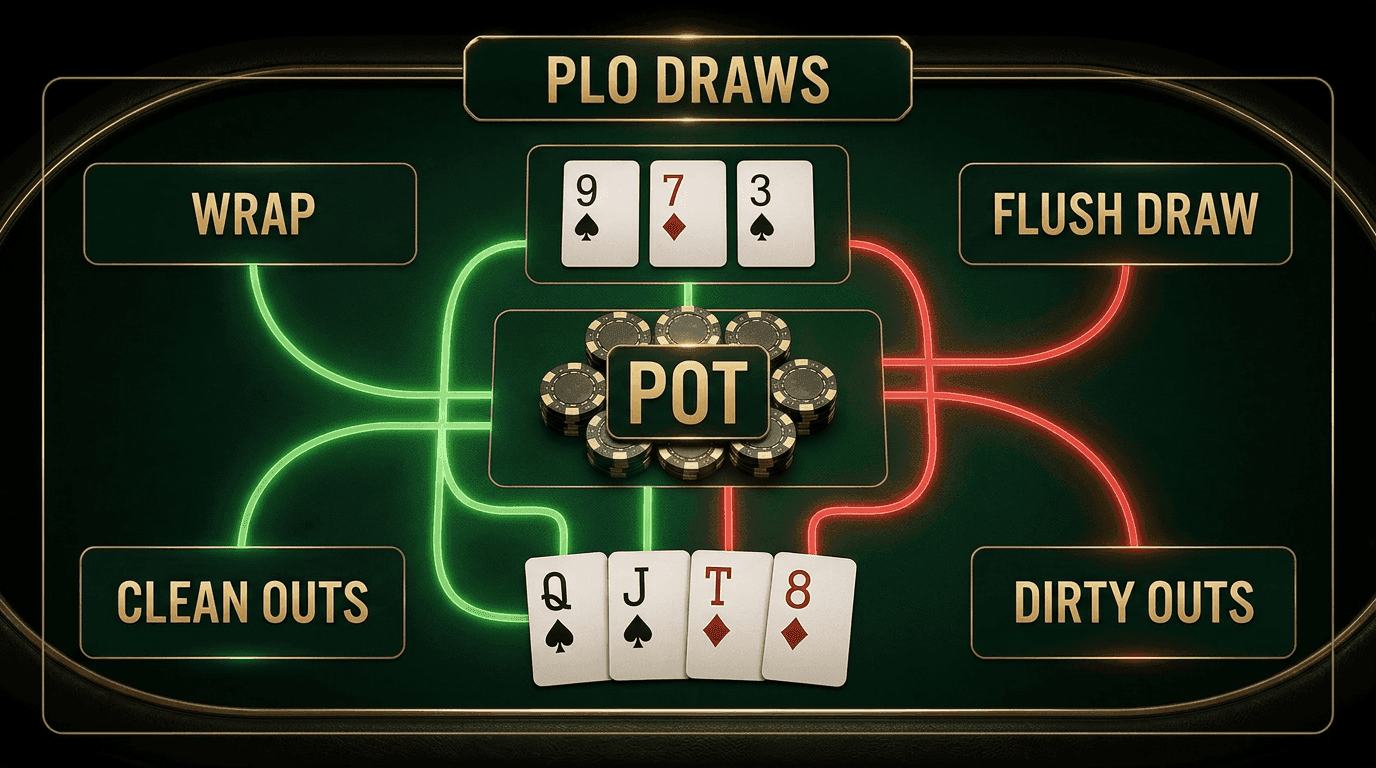
A 17-out wrap can still be dangerous if many outs make the low end, complete a flush, or pair the board in a way that helps villain more.
Strategy Hub
A complete guide to wraps, combo draws, nut flush draws, redraws, clean outs, dirty outs, and draw quality in PLO.
Ask first
Which outs are clean enough to put money behind?
PLO draws are powerful because they combine paths. The mistake is counting raw outs without separating nutted outs, dirty outs, redraws, and reverse implied odds.
Strategy frame
A 17-out wrap can still be dangerous if many outs make the low end, complete a flush, or pair the board in a way that helps villain more.
Straight-plus-flush and pair-plus-draw hands often have enough equity to bet hard, especially when they draw to the nuts.
When two players can make the same current hand, the hand with flush, full-house, or higher-straight redraws gets to apply more pressure.
Decision path
These checks keep the topic tied to an actual action, not just a definition.
Start with every card that improves you.
Discount cards that make higher straights, flushes, boats, or better redraws for villain.
The deeper the pot, the more you need nut outs and redraws instead of fragile equity.
Common leaks
Reading path

Learn how to play straight draws, flush draws, and combo draws in Omaha without overcommitting with weak equity.

A wrap is a straight draw with extra outs because your hole cards surround the board: J-T-7-6 on 9-8-2 has 20. See which outs are clean and which lose stacks.
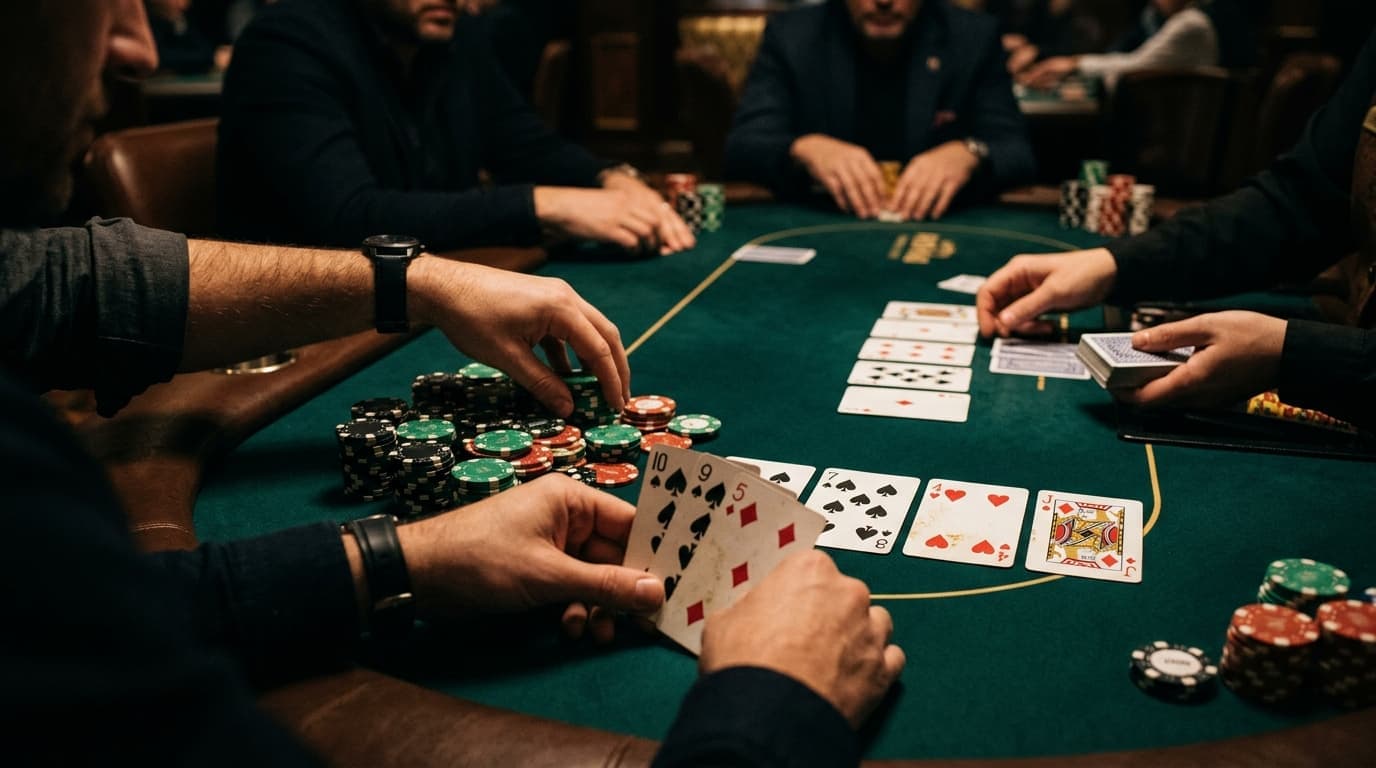
Learn why combo draws are so strong in PLO and how redraws and blockers make these hands powerful stack-off candidates.
Practice spots
A wrap is a straight draw with more than eight outs, created when your hole cards surround the board ranks.
No. Stack-off quality depends on nut outs, redraws, SPR, blockers, and whether the pot is heads-up or multiway.