Most PLO players do not lose because they have no opening range. They lose because they use the same emotional range from every seat.
J♠T♥9♣5♦ looks close enough when you are bored under the gun. A♠8♣7♥2♦ looks playable because it has an ace. Q♠J♠T♥4♣ looks like a rundown until the dead side card shows up on every important turn. These are the hands that quietly turn preflop impatience into postflop tax.
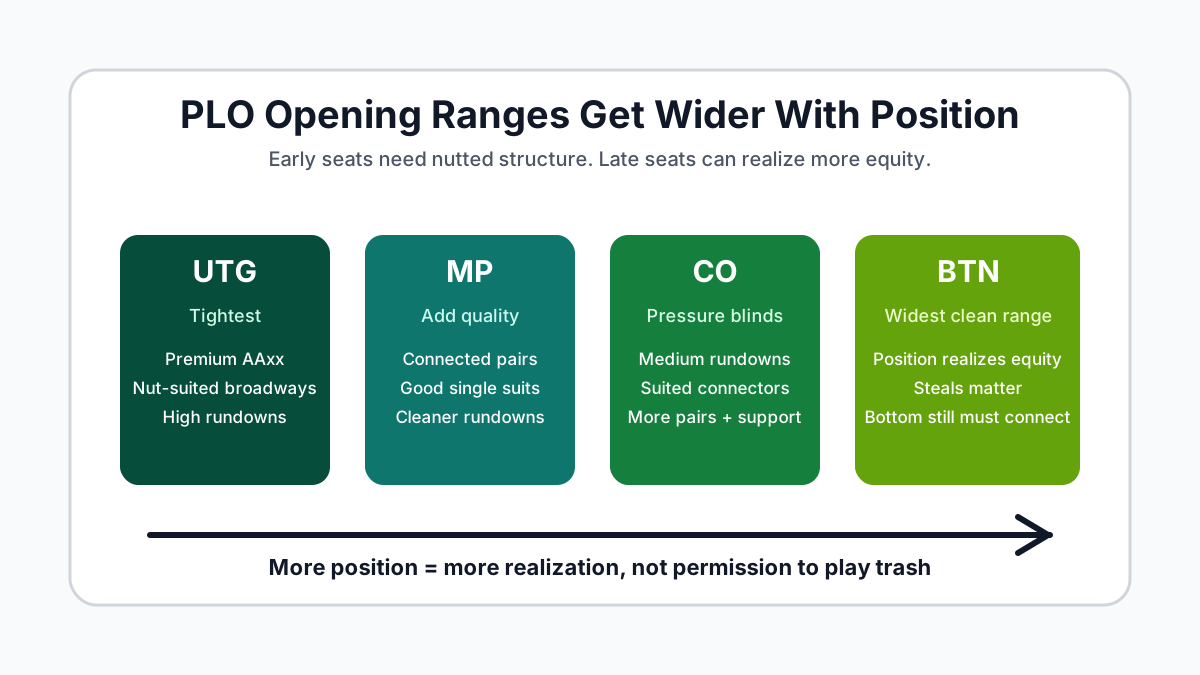
Strong PLO opening ranges are built around one idea: the earlier your position, the more your hand must make the nuts, tolerate pressure, and play well out of position. The later your position, the more you can use realization, steal equity, and table reads.
Free tool: The PLO Preflop Charts show position-by-position opening, 3-bet, and big-blind defend ranges with concrete hand examples. Use this article to understand why those ranges tighten and widen.
What Solver PLO Preflop Ranges Actually Look Like
Before the seat-by-seat detail, anchor your baseline to the decoded 6-max 100bb solve (5% rake). First in, the solver open-raises:
| Seat | Open-raise share of all hands |
|---|---|
| UTG | 17.6% |
| HJ | 22.3% |
| CO | 30.5% |
| BTN | 48.6% |
| SB | 33.6% (plus 6.8% limps) |
Two facts from that ladder should shape everything below. The button opens almost three times as many hands as UTG — same stack, same cards, so the entire difference is realization and players left to act. And no seat except the small blind ever limps at all: the solver's answer to "raise or fold?" is always one of those two.
The full class-by-class data behind this table lives on the 6-max opening ranges page, the positional logic is unpacked in the position guide, and you can drill every range in the free preflop charts.
Why Position Changes Everything
In PLO, position is not just the right to bluff more. It changes how much equity your hand can realize.
Out of position, you face three problems:
- you reveal information first on every postflop street
- multiway pots punish thin one-pair and non-nut draw hands
- opponents can apply pot-sized pressure when your equity is unclear
In position, the same hand gets more ways to win. You see checks, bets, sizing, and timing before committing chips. You can take free cards, value bet thinner, and avoid paying off dominated draws.
That is why the button can open hands that are folds under the gun. The cards did not become stronger. Their realization improved.
The Core Opening Filters
Before opening, run the hand through five filters.
| Filter | Open more when | Tighten when |
|---|---|---|
| Nuttiness | Ace-high suits, top straight paths, premium pairs | Non-nut suits and low dominated straights |
| Connectivity | All four cards cooperate | Three-card hand plus dangler |
| Position | CO/BTN or likely position postflop | UTG or blinds likely to call |
| Pressure tolerance | Can call or 4-bet versus 3-bets | Must fold whenever raised |
| Table shape | Blinds overfold or play fit-or-fold | Sticky callers create bloated multiway pots |
The best open is not the hand with the highest raw equity. It is the hand that can handle the most likely next action.
UTG: Build Around Hands That Survive
Under the gun, you are opening into the whole table. The solver opens just 17.6% here, and the composition is telling: every AAxx hand opens, broadway rundowns open 94.5% of the time, plain rundowns 61.2% — while small pairs (9.1%) and junk (8.6%) almost never do. You need hands that can make strong, nutted hands across many flops and continue when called or 3-bet.
Open more confidently UTG:
- A♠A♥K♠Q♥
- A♠A♥J♠T♥
- A♠K♠Q♥J♥
- K♠Q♠J♥T♥
- Q♠J♠T♥9♥
- K♠K♥Q♠J♥ in games without relentless 3-betting
Fold or treat cautiously UTG:
- J♠T♥9♣5♦: the dangler matters
- A♠8♣7♥2♦: weak side cards and poor high-card coverage
- Q♠Q♥4♦3♣: pair with no useful backup
- T♠9♦7♣4♥: partial connectivity but too many weak futures
The UTG question is not "can this hand flop something?" Almost every PLO hand can. The question is whether it can flop something strong enough to continue out of position against ranges that called an early-position raise.
Middle Position: Add Quality, Not Optimism
Middle position — the hijack in 6-max — lets you widen, but only with hands that improve the range cleanly. The solver moves from 17.6% to 22.3% here, and the growth is quality-shaped: kings jump from opening 67.9% to 84.9%, one-gap rundowns from 43.5% to 54.2%. Junk barely moves.
Add hands like:
- A♠Q♠J♥T♥
- A♠K♠J♥9♥
- T♠T♥9♦8♣
- J♠T♠9♥7♥
- K♠Q♠J♦9♥
These hands are not automatic in every game. They become opens because fewer players remain behind and you are more likely to reach position. If the cutoff and button are aggressive 3-bettors, tighten back toward UTG quality.
This is where many players drift. They correctly widen, then keep widening until their range is filled with hands that look connected but cannot stand pressure. Middle position should add playable structure, not excuses.
Cutoff: Pressure the Blinds, Respect the Button
The cutoff is the first seat where opening can become meaningfully aggressive — 30.5% of hands in the solve, with rundowns now opening 76.5% and even the small-pair bucket climbing to 18.4%. You can attack blinds, isolate weaker players, and play many pots in position.
Good cutoff additions:
- T♠9♠8♥7♥
- 9♠8♠7♥6♥
- A♠T♠9♥8♥
- K♠Q♠T♥8♥
- 8♠8♥7♠6♥
The button still matters. If a strong button 3-bets too much, your cutoff opens must tolerate that. Hands with nut suits, high connectivity, and good side cards perform better. Medium double-suited hands with dominated suits lose value when they cannot comfortably continue.
Against tight blinds and a passive button, widen. Against a punishing button and sticky blinds, trim the bottom.
In loose rooms where even cutoff opens go three or four ways, use the dedicated live PLO open-raising multiway filter before widening.
Button: Widen, But Keep the Bottom Clean
The button is PLO's best seat because position turns marginal equity into profit. This is where the solver's range explodes to 48.6% — one-gap rundowns open 79.8%, small pairs 38.0%, wheel hands 74.6%, and even the junk bucket opens 30.7% of the time. You can open many hands with two or more of these traits:
- a useful pair
- a nut or strong suit
- connected cards
- high-card coverage
- blocker value
Standard button opens include:
- 8♠7♠5♥4♣
- K♥J♦T♣9♥
- A♣6♣8♥7♦
- Q♠J♠8♥7♥
- 7♠7♥6♠5♥
Still fold the hands that have no coherent plan:
- K♠8♥3♦2♣
- Q♥7♦4♣2♠
- 9♠9♥9♦5♣
- A♠J♦6♣2♥
The button is not permission to play four random cards. It is permission to realize equity with hands that have at least a plausible structure.
If your button range gets too wide, good players can punish wide button opens with cleaner 3-bets, better calls, and more disciplined postflop plans.
Blinds and Limped Pots Are Different
The small blind gets its own rule: first in, the solver raises 33.6%, limps only 6.8%, and folds everything else — and facing a button open it flat-calls a mere 5.7% of hands (8.9% 3-bet, 85.4% fold). If you complete the small blind out of habit, that gap is one of the cheapest leaks to fix; the big blind defense guide covers the other blind's much wider continue range.
Opening ranges assume the action folds to you. Once there are limpers, the decision changes.
A hand that is a clear button open may not be a clear iso-raise over three sticky limpers. You are no longer stealing blinds; you are deciding whether to build a pot that may go four or five ways.
Use the same position logic, but tighten the hand-quality filter. Raise when the iso changes field size or lets a nutted hand build value. Overlimp when the hand plays well but the raise only inflates a family pot.
For that exact branch, use iso-raising limpers in live PLO.
Stack Depth and Rake Adjustments
At 50bb, hands that can commit equity earlier improve. Premium aces, high-card double-suited hands, and strong broadways become more valuable because SPR compresses quickly.
At 100bb, baseline range construction works well: tight early, wider late, and heavily shaped by suit quality and connectivity.
At 200bb+, reverse implied odds matter more. Low rundowns, non-nut suits, and dominated pair-plus-draw hands become more dangerous. You can still open them in position, but you need opponents who make bigger postflop mistakes than you do.
Rake pushes in the same direction. In high-rake live or low-stakes games, thin early-position opens lose appeal. You want hands that win bigger pots cleanly, not hands that scrape small edges while paying rake and playing out of position.
Example Open Decisions
UTG, 100bb: A♠A♥K♠T♥
Clear open. It has premium aces, nut-suit potential, high-card backup, and enough structure to continue versus pressure.
UTG, 100bb: K♠Q♥J♦9♣
Close to a fold in tougher games. The ranks look good, but rainbow structure and early position make realization poor. K♠Q♠J♦9♥ is much more defensible.
Hijack, 150bb: J♠T♠9♥7♥
Open in many lineups. The hand has connectivity, suits, and position prospects. Tighten if the cutoff and button are aggressive 3-bettors.
Cutoff, 100bb: T♠9♠8♥6♦
Usually open if the button is not punishing and the blinds are not sticky maniacs. The gap and single suit make it worse than T♠9♠8♥7♥, but position can carry it.
Button, 200bb: 8♠7♠6♥4♥
Open against normal blinds, but understand the deep-stack risk. This hand can flop big, but it also makes lower straights and non-nut flushes. Position is doing a lot of the work.
Run the Numbers Yourself
The PLO equity calculator is useful when two hand classes look close. Three verified spots show why the ladder rewards the hands it rewards:
Do not use equity numbers as the whole answer. Use them to expose why some hands realize beautifully and others need too much help.
How to Use Charts Without Playing Robotic Poker
Charts are a baseline, not a substitute for judgment.
Use the PLO Preflop Charts to anchor your default opens. Then adjust one variable at a time:
- Tighten when players behind 3-bet aggressively.
- Tighten when calls are sticky and pots go multiway.
- Tighten when rake is high and your edge is thin.
- Widen when blinds overfold.
- Widen when weaker players behind call too much and play fit-or-fold.
- Widen carefully on the button when stacks are deep and you have postflop edge.
The discipline is knowing which factor matters most. A passive table does not make K♠8♥3♦2♣ playable. It makes the next tier of coherent hands playable.
FAQ
Should I open the same range at 6-max and full ring?
No. At 6-max, first position is less restrictive because fewer players remain to act. You can widen meaningfully, but you still should not treat first position like the button.
How wide should I open from the button in PLO?
Wider than most early-position ranges, but not blindly. Open hands with at least two useful traits: pair, suit, connectivity, high-card coverage, or blockers. Fold disconnected rainbow hands and trips-heavy hands.
Is K♠Q♥J♦9♣ an open from UTG?
It depends heavily on suits and lineup. K♠Q♠J♦9♥ is much stronger than K♠Q♥J♦9♣. The suited version can open in many games; the rainbow version is often a fold from early position.
How do I adjust when the blinds 3-bet aggressively?
Cut the weakest opens first. Keep hands that can continue against 3-bets: suited aces, premium rundowns, connected pairs, and structures that do not collapse when the pot gets bigger. For blind-pressure spots, also study squeeze strategy in PLO.