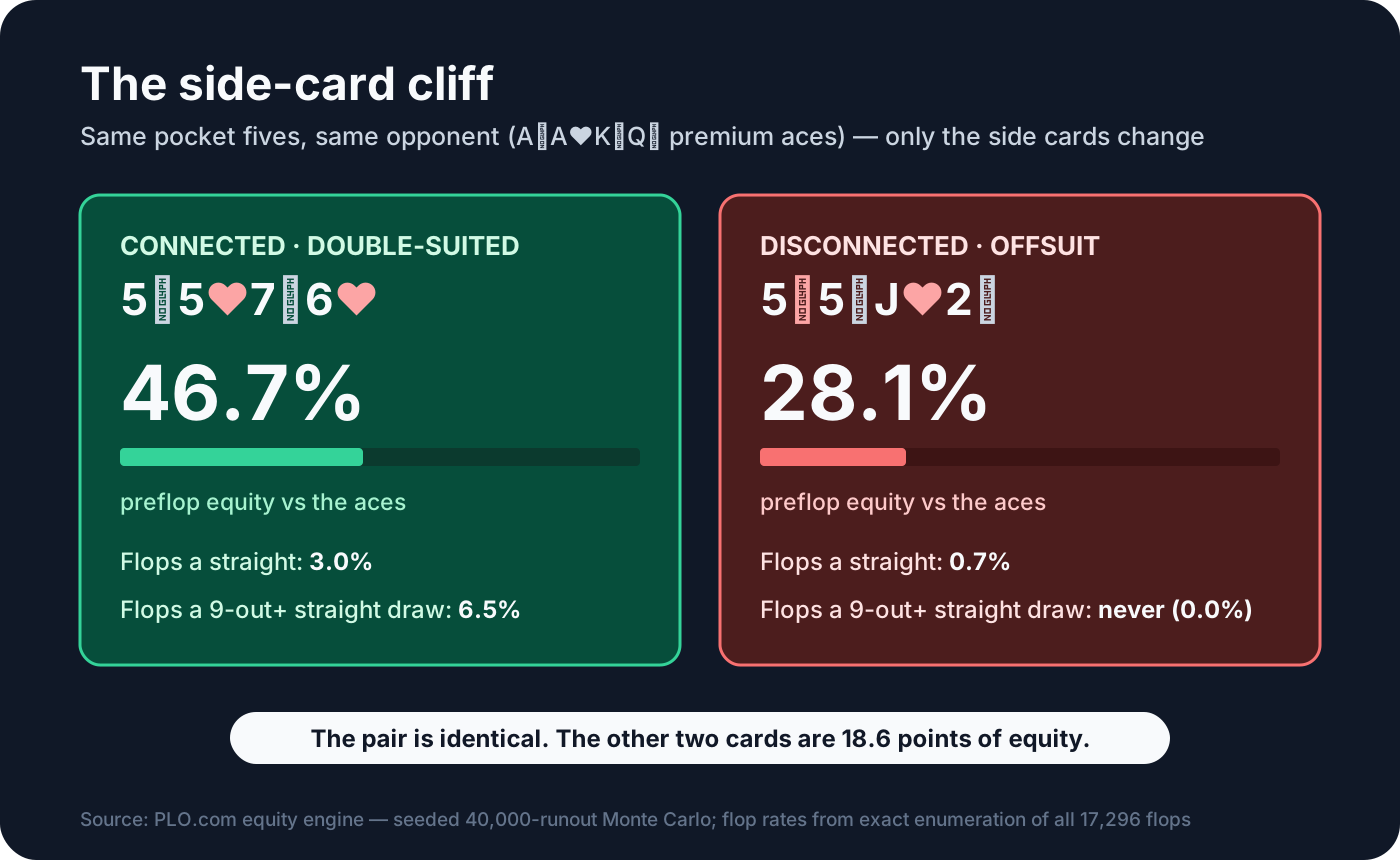
Here are two hands that both contain pocket fives. Against the same premium aces, one of them holds 46.7% equity -- close to a coin flip. The other holds 28.1%. The pair contributed exactly the same thing to both hands. Everything else came from the other two cards.
That single comparison is the entire subject of small pairs in PLO. The pair is never the hand. The question is what it is attached to.
The Set-Mining Math Works. The Sets Don't.
Players arriving from No-Limit Hold'em see pocket fives and think "set mine." The frequency math actually cooperates: holding one pocket pair in a four-card hand, you flop at least a set of your pair 12.2% of the time -- about one flop in eight, and a touch more often than the same pair manages in Hold'em (11.8%), because your four known cards leave fewer unknowns in the deck.
Set frequency was never the problem. The problem is what a small set is worth when it arrives. In Hold'em, bottom set on K-8-5 is usually the best hand and usually gets paid. In PLO -- a game of four-card hands and nut-driven showdowns -- bottom set is the hand that pays someone else. The numbers below make that concrete.
The Side Cards Are the Hand
What separates a playable small pair from a fold is not the pair -- it is whether the other two cards give the hand a life when the set never comes, which is seven flops out of eight.
The flop-texture numbers explain the gap. Enumerating all 17,296 possible flops with the site's engine: 5♠5♥7♠6♥ flops a straight on 3.0% of them and a nine-out-or-bigger straight draw on another 6.5%. 5♦5♣J♥2♠ flops a straight on 0.7% -- and a nine-out draw on exactly none. There is no board in the deck that gives the disconnected version a big straight draw. Its entire future is the set.
Bottom Set Is a Bet-Fold Hand
Even when the one-in-eight flop arrives, small pairs make the worst version of a strong hand. Two verified spots show how narrow the win condition is.
The multiway games where small pairs look most tempting make both problems worse: more players means more combinations of higher sets and monster draws among the hands that continue. The sets guide covers the postflop play in detail, and multiway pot dynamics explain why heavy action into several ranges narrows what bottom set can beat.
What the Solver Actually Does With Small Pairs
The decoded 6-max 100bb solve buckets every pocket pair of nines or lower with two unpaired side cards into one class -- 18.7% of all starting hands. Here is how often that class open-raises first-in, by seat:
| Seat | Open-raise |
|---|---|
| UTG | 9.1% |
| HJ | 12.1% |
| CO | 18.4% |
| BTN | 38.0% |
| SB | 23.3% |
Two things stand out. First, position multiplies playability by four: the same bucket opens 9.1% under the gun and 38.0% on the button -- the strongest positional swing of any major hand class in the solve, which is exactly the pattern the position guide predicts for marginal structure. Second, even the button folds most of them. The minority that opens is the connected, suited minority -- the class average is dragged down by all the 5♦5♣J♥2♠-shaped hands in the bucket, and the solver treats those as junk from every seat. Browse the full class-by-class data on the 6-max opening ranges page or drill it in the preflop charts.
When a Small Pair Is Worth Playing
Reading the conditions off the numbers above:
1. The side cards must work with the pair. Connected and suited around it (5♠5♥7♠6♥, 6♠6♥8♠7♥), not floating free of it (4♠4♥K♦9♣). The side cards are what you actually flop with, seven times in eight.
2. Position. A 9.1% UTG open rate versus 38.0% on the button is the solver telling you these hands need to act last. Out of position, missed flops bleed and flopped bottom sets guess.
3. Multiway prices help the draws, not the set-mining. Extra callers improve the odds on the straight and flush equity your side cards bring. Just remember the same crowd devalues bottom set when it hits -- you are playing for the whole structure, not the pair alone.
4. Depth for implied odds, with a fold button attached. Deeper stacks improve what a flopped set can win -- and what a second-best set can lose. Depth is only an argument for entering if you are genuinely willing to fold bottom set under heavy action.
Stress Test: Five Small-Pair Hands vs Premium Aces
The same benchmark for all five -- premium aces A♦A♣K♥Q♥, seeded 40,000-runout Monte Carlo on the site's engine:
| Hand | Equity vs A♦A♣K♥Q♥ |
|---|---|
| 5♠5♥6♠4♥ | 42.1% |
| 6♠6♥8♠7♥ | 40.7% |
| 2♦2♣9♥7♣ | 34.0% |
| 3♦3♣A♠K♠ | 27.8% |
| 4♠4♥Q♦2♣ | 24.3% |
Where Small Pairs Rank
Honest assessment: small pairs are the weakest major starting-hand category in the game. Rundowns beat them on most textures, broadway hands outrank them on high boards, and double-suited structures bring more average equity. A small pair is a supplement that upgrades an already-coherent hand -- never the foundation you build a preflop decision on.
FAQ
Should I ever 3-bet with a small pair in PLO?
Rarely, and never because of the pair. A hand like 6♠6♥7♠5♥ can 3-bet in position against a wide opener on the strength of its connected, double-suited structure -- the pair is a bonus. A hand like 4♦4♣Q♥8♠ has no business bloating a pot from any seat.
What if I flop middle set instead of bottom set?
Much better. Hold 5♠5♥ on K♦5♣3♠ and only kings make a higher set, instead of two ranks beating you. Middle set still is not top set, but the risk drops enough to play it aggressively in most single-raised pots.
At what stack depth do small pairs become unplayable?
Short stacks hurt them twice: there is less behind to win when a set hits, and the side-card draws that justify the hand cannot realize across streets. As depth shrinks, keep only the small pairs with genuinely premium structure around them -- and below roughly 40 big blinds, prefer folding the rest preflop rather than paying to flop one-in-eight.