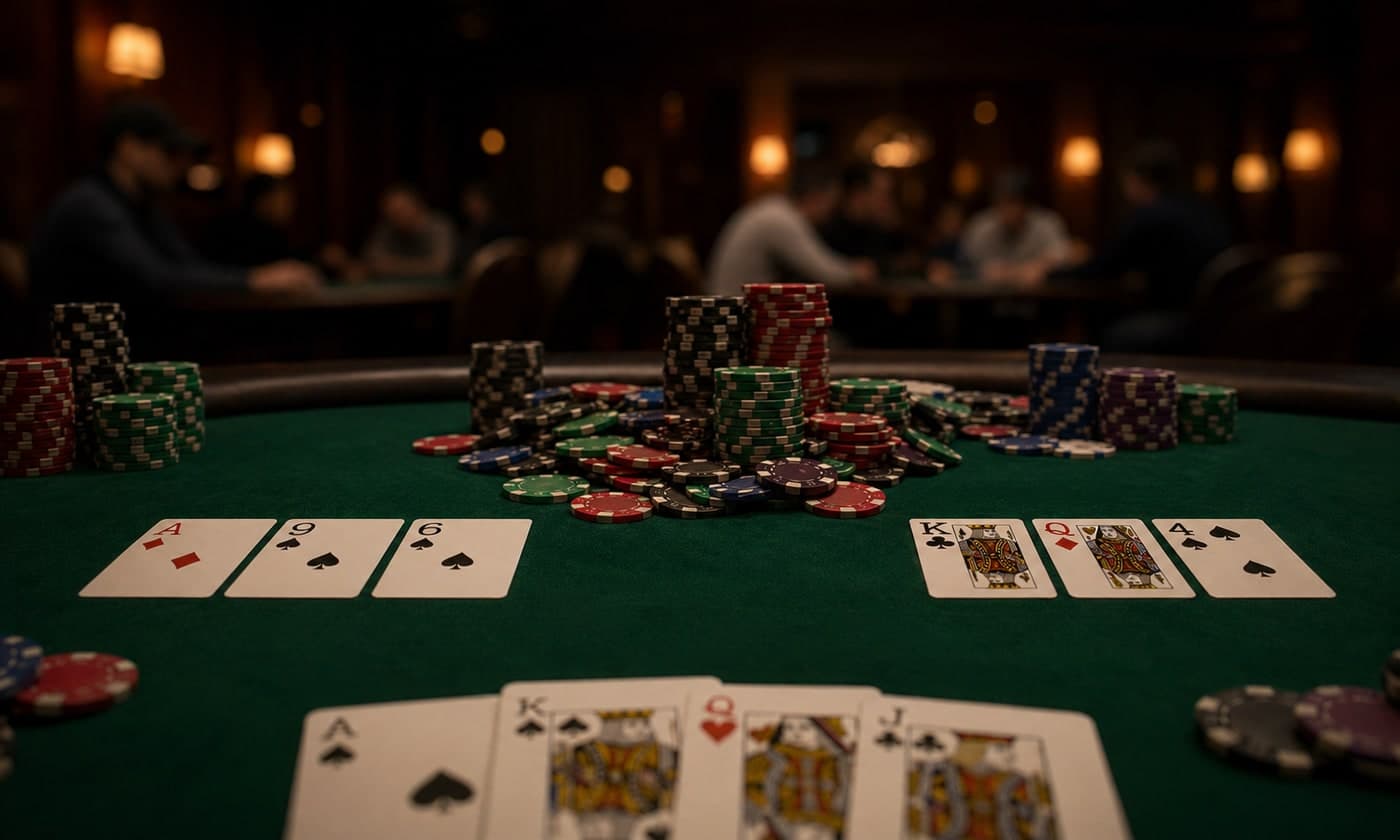
Double-board bomb pots punish one mistake more than any other: paying full price for hands that usually win half. A strong double board PLO bomb pots strategy starts before sizing. Ask which board you actually control, whether the other board gives real scoop equity, and whether the runout you are reviewing is repeatable or just memorable chaos. Rules vary by room, so verify the local format before applying any default.
For a table-ready version of these ideas in live games, pair this study process with the live PLO bomb-pot strategy guide.
Start With A Board-Ownership Tag
Do not begin review by asking, "Did I have a lot of outs?" Begin with a tag.
| Tag | Meaning | Default study question |
|---|---|---|
| Scoop pressure | You are strong on one board and have nut or near-nut routes on the other | Can I bet big and make one-board hands pay? |
| Freeroll | You are close to securing half while drawing live for the other half | Can I keep worse half-protection hands in? |
| Split protection | You likely win half but have thin scoop equity | Can I avoid reopening against stronger ranges? |
| Dirty equity | Your visible draws are dominated, low, or mostly half-only | Am I paying for outs that do not realize? |
Use tighter definitions than "good" and "bad." Moderate SPR means one or two large bets can commit stacks. Deep SPR means there is room for bet, call, turn pressure, and river decisions. Locked ownership means nut made hand plus redraws on one board. Fragile ownership means a set, straight, or flush can be overtaken by many turns. Real backup equity is nut or near-nut improvement on the second board. Cosmetic equity is visible movement that still makes second-best flushes, low straights, or half-only hands.
That framework keeps you from overfitting. A freak river where both boards pair is less useful than the flop question: were you pressing a locked side with live scoop routes, protecting half, or paying for dirty equity?
Turn The Tag Into An Action
Bet large when four things are true: you have locked or near-locked ownership on one board, your second-board equity is real, the pot is multiway, and opponents continue too wide with one-board hands. This is where near-pot pressure earns money. You are charging pair-plus-draws, dominated flush draws, wraps that fight for half, and players who hate folding anything that touched either board.
Use a medium bet when your best board is strong but fragile, or when deeper stacks let strong opponents raise turns against a capped range. Medium sizing still gets value and denial, but it avoids building a pot where your split-protection hand becomes face-up.
Check when you have likely half plus thin scoop routes, especially out of position. This is not passive. It protects realization and keeps aggressive players from attacking your capped half-protection line.
Call more than raise when you can protect half at a good price but a raise isolates you against freerolls. Fold when your equity is concentrated in non-nut draws on one board, especially after a bet and a call. If you need a reality check on whether a draw is clean, run the hand through the equity calculator, but log the board-ownership tag beside the result. Equity without realization context will mislead you.
Adjust by opponent. Sticky one-board callers make value bets larger. Nitty half-protectors let you steal more when both boards are scary. Aggressive players who attack capped ranges force more checks with medium-strength half equity and more bet-calls with real freerolls.
Example 1: Bet Large With A♠A♥J♠T♦
Assumptions: five-way bomb pot, moderate SPR, flop checks to Hero in position, and the table overcontinues with one-board hands.
Board 1: A♦9♠6♠. Hero has top set plus the nut spade redraw with A♠A♥J♠T♦. This is locked ownership unless the turn radically changes the texture.
Board 2: K♣Q♦4♠. Hero is not made, but J-T creates Broadway runouts and spade turns can add pressure across both boards. That is real backup equity.
Villain buckets: lower sets, two pair, weaker spade draws, pair-plus-wraps, one-board wraps peeling for half, and K-Q-x-x hands that dislike folding Board 2.
Flop default: bet large or near pot. The hand does not need both boards made. It needs one board secure enough to punish loose half-chasers while the second board keeps scoop routes alive.
Turn follow-through: keep betting turns that preserve Board 1 ownership or add real Board 2 pressure, such as Broadway cards or spades that improve your scoop routes. Slow down when Board 1 becomes coordinated against continuing ranges and Board 2 bricks in a way that leaves you mostly playing for half.
Example 2: Fold J♥T♥9♣8♣ Against Heat
Assumptions: four-way bomb pot, deeper SPR, one player pots, one player calls, and Hero is not closing the action with J♥T♥9♣8♣.
Board 1: Q♠7♦2♣. Hero has some straight movement, but many improving cards create non-nut or vulnerable straights.
Board 2: A♣K♥5♥. Hero has a king-high heart draw. In a single-board pot that can already be dangerous. Across two boards, it is often a dominated half-only draw.
Villain buckets: sets on Board 1, top two plus redraws, nut-heart draws, pair-plus-nut-draw hands, and holdings that already own one side while staying live on the other.
Flop default: fold under these assumptions. Calling because the hand "touches both boards" is the leak. Your straight cards are dirty on Board 1, your flush draw is dominated on Board 2, and the bet-call sequence says at least one opponent often has a cleaner path to half or scoop.
Turn follow-through: if a specific read ever justifies a peel, continue only on turns that clean up Board 1 or move you toward the nut side on Board 2. Do not continue just because you added more visible outs.
Example 3: Check Back K♠Q♠J♦9♦ In A Marginal Half Spot
Assumptions: three-way bomb pot, deep SPR, Hero is last to act, both opponents check, and Hero holds K♠Q♠J♦9♦.
Board 1: K♦8♣3♥. Hero has top pair with a queen kicker, but this is fragile ownership. Sets, two pair, and strong K-x-x-x continues can pressure later streets.
Board 2: T♠7♠2♦. Hero has a king-high spade draw and straight interaction with Q-J-9, but not the nut flush draw and not a made hand.
Villain buckets: K-8 or set-heavy Board 1 checks, A♠-x♠ draws on Board 2, pair-plus-wraps, and cautious half-protection hands that may check-call once.
Flop default: check back often. This is the kind of medium-EV node that creates bad study conclusions if you only remember the runout. Betting can be fine against players who overfold weak halves, but against sticky callers the hand has too much fragile ownership and too little nut backup to build a big pot.
Turn follow-through: bet turns that improve the spade side with credible pressure or strengthen Board 1 without exposing you to raises. Call selectively when one opponent bets small and your price to protect half is good. Fold more when a pot-sized turn bet comes from a player whose range now contains nut spades, sets, or freerolls.
Study Nodes, Not Weird Rivers
The best double-board review is boring on purpose. Bucket flop families first:
- top-set board plus live second board
- fragile one-board made hand plus non-nut draw
- likely half with nut redraw
- dominated flush draw plus dirty straight draw
- paired board on one side and dynamic board on the other
Review five to ten hands per bucket before making a rule. For each hand, log player count, position, SPR, Board 1 texture, Board 2 texture, ownership security, backup-equity quality, action taken, villain type, and result. Then write one testable sentence: "Against sticky one-board callers, near-pot performs better when my owned side is locked and my second board has nut routes." That is a hypothesis you can test. "I got scooped once when the river paired twice" is just noise.
Common study leaks are predictable. Players review rivers instead of flop and turn nodes. They count dominated draws as real equity. They confuse visible activity with realizable equity. They forget that raising a likely-half hand can reopen against a freeroll. Tie this work into your broader session review process: tag the node, compare similar spots, and only then decide whether the line needs changing.
The goal is not to memorize every strange double-board runout. It is to build repeatable rules for board ownership, scoop routes, and realization so the weird runouts stop making the decisions for you.