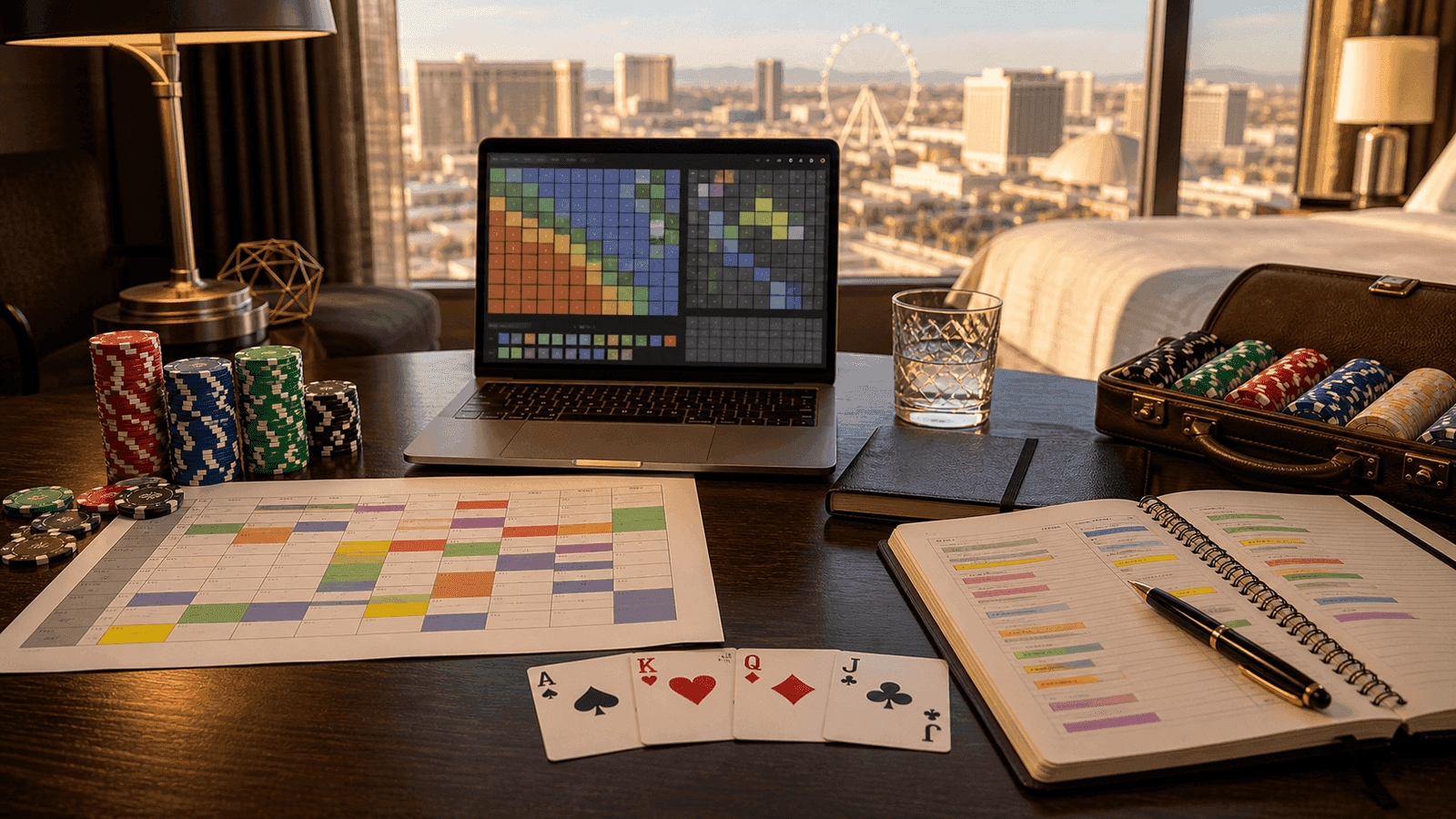
The mistake is trying to "get ready for the WSOP" as if the summer is one tournament. It is not. For PLO players, the 2026 schedule is a sequence of different games, stack depths, formats, and emotional pressure points.
The official 2026 WSOP schedule gives you the raw calendar. Your job is to turn that calendar into a prep plan that fits your bankroll, your best variants, and the number of high-stress decisions you can make well in a week.
That matters because the PLO lane is not just one $1,500 four-card event. The summer includes early Pot-Limit Omaha, Omaha Hi-Lo, Big O, mixed NLH/PLO, high-roller PLO, five-card PLO, double-board bomb pot PLO, and a late "Pick Your PLO" event. A player who studies all of that vaguely is less prepared than a player who chooses three targets and trains the exact spots those events will create.
Start With The Events, Not The Dream
Build the plan around actual tournament dates. The 2026 WSOP runs May 26 through July 15 at Horseshoe and Paris Las Vegas, and the PLO-adjacent schedule starts almost immediately:
| Date | Event | Prep implication |
|---|---|---|
| May 28 | Event #5: $5,000 Pot-Limit Omaha | Strong players, deeper decisions, fewer cheap mistakes. |
| June 1 | Event #14: $1,500 Mixed PLO Hi-Lo / Omaha Hi-Lo / Big O | Split-pot discipline matters more than pure high-only aggression. |
| June 2 | Event #15: $600 Pot-Limit Omaha Deepstack | Lower buy-in, wider fields, more multiway patience. |
| June 8 | Event #28: $600 NLH/PLO Mixed Deepstack | Switching games cleanly is the edge. |
| June 10 | Event #35: $1,500 Pot-Limit Omaha | The most natural target for many PLO-first players. |
| June 15 | Event #47: $25,000 High Roller Pot-Limit Omaha | Relevant mostly as a study benchmark unless it is in your bankroll. |
| June 18 | Event #53: $1,500 Five Card Pot-Limit Omaha | More equity, more domination, more non-nut traps. |
| July 2 | Event #83: $1,500 Double Board Bomb Pot PLO | Board-first decision making replaces preflop comfort. |
| July 9 | Event #91: $1,500 Pick Your PLO | Variant flexibility becomes the skill. |
Do not treat every row as a goal. Pick a primary lane:
- Four-card PLO lane: Event #15, Event #35, and any side events with similar structure.
- Variant lane: Event #14, Event #53, Event #83, and Event #91.
- Shot-take lane: one bigger buy-in plus lower-stress events before and after it.
The first practical win is saying no. If five-card PLO and double-board bomb pots are not games you play regularly, they should not both become last-minute bracelet shots unless your bankroll and study time can absorb the learning curve.
Match Study Blocks To Formats
Generic PLO study feels productive because every video and solver sim looks connected. A WSOP prep plan should be less elegant and more useful: each block should map to a tournament you might actually enter.
For four-card PLO, spend most of your technical time on opening ranges by position, blind defense, 3-bet pots, and medium SPR flops. If Event #5 or a similar 8-handed structure is on your schedule, separate those defaults with an 8-handed PLO preflop strategy pass before you sit down. You need clean defaults for spots like A♠K♠J♦8♦ on the button, K♥Q♥J♣T♣ facing an early-position open, and weak suited aces that look better than they play out of position.
For five-card PLO, train domination. Hands that look connected can still be reverse-implied-odds problems when the extra card gives everyone more coverage. J♠T♠9♥8♥7♦ is active, but against several players it can still make second-best straights and second-best flushes. Your prep should include folding attractive hands that do not make the nuts often enough.
For double-board bomb pots, stop thinking preflop first. Event #83's structure sheet says a double-board bomb pot occurs every hand, with players anteing before the hand and betting beginning after the flop. That means the most important question is not whether your hand was playable preflop. It is whether your hand can scoop, freeroll, or only fight for half.
For split-pot variants, study quartering and nut lows before you study fancy aggression. In Big O and Omaha Hi-Lo, A♣2♣K♦T♠9♠ can be valuable because of its nut-low path and high-card backup, but a naked second-low draw can become a quiet disaster. Your goal is not to "have both ways" in the abstract. It is to avoid paying full price for a quarter of the pot.
Build A Three-Week Prep Calendar
If you have three weeks before traveling, do not cram every format evenly. Use a 60/30/10 split.
60%: your primary events.
If Event #35 is your main target, the core block is four-card PLO: preflop, 3-bet pots, c-bet thresholds, SPR, and multiway turn decisions. Review hands from your own database or notes first. Solver drills are useful, but your past mistakes are more likely to repeat under pressure.
30%: likely adjacent events.
If you might play Event #53 or Event #83, give them enough time to avoid obvious format errors. For five-card PLO, tag non-nut flushes and dominated wraps. For bomb pots, sort double boards into three buckets: scoop pressure, half protection, and dominated chase.
10%: logistics and mental game.
This is not glamorous, but it wins money. Decide registration windows, late-reg rules, meal breaks, and maximum re-entry exposure before you are tired. WSOP days are long, and PLO punishes the player who makes ambitious calls after ten hours because the pot is big and the hand looks close.
A realistic week looks like this:
| Day | Main task | Output |
|---|---|---|
| Monday | Preflop and blind-defense review | One-page range notes for common positions. |
| Tuesday | 3-bet pot flop study | Ten hands tagged as bet, check-call, or check-fold. |
| Wednesday | Multiway single-raised pots | Five turn plans written before seeing results. |
| Thursday | Variant block | Five-card, Big O, or bomb-pot examples depending on target events. |
| Friday | Live-field exploit review | Three opponent tags and your adjustment to each. |
| Saturday | Mock tournament session | Two focused hours with no phone and written breaks. |
| Sunday | Leak audit | Three mistakes to remove next week. |
The output matters more than the hours. "Studied PLO for four hours" is vague. "Fold non-nut wraps facing bet-call-raise on wet boards unless I have nut redraws or closing price" is usable at the table.
Bankroll Pressure Changes The Strategy
Summer series poker tempts players into pretending all bullets are equal. They are not. Your third re-entry in a $1,500 PLO event may change how you play even if you tell yourself it will not.
Before you register, write three numbers:
- Total summer poker budget.
- Maximum loss for PLO events.
- Maximum bullets for each event.
If those numbers make you uncomfortable, lower the schedule before you arrive. The point is not to play scared. The point is to avoid turning every close pot into a referendum on the whole trip.
This is especially important in PLO because variance hides inside reasonable decisions. Getting it in with a strong wrap plus nut flush draw can still lose. Top set can still be fragile on connected boards. A bomb pot can force you into a large decision without any preflop mistake. Good prep accepts that and protects your future decisions.
Pair the schedule with a bankroll management plan and a stop-loss rule. If you are taking one shot, define the shot. If you are grinding multiple events, protect the grind. The same calendar should also decide your late-registration and re-entry rules, and any stream review should follow a structured study routine instead of becoming background entertainment.
Practice The Hands The Schedule Will Actually Create
Here are three training spots that map directly to the 2026 PLO schedule.
Four-card PLO, mid-stakes bracelet field.
You open A♠K♠J♦8♦ from the cutoff and the big blind calls. Flop: K♥9♠4♠. You have top pair, nut spades, and backdoor straight coverage. Your plan should change by stack depth. At shallow SPR, you can pressure many worse kings and draws. At deep SPR, you need to decide which turns continue for value and which turns become pot control. A blank 2♦ is not the same as T♣, and a paired board is not the same as a spade.
Five-card PLO, loose table.
You hold Q♠J♠T♦9♦7♣ on K♠8♠6♥. The hand has movement, but it is not a license to pile money in. Some straight cards make non-nut straights. Spades can run into ace-high spades. Extra cards in opponents' hands increase the chance that your "big draw" is sharing outs or drawing to second best. Train the continue/fold decision after bet and call, not just the equity against one hand.
Double-board bomb pot.
You hold A♥K♥Q♦T♣. Board 1 is K♠9♥4♥; Board 2 is J♦7♦2♣. On Board 1 you have top pair and the nut heart draw. On Board 2 you mostly have overcards and backdoor shape. This is a classic half-protection hand. It can call small and bet for value in some checked-through spots, but it should not behave like a scoop monster. Change the hand to A♥K♥Q♦T♦ and Board 2 to J♦8♣2♦, and now the plan changes because you have real equity on both boards.
Run these spots through the equity calculator, but do not stop at the first number. Write the turn plan. Which turns let you continue against pressure? Which turns improve you but still leave you dominated? Which turns turn a value hand into a bluff-catcher?
Account For Live WSOP Fields
The summer field is not one pool. A $600 deepstack, a $1,500 bracelet event, a $25,000 high roller, and a novelty PLO format do not play the same.
In lower buy-in PLO events, expect more multiway flops and more one-street curiosity. Value bet clearly, bluff less into several players, and avoid fancy blocker lines against opponents who are not folding the hand they came to see.
In $1,500 bracelet events, expect a mixed field. Some players will be very good. Some will be strong NLH players underestimating PLO volatility. Your edge is not assuming everyone is weak. Your edge is identifying who overvalues bare aces, who overcalls non-nut draws, and who only raises multiway with heavy value.
In variant events, expect competence gaps. A player can be strong at four-card high-only PLO and still make serious mistakes in five-card, Big O, or bomb pots. That does not mean you should gamble wider. It means you should know the format-specific traps before the table learns them.
Use simple live tags:
| Opponent tag | What it often means | Adjustment |
|---|---|---|
| One-board caller | Calls because one board or one draw looks alive | Value bet, but do not pay off sudden raises lightly. |
| Bare-aces player | Treats AAxx like a hold'em overpair |
Pressure bad boards; respect improvement on ace-high textures. |
| Nut-peddler | Continues strongly only with nut paths | Steal smaller pots; fold when the line gets loud. |
| Variant tourist | Knows PLO but not the specific format | Make fewer format errors and let them overpay for half. |
The Travel Week Plan
During the final week, reduce volume and increase clarity.
Two days before travel, stop adding new theory. Review your one-page notes: preflop defaults, three-bet pots, multiway caution spots, five-card domination warnings, and bomb-pot scoop rules.
The day before an event, study only that format. If Event #83 is tomorrow, do not watch a standard four-card c-bet video at midnight. Deal double boards, classify them, and rehearse the language you will use in-game: "scoop pressure," "half protection," "dominated chase."
On the morning of the event, keep the warmup short:
- Three preflop reminders.
- Three postflop reminders.
- One bankroll rule.
- One emotional rule for re-entry decisions.
That is enough. The goal is not to feel like you solved PLO. The goal is to prevent predictable mistakes when the summer schedule puts you in unfamiliar, expensive spots.
A 9/10 Plan Is Selective
A strong WSOP PLO prep plan does not ask, "How do I study everything before Las Vegas?" It asks, "Which events am I actually playing, which formats can punish me fastest, and what decisions will repeat?"
Use the schedule as a filter. Choose your lane. Build study blocks around those events. Protect your bankroll before the first card is dealt. Then walk into each tournament with specific rules for the hands that look close but cost the most.
That is the difference between showing up inspired by the summer and showing up prepared for it.