
You have been card-dead for forty minutes, then lose a deep pot where nothing felt avoidable. The next playable hand starts to feel like a permission slip. Good deep stack PLO tournament strategy begins right there: before impatience turns a normal stretch of variance into a forced, low-clarity stack-off.
Why Deep Stacks Punish Impatience
At 80-200BB, PLO stops being only a hand-strength contest. Stack depth adds turn and river branches, increases the penalty for dominated draws, and makes weak nut coverage more expensive. A hand that can call once at 45BB may become a leak when it has to survive three streets against a range with better suits, higher wraps, and stronger redraws.
Patience does not mean passing on every aggressive line. It means preserving maneuverability until the pot, position, and range shape justify pressure. When your hand has nut-heavy equity and future-card coverage, build. When it has a pretty but dominated shape, keep the pot smaller and make the next decision with a stack that still has options. This is the same logic behind SPR discipline in PLO and redraw protection: deeper stacks make later mistakes larger.
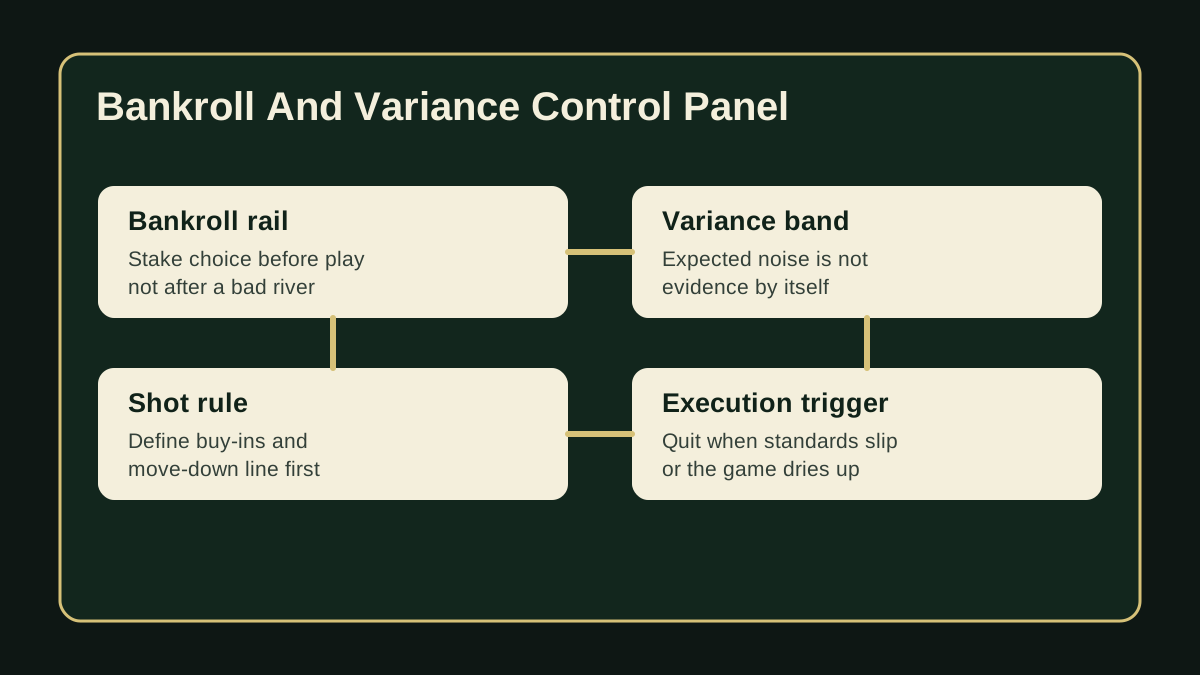 Inline visual: deep-stack patience works best when bankroll limits and execution triggers are defined before the pressure arrives.
Technical Decay
Technical decay is the strategy slipping before the emotions are obvious.
Signs:
- Defending 3-bets out of position too wide at 100BB+ because the hand looks connected.
- Continuing with non-nut suits on wet boards where your clean outs are fewer than they appear.
- Building large pots with pair-plus-draw hands that have weak redraws and poor blockers.
Immediate response: pause one orbit, tighten the bottom of your defend range, and stop inflating pots unless your hand can make the nuts or apply credible range pressure.
Emotional Decay
Emotional decay is the urge to manufacture action after the tournament has made you wait.
Signs:
- Speeding up river calls after a cooler.
- Treating a card-dead orbit as evidence that you are being run over.
- Taking a marginal stack-off because folding feels too passive.
Immediate response: take a reset before the next level. If the need to "win one back" is still present, skip the marginal bullet or leave the lineup before the cost becomes a bankroll decision.
Game-Selection Decay
Game-selection decay is staying in a bad situation because you already paid for it.
Signs:
- The soft seat is gone and the table is now mostly competent deep stacks.
- Re-entry is available, but the price changes how clearly you think.
- You are passing better future events to chase a worse current one.
Immediate response: tighten your edge requirements. Request a seat change if possible, skip late registration if the table is poor, or move down for the next event. That is bankroll discipline, not fear; the broader framework belongs in bankroll management for PLO.
A Fast Decay Example
You lose a standard set-over-set pot, then defend the big blind against a 3-bet with Q♠J♠9♦7♣ at 120BB effective because the hand "cannot be that bad." The flop comes T♠8♥4♠. You have a wrap-looking hand and a queen-high flush draw, but many of your best-looking outs are not clean against A-high spades, higher wraps, sets, and two-pair-plus-redraws. This is exactly where non-nut flush discipline matters.
If you check-jam because you are tired of folding, the leak is direct: forcing dominated equity because of frustration. The better response is to slow the decision down, call only when price and opponent range justify it, and tag the hand for review in the equity calculator instead of calling the result bad luck.
The 130BB Hand Test
Lineup: live high-roller style PLO tournament, one capable middle-position opener, one straightforward blind, and no obvious splashy caller behind.
Positions and stacks: middle position opens, you are on the button with A♠K♠T♥9♥, and stacks are 130BB effective.
Preflop: you 3-bet for value and position. Middle position calls.
Flop: K♦8♠5♠.
This is a strong hand: top pair, nut flush draw, and backdoor straight coverage. It is not an automatic pile-in. At 130BB, the question is whether your line keeps worse hands in while avoiding a bloated pot against sets, strong king-plus-draws, and combo draws with solid redraws.
Stable-process marker: you bet small to medium, keep dominated equity from realizing cheaply, and preserve room to respond to a large raise. If villain calls, you reassess turn cards by nut improvement, blocker value, and range advantage. Your process stays tied to board texture, not to the emotional comfort of "I had a big draw."
Leak marker: you pot or 3-bet jam because the hand feels too strong to control. That line may be fine against a specific opponent who overplays worse draws, but as a default it turns a deep-stack edge into a high-variance guess. Use calculator output as a range-checking heuristic, not as proof that every stack-off is mandatory.
The Close
Set bullet caps and event limits before play starts. In-session, use the three buckets: technical, emotional, and game-selection decay. If none are present, keep playing your edge. If one is clearly present, patience is not weakness; it is the decision that keeps deep-stack PLO from becoming an expensive mood swing.
FAQ
Does patience mean playing tight in every deep-stack PLO tournament spot?
No. It means refusing low-clarity stack-offs until the range and redraw picture justify pressure. You should still attack when position, nut coverage, and opponent mistakes give you leverage.
When should I leave or skip re-entry in a deep-stack event?
Use the three-bucket diagnostic. If the issue is normal variance, continue. If your technical standards drop, your emotions drive risk, or the lineup gets much worse, quitting or skipping re-entry protects future EV.
What is the easiest deep-stack mistake to miss?
Calling or raising with dominated equity because the hand looks active. Non-nut wraps, queen-high flush draws, and pair-plus-weak-draw holdings can look playable while making expensive second-best hands at 100BB+.