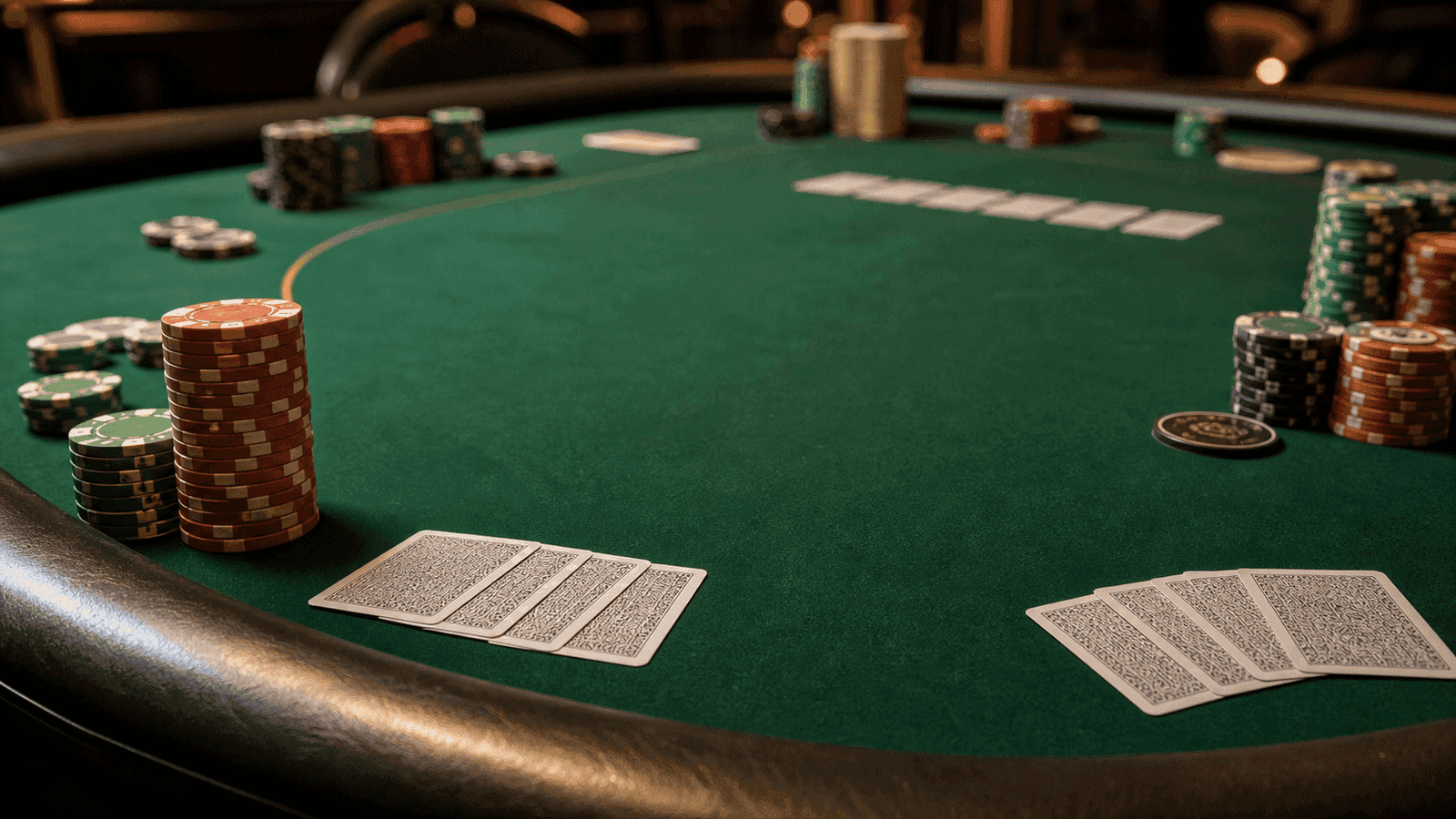
You sit in a $1/$2 PLO game with a $10 UTG straddle. You bought in for $200, so your brain says "100 big blinds." The hand does not care. You are playing 20 straddles, with extra dead money, different reopen risk, and a stack-to-pot ratio that will collapse much faster than normal.
That is the mistake this article fixes. PLO straddle strategy is not just "play tighter" or "gamble more because it is live." A live straddle or single-blind format changes the preflop tree: effective stack depth, position, isolation value, and the hands that can tolerate pressure all move.
Convert the Game Into Real Straddles
Before you decide whether to open, call, limp behind, 3-bet, or fold, convert the stack into the unit that matters.
| Game | Posted straddle | Effective stack | Real depth |
|---|---|---|---|
| $1/$2 PLO, $10 UTG straddle | 5bb | $200 | 20 straddles |
| $2/$5 PLO, $25 UTG straddle | 5bb | $1,000 | 40 straddles |
| $5/$5 PLO, $25 straddle | 5x blind | $1,000 | 40 straddles |
| $2/$5 single-blind PLO, no straddle | none | $500 | 100 big blinds |
A normal 100bb single-raised pot lets more speculative hands realize equity across turns and rivers. A 20-straddle pot punishes hands that need perfect flops, clean turns, and late-street fold equity. If a pot-sized raise or 3-bet can create a low-SPR flop, the hand must be ready for that geometry before you put chips in.
For the postflop side of this idea, pair this with the SPR in PLO guide and the broader stack sizes in preflop PLO framework.
Action Defaults for Straddled and Single-Blind Trees
Use this as a live decision filter, not a fixed chart.
| Formation | Default action | Hands that gain | Hands that lose |
|---|---|---|---|
| UTG straddle, folds to late position | Raise for value and isolation, but keep sizing tied to stack depth | Double-suited broadways, nut-suited aces, high rundowns | Dangling suits, weak kings, medium hands that need position plus depth |
| Facing a straddled open | 3-bet value-heavy or fold more; call fewer dominated hands | A♠K♠Q♥J♥, K♣Q♣J♦T♦, strong suited AAxx | A♦A♣8♠5♥, K♣J♣8♦5♦, weak single-suited rundowns |
| Loose multiway straddled pot | Limp behind or call only with nutty hands that welcome callers | Suited ace structures, high rundowns with redraws | Non-nut flush hands, low wraps, bare overpairs |
| 100bb single-blind button-vs-blind | Open wider on button; defend less trash out of position | Position, blockers, hands that 3-bet well when called | Blind defenses based only on pot odds |
For 3-bets, prefer pot-sized or near-pot-sized raises when the goal is leverage. Tiny live 3-bets often invite the blinds, callers, and straddle to continue. If the raise will not isolate and will not create useful pressure, calling or folding can beat building a bloated five-way pot.
For the non-straddled baseline, start with PLO opening ranges by position. For loose live fields where the open is already likely to go multiway, use the live PLO open-raising filter.
Which Hand Classes Move Up or Down
High-card density and nut suits move up in straddled trees because they keep equity when the pot gets big early.
A♠K♠Q♥J♥ is the clean example. It dominates loose broadway continues, can flop wraps and nut-flush draws, and makes more comfortable low-SPR decisions on boards like K♥T♠4♦ or Q♣J♦T♠.
K♣Q♣J♦T♦ also gains because it connects with high-card boards and keeps real redraws. It is not just "pretty." It has top-end straight coverage and two suits that interact with many live calling ranges.
Disconnected aces move down when the straddle prevents isolation. A♦A♣8♠5♥ still has raw equity, but if a 3-bet gets called by three players, you have created a large pot with one pair and poor backup. That is a very different spot from A♠A♥K♠T♥, which can continue across more boards.
Middling double-suited clutter is the trap. K♣J♣8♦5♦ looks playable because it has two suits, but the suits are not usually nut suits and the ranks do not cooperate enough. In a 20-to-40-straddle game, it often makes just enough equity to get trapped.
If two hand classes look close, test them in the PLO equity calculator. Use the number to understand equity shape, not to excuse a low-clarity live call.
Worked Example 1: UTG Straddle Isolation
Game: $1/$2 PLO with a $10 UTG straddle.
Effective stack: $200, which is 100 posted big blinds but only 20 straddles.
Action: UTG straddles $10, two players call $10, hero is on the button with A♠K♠Q♥J♥. Blinds are still behind.
Pot before hero acts: about $33 before rake, depending on blind structure.
Hero's options: limp behind, make a small raise, pot/near-pot raise, or fold.
Recommended action: pot or near-pot raise for value and isolation.
The raise is not an ego raise. It is a tree-control raise. A♠K♠Q♥J♥ wants heads-up or three-way low-SPR pots against dominated continues. It has nut-suit coverage, broadway blockers, and strong equity on high-card textures. If one loose caller continues and stacks are shallow by straddle count, the hand can make clean flop decisions.
The weak line is limping because "we have position." Position helps, but five-way position at 20 straddles does not rescue every hand. With this exact holding, you would rather charge dominated broadways and weaker suited structures before the flop.
Upgrade: double-suited versions, passive callers, blinds that overfold to pot-sized pressure.
Downgrade: very short stacks behind that can jam over the raise, or a straddler who limp-reraises only premium AAxx.
Worked Example 2: Bad Aces Facing a Straddled Open
Game: $5/$5 PLO with a $25 live straddle.
Effective stack: $1,000, which sounds like 200bb but plays as 40 straddles.
Action: the straddle is on, cutoff opens to $85, hero is on the button with A♦A♣8♠5♥. Both blinds and the straddler are sticky.
Pot before hero acts: roughly $125 before hero calls or raises.
Hero's options: fold, flat in position, or pot-sized 3-bet.
A pot-sized 3-bet can look automatic because the hand says AAxx. But if the blinds, opener, or straddler continue too often, the 3-bet may create a large multiway pot where hero has one pair, poor suits, and no clean rundown backup.
Recommended action: flat against a wide opener when the players behind are not squeeze-happy; fold against a tight opener plus sticky players behind; 3-bet only when the raise is likely to isolate or when stack sizes make the lower SPR favorable.
The key is what happens after the 3-bet gets called. On J♣8♦3♠, hero has an overpair and a weak pair component. On T♠9♠4♥, hero has an overpair with few turns that improve the hand. In both cases, the pot is already large and many live opponents will have wraps, pair-plus-draw hands, or suited rundowns that realize well.
Upgrade: A♠A♥K♠T♥, A♠A♦Q♠J♦, or aces with nut suits and connected side cards.
Downgrade: tight cutoff openers, sticky blinds, and opponents who call 3-bets with every connected double-suited hand.
For the broader AAxx split, review how to play AAxx in PLO.
Single-Blind Contrast: Same Cards, Different Tree
Now remove the straddle.
Game: $2/$5 single-blind PLO, no live straddle.
Effective stack: $500, a real 100bb.
Action: folded to hero on the button with K♣Q♣J♦T♦. Small blind is tight, big blind defends wide but fit-folds flops.
Hero's options: open, limp, or fold.
Recommended action: open. Against many blinds, this is also a hand that can 3-bet in position versus a loose cutoff open.
The same hand class that likes straddled isolation also likes single-blind position, but for a different reason. In the straddled pot, it benefits from fold equity, dead money, and lower SPR. In the single-blind pot, it benefits from position and more postflop maneuverability. You can steal, take flops in position, and keep pressure on boards where your high-card connectivity matters.
Do not transfer the wrong lesson. Single-blind games do not require you to shrink every range just because live players call. They require a normal position-based tree with better discipline in the blinds. The button gets to widen; the big blind still needs hands that realize equity out of position. The big blind defense guide covers that side of the tree.
Final Live Checklist Before You Put Chips In
Before you act in a straddled or single-blind live PLO game, run this checklist:
- Count the real stack in straddles, not just posted blinds.
- Identify who can reopen the betting if you call.
- Decide whether your hand wants heads-up isolation or a cheap multiway pot.
- Know which stack sizes can 4-bet jam before you 3-bet.
- Downgrade non-nut flushes, dominated wraps, and one-pair hands with no backup.
- In single-blind games, let position widen your range, not pot odds alone.
The shortcut is simple: straddles compress the game, and single-blind formats preserve more room. A♠K♠Q♥J♥ gets to build in both trees for different reasons. K♣J♣8♦5♦ usually gets to wait.
FAQ
Does a UTG straddle make a 100bb PLO game short-stacked? Often, yes. If the straddle is 5bb and you have 100 posted big blinds, you are only 20 straddles deep. That changes preflop leverage, flop SPR, and how much speculative hands can realize.
Should I 3-bet more in straddled PLO games? 3-bet more value-heavy, not necessarily more often. Hands with nut suits, high-card connectivity, and strong AAxx structures benefit from isolation. Weak single-suited or disconnected hands become expensive when the 3-bet fails to isolate.
Are single-blind games tighter than straddled games? Not by default. Single-blind games usually preserve more effective depth, so button opens and in-position calls can widen. The tightening happens mostly out of position and against strong ranges, not everywhere.
What is the biggest live straddle leak? The biggest leak is treating "100bb" as real depth after a large straddle. Once the game is 20 to 40 straddles deep, many pretty hands lose the implied odds and postflop room they need.