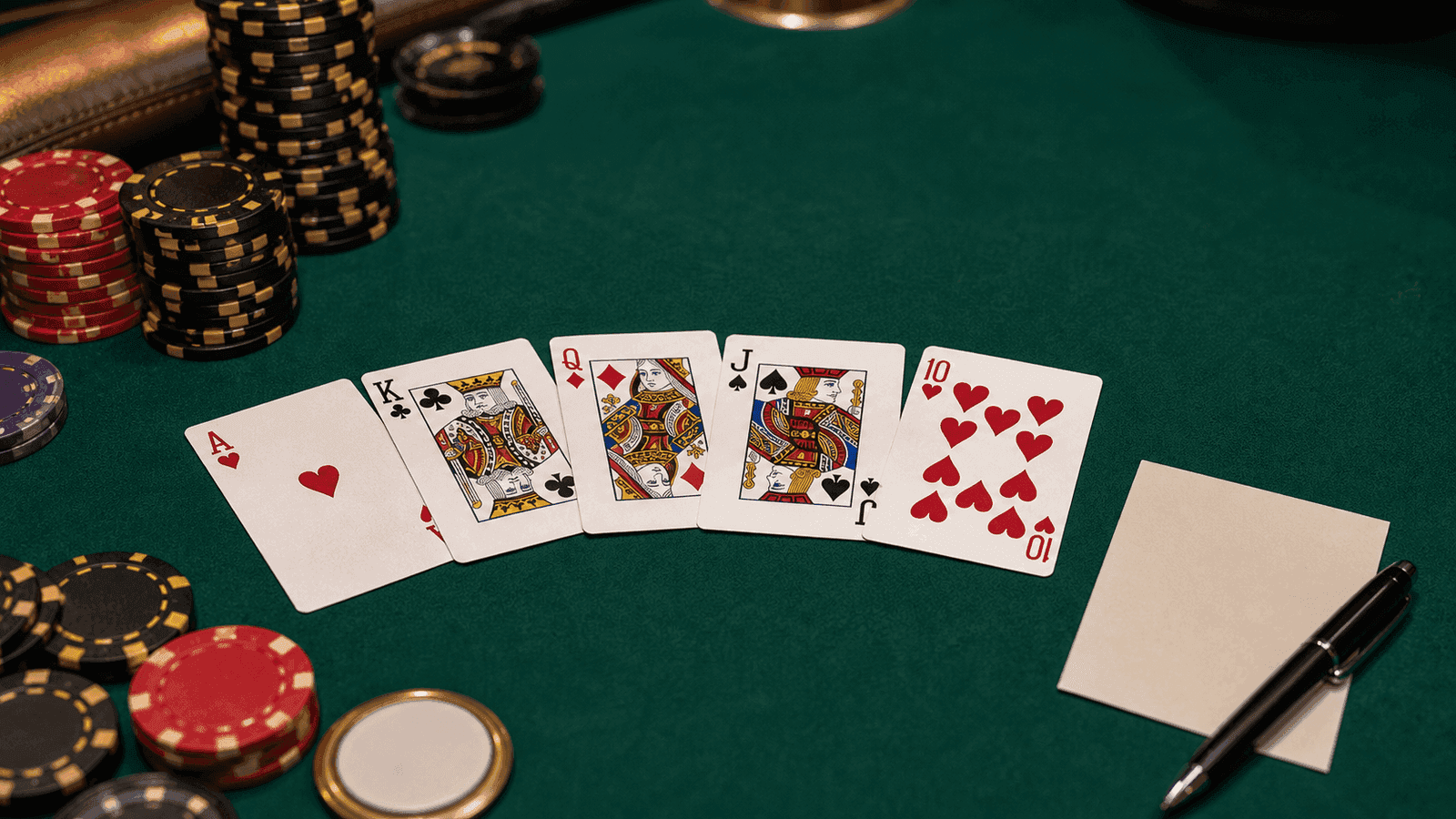
Five-card PLO does not make more hands playable. It makes more bad hands look playable.
That is the first adjustment for players moving from four-card PLO into WSOP-style five-card fields. The fifth card creates more combinations, more blockers, more redraws, and more reasons to talk yourself into entering a pot. It also gives everyone else more ways to make the nuts.
The official 2026 WSOP schedule lists Event #53 as the $1,500 Five Card Pot-Limit Omaha event on June 18 at Horseshoe / Paris Las Vegas. That timing is useful, but the strategy here is not a news recap. The real question is durable: when you look down at five cards, which hands actually earn tournament chips before the flop?
Good five-card PLO starting hands are not just four-card premiums with a bonus card. They are hands where the fifth card improves nut blockers, suit quality, connectedness, or postflop playability. If it does not do one of those jobs, it is not free value. It is decoration.
The Five-Card Filter: Density Beats Decoration
Before you open, call, limp behind, or 3-bet, ask four questions:
- Do I make the nut flush often enough? Ace-high suits matter more because more opponents hold suited cards.
- Do my straight paths point upward? High rundowns and Broadway structures make safer nut straights than low, gapped rundowns.
- Does the fifth card cooperate? A side card should add a suit, a wheel component, a blocker, or a straight connection.
- Will this hand still play at 45bb or 28bb? Tournament stacks reduce the value of hands that need deep implied odds.
A♠K♠Q♥J♥7♦ is not perfect, but it has a premium four-card Broadway core, an ace-high suit, and enough high-card density to open in many early-level formations. K♣J♣T♦9♦4♠ looks busy, but the suits are easier to dominate and the 4♠ does not help the main structure. Those hands are not close just because both contain connected Broadway cards.
Use the normal best PLO starting hands framework as the baseline. Then raise the bar. In five-card PLO, "pretty" is not enough; the hand needs clean nut routes.
Default Actions by Hand Class
This matrix is a live-tournament filter, not a solver chart. It gives default actions for common five-card PLO starting-hand categories before table-specific reads.
| Hand class | Example | 100bb early position | 45bb facing a 3-bet | 28bb after limps |
|---|---|---|---|---|
| Premium connected aces | A♠A♥K♠Q♥J♦ | Open or 3-bet | Continue selectively | Isolate if limpers fold too much |
| Double-suited Broadway density | A♠K♠Q♥J♥7♦ | Open | Call more than 4-bet | Isolate or overlimp by lineup |
| Dominated single-suited Broadway | K♣J♣T♦9♦4♠ | Fold early more often | Fold out of position | Limp behind only in soft spots |
| Non-nut gapped rundown | Q♠J♠T♥8♦6♦ | Late-position open | Fold to pressure | Overlimp selectively |
| Disconnected aces | A♥A♦8♣7♣2♠ | Open tighter | Avoid pile-ins | Limp behind or small isolate |
| Trap-heavy pair | J♠J♦9♣5♣2♥ | Fold | Fold | Fold |
The cleanest upgrade from four-card thinking: stop treating an extra card as automatic permission. The fifth card should make your best outcomes stronger, not just give you more mediocre outcomes.
Worked Example 1: Early Position Premium That Still Opens
Stack: 100bb
Position: UTG
Action faced: Folded to hero
Default action: Open
Reasons:
- The ace-high suit and Broadway density create nut-flush and nut-straight pressure.
- The hand keeps betting authority on boards like K♥T♠4♦, Q♣J♦6♠, and T♥9♣3♠.
- The 7♦ is not a premium side card, but it does not wreck the main structure.
This is a hand you should still enter. The tournament adjustment is not "fold everything because five-card fields are nuttier." The adjustment is to keep the hands that make high-equity, nut-heavy flops and remove the hands that only look similar.
If the table behind you is full of loose 3-bettors, this hand loses some comfort because you will realize less equity out of position. If the table is passive and calls too much, it gains value because worse Broadway structures come along dominated.
Worked Example 2: Pretty Broadway That Folds to Pressure
Stack: 45bb
Position: Middle position, out of position after the 3-bet
Action faced: Hero opens, cutoff 3-bets, button and blinds fold
Default action: Fold
Reasons:
- The hand is connected, but both suits are more vulnerable than ace-high suits.
- The 4♠ adds no blocker value, no strong wheel path, and no meaningful Broadway connection.
- At 45bb, calling out of position creates too many low-SPR flops where you make non-nut draws and face pot-sized pressure.
This is the hand class that punishes four-card autopilot. In four-card PLO, K♣J♣T♦9♦ can be a real structure in the right seat. In five-card PLO, the extra 4♠ does not make it better in a pressured tournament formation. It mostly adds a card that fails to improve your nut profile.
Run a simple preflop comparison in the PLO5 equity calculator. Raw equity will not tell the whole story, but it helps show why similar-looking five-card hands do not realize the same.
Worked Example 3: Weak Aces After Limpers
Stack: 28bb
Position: Cutoff
Action faced: Two players limp, action on hero
Default action: Limp behind
Reasons:
- The aces are real value, but the side cards do not create enough clean nut paths.
- Raising can build a low-SPR multiway pot where the hand flops a bare overpair too often.
- Limping behind keeps dominated hands in while avoiding a tournament-life pot with disconnected aces.
Weak five-card aces are still aces. They are not automatic stack-off hands. The difference matters most around 25-35bb, where one raise and one caller can create an SPR that forces you to commit on flops where your hand has not improved enough.
The upgrade version is A♠A♥K♠Q♥J♦. That hand can raise more confidently because the side cards create nut suits, high straight paths, and more boards where you can continue without guessing.
Worked Example 4: The Rundown That Changes by Seat
Stack: 55bb
Position: Hijack
Action faced: UTG opens, one caller, action on hero
Default action: Fold
Reasons:
- The hand has shape, but the gaps create too many second-best wraps against early-position ranges.
- Cold-calling invites squeezed pots and multiway flops where the queen-high suit is not enough protection.
- The same hand can open from the button in softer lineups, but it is not a profitable cold-call against strength.
This is the tournament version of "playability is conditional." A hand can be playable first in from late position and still be a fold after raise-call action. Five-card PLO magnifies that difference because more players have blockers, suits, and redraws that punish dominated connectivity.
For a practical drill, compare a weak-aces structure against a gapped rundown in the PLO5 calculator. Then change the action in your head: first in from cutoff, facing a 3-bet, or cold-calling after UTG opens. The answer should change even when the raw cards do not.
Postflop Reality Check for Preflop Decisions
The best five-card starting hands are the ones that can keep telling a credible story after the flop.
On K♥T♠4♦, A♠K♠Q♥J♥7♦ has top-pair interaction, straight coverage, blockers, and future barrel cards. It does not need to make the nuts immediately to continue intelligently.
On J♠8♥3♣, K♣J♣T♦9♦4♠ has contact, but much of that contact is fragile. Top pair can be dominated. The straight coverage is not as clean as it looks. The king-high club suit may become expensive if the board turns two clubs.
On Q♦8♠5♥, A♥A♦8♣7♣2♠ is mostly a bluff-catcher with a pair and aces. That does not mean you always fold, but it does mean the preflop raise you wanted to make after limpers may have built the wrong pot.
This is why preflop selection cannot stop at "equity." In five-card PLO, more hands have equity. The edge comes from choosing the hands whose equity remains clean when chips start moving.
The First-Session Checklist
Use this before playing a five-card WSOP event or a live PLO5 side game:
- Tighten early-position opens. Remove hands with weak suits, low gaps, and dangling fifth cards first.
- Keep premium density. Do not overfold double-suited connected aces or high Broadway clusters that make nut pressure.
- Downgrade dominated suits. King-high and queen-high suits get expensive in five-card multiway pots.
- Respect stack depth. At 25-45bb, speculative rundowns and weak pairs lose implied odds quickly.
- Separate open from call. A late-position open can become a fold facing raise-call action.
- Use the tool after the session. Save the exact hand and run it in the PLO5 equity calculator, then write down whether the issue was raw equity or realization.
The short rule: pay for hands that make nut pressure, not hands that merely make contact.
FAQ
Are five-card PLO starting hands looser than four-card PLO starting hands?
Not automatically. Five cards create more playable-looking combinations, but they also create more dominated draws and second-best made hands. You can open some dense high-card structures confidently, but you should fold more decorative hands than your four-card instincts suggest.
Should I always raise aces in five-card PLO tournaments?
No. Premium aces with connected side cards and strong suits can raise or 3-bet. Disconnected aces like A♥A♦8♣7♣2♠ often prefer smaller pots, especially after limpers or at awkward tournament stack depths.
What makes a five-card hand worth 3-betting?
A strong 3-bet candidate has blocker density, nut-suit potential, and postflop playability. A hand that mostly makes non-nut flushes, weak wraps, or bare overpairs should usually call or fold instead of inflating the pot.
How should I study five-card PLO before a WSOP event?
Start with exact hands, not broad categories. Pick five hands from your session or from a structure sheet, run them in the PLO5 calculator, and write one sentence for each: open, call, fold, or 3-bet, plus the reason. Then compare that note with the broader five-card PLO tournament strategy guide.