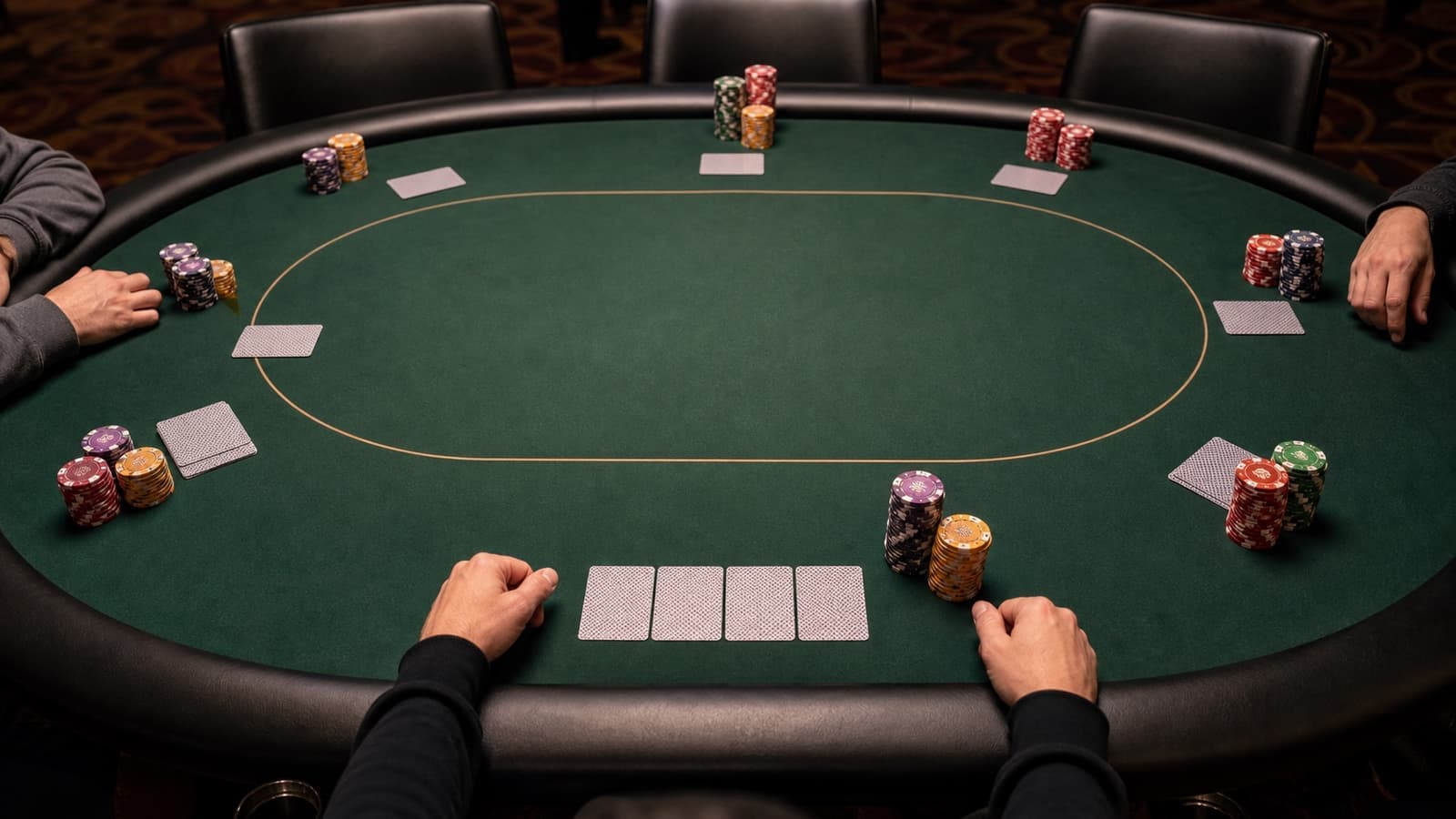
Your 6-max PLO opening range is too loose for the first two seats in an 8-handed WSOP field.
That is the leak. You see four playable cards, remember a 6-max default, and ignore that two extra players behind change domination, position, and how often early opens face premium suits. Strong 8-handed PLO preflop strategy starts by shrinking UTG and UTG+1 before you adjust anything else.
The 2026 WSOP structure sheet lists Event #5 as $5,000 Pot Limit Omaha (8-Handed), with two reentries, a 50,000-chip starting stack, and a 12 p.m. start on May 28. PokerNews coverage framed the same event as a three-day $5,000 Pot-Limit Omaha 8-Handed tournament. That format is exactly why the preflop formation matters: one extra lap of tight early seats changes the hands you should open, flat, and 3-bet.
Why 8-Handed PLO Tightens the First Two Seats
8-handed PLO is not 6-max with two harmless seats added. UTG and UTG+1 must open through more players, face stronger continuing ranges, and create more multiway pots where dominated suits and second-best wraps get punished.
A♠K♠Q♥J♥ can open from any seat because it has high-card density, nut potential, and clean connectivity. K♣J♣8♦5♦ cannot borrow that logic just because it is double-suited. The first hand can make nut straights, dominate top-pair boards, and keep betting equity on many turns. The second hand makes too many second-best flushes and disconnected pair-plus-backdoor holdings when an early-position range continues.
The first adjustment is simple: tighten the earliest formations before touching the rest of your range. CO and BTN still get to attack when folded to. Early position must prioritize nut-suited aces, connected AAxx, premium broadway structures, and rundowns that can survive pressure on textures such as K♥T♠4♦ and J♣8♦3♠.
For a broader baseline before adding this 8-handed layer, start with opening ranges by position in PLO. Then subtract the attractive but dominated hands from the first two seats.
The 8-Handed Formation Map
Think in formations, not just positions. A formation is the opener, the players left to act, stack depth, and whether your hand wants a single-raised pot or a lower-SPR 3-bet pot.
| Formation | Unopened default | Facing early open | Facing late open | Best 3-bet candidates |
|---|---|---|---|---|
| UTG / UTG+1 | Open premium nut quality: A♠K♠Q♥J♥, connected AAxx, nut-suited high cards | Mostly opened or folded already | Rare cold entry | Strong suited AAxx and premium broadway structures |
| LJ / HJ | Add strong rundowns like K♣Q♣J♦T♦ when the table is not punishing opens | Fold or tight-call only with position and passive players behind | Call or attack loose opens | Premium broadways, connected suited aces |
| CO | Open more playable rundowns, suited aces, and high-card gaps | Call more than 3-bet with dry A♦A♣7♠2♥ | Pressure loose late opens | Nut-suited broadways, playable AAxx, double-suited connected hands |
| BTN | Open Q♠T♠9♥8♦ when folded to | Release pretty dominated rundowns versus tight UTG | Call, isolate, or 3-bet wider | Double-suited broadways, connected aces, hands that block strong continues |
| Blinds | SB selective; BB defend by opener and price | Tight versus early opens | Wider versus steals | Hands that retain equity out of position and do not rely on non-nut suits |
The key distinction is nut quality. Dry aces are still aces, but disconnected versions do not automatically want a large pot against an early-position range. K♣J♣8♦5♦ is mostly a fold except in exploitative late, soft, unopened spots.
If you are unsure whether a hand wants pressure or pot control, compare it to the principles in three-betting in PLO and stack sizes in preflop PLO. The same four cards can be an open, a flat, or a fold once the formation changes.
Action Defaults for Opens, Flats, and 3-Bets
Use these as live defaults, not locked charts.
Open tighter from UTG and UTG+1. Remove the king-high double-suited hands, disconnected single-suited aces, and weak rundowns that rely on position to realize equity. You are trying to avoid opening into six or seven players with hands that make expensive second-best holdings.
Flat less versus early opens. When a tight UTG range opens, the caller is not just asking whether the hand is pretty. The caller is asking whether the hand can win a multiway pot without needing dominated flushes or shared straight outs.
3-bet for structure, not ego. Good 3-bets either isolate with a strong equity edge or create a pot where your hand keeps playing well at lower SPR. Disconnected AAxx can still prefer calling in position at 100bb because it avoids turning one pair into a bloated-pot guessing game.
Widen mainly after folds. The button can open hands UTG should never touch because it is attacking two blinds, not opening through the whole table. That is where antes and tournament pressure create profit.
Treat the blinds as formation-dependent. BB defense versus a button steal is a different game from BB defense versus UTG. Do not use the same suited rundown defense just because the pot odds look friendly.
Worked Formation 1: UTG at 100bb With A♠K♠Q♥J♥
Default: open.
This is a premium 8-handed open because it makes nut straights, strong pair-plus-draw holdings, and nut-flush pressure. In a 100bb single-raised pot, K♦T♣4♠ gives you top pair, the nut gutter, backdoor hearts, and enough high-card coverage to continue on many turns.
The important part is not that the hand is double-suited. It is that the suits, ranks, and connectivity all work together. A♠K♠Q♥7♦ is playable in some formations, but it loses the same clean wrap pressure. A♠J♠8♥4♥ looks tempting, but it makes more awkward low-connectivity spots. Open the first hand confidently; become more selective as the side-card structure decays.
Worked Formation 2: HJ at 60bb Facing UTG With K♣J♣T♦9♦
Default: fold; tight call only with passive blinds and a clear postflop edge.
This is the pretty double-suited rundown 6-max players over-defend. Against UTG strength, the king-high suit can be dominated, straight outs can be shared, and made hands often face better redraws. On J♥8♠3♦, top pair plus backdoors is not enough to welcome pressure. On Q♣9♠4♣, you can have a draw-heavy hand that still runs into stronger clubs, higher wraps, or AAxx with redraws.
Upgrade this hand on the button when the blinds are weak and the opener is too wide. Downgrade it immediately versus a tight opener, squeeze-happy players behind, or stacks that push you into awkward 3-bet pots.
Worked Formation 3: CO at 100bb Versus UTG With A♦A♣7♠2♥
Default: call more often than 3-bet.
Dry aces block premiums, but they play poorly when the 3-bet is called. If you 3-bet and get flatted, boards like Q♣J♦T♠ or 9♠8♠5♥ put you into low-flexibility decisions with one pair and limited redraws. Calling keeps the pot more manageable and lets you realize your positional advantage without pretending every AAxx hand is a stack-building hand.
Upgrade when the aces are suited, connected, or paired with side cards that can continue on more turns. Downgrade deep against sticky live fields that will call the 3-bet and force you to play bloated pots without nut backup.
Worked Formation 4: BTN Unopened With Q♠T♠9♥8♦
Default: open.
This is not an early-position standard, but it becomes a clean button open when folded to. You are attacking two blinds instead of opening through seven players, and position lets you pressure more textures. On J♦8♣4♠ you can continue with pair-plus-draw texture. On K♠J♥3♦ you can barrel turns that improve your wrap pressure.
Upgrade if double-suited or if the blinds overfold. Downgrade when short blinds 3-bet aggressively and create awkward 40bb to 50bb low-SPR decisions.
Worked Formation 5: BB Versus Button Steal With A♥T♥8♣6♦
Default: defend selectively; do not auto-continue versus larger opens.
This hand has a nut suit and some connectivity, so it can defend well against a wide button open at friendly prices. The same hand is a fold versus UTG because the opener has more nut-suited aces, better broadway structures, and fewer weak steal hands.
That contrast is the entire point of formation thinking. You are not judging the hand in a vacuum. You are judging whether it realizes equity against the opener's range, from your seat, at your stack depth.
Live Exploit Adjustments
Against tight early openers, fold the handsome dominated hands and keep the session boring. You make money by refusing the cool-looking flat.
Against loose late openers, widen your button and blind defenses, especially with nut suits and connected high cards. Late-position pressure is where 8-handed events still give you room to play poker.
Against passive tables, open a little more from LJ and HJ once the first two seats fold too much. Do not let a generally tight framework stop you from attacking players who are overfolding.
Against aggressive tables, build a clearer 3-bet response before you open marginal hands. If two players behind are capable of potting it, hands like K♠T♠8♦6♦ lose a lot of their appeal from middle position.
For multiway expectations after your open gets called twice, review multiway pots in PLO. Many preflop mistakes only become obvious after the flop goes four ways and your non-nut draw is suddenly expensive.
Short Prep Drill Before a WSOP-Style Level
Before each hand, ask three questions:
- What formation opened?
- Does my hand make nutty equity or just attractive equity?
- Do I want a 50bb low-SPR pot or a 100bb single-raised pot?
If the answer is "pretty hand, poor nut coverage," fold more versus early position. If it is "position, connected high cards, clean suits," attack more often.
Away from the table, test close hand-class comparisons in the PLO.com equity calculator. At the table, keep it simple: tighten UTG and UTG+1 first, defend less versus early opens, and widen mainly from CO and BTN.
FAQ
Is 8-handed PLO much tighter than 6-max PLO?
It is tighter in the first two seats and tighter when defending against those seats. It is not automatically tight everywhere. CO and BTN can still open aggressively when folded to because they are attacking fewer players and realize equity in position.
Should I always 3-bet AAxx in an 8-handed WSOP PLO event?
No. Premium suited and connected AAxx can 3-bet happily, but dry AAxx often performs better as a call in position, especially at 80bb to 150bb. The worse your side cards are, the less you should want a lower-SPR pot against a strong early range.
What is the biggest 8-handed preflop leak?
The biggest leak is cold-calling early opens with hands that look strong in 6-max but make dominated equity in 8-handed formations. King-high double-suited rundowns, weak single-suited aces, and disconnected broadway hands all lose value when the opener is tighter and more players can enter behind.
How should I study before playing an 8-handed PLO tournament?
Build separate notes for UTG/UTG+1 opens, middle-position adds, late-position steals, and BB defenses by opener. Then run close examples through an equity tool and mark which hands want single-raised pots versus 3-bet pots.