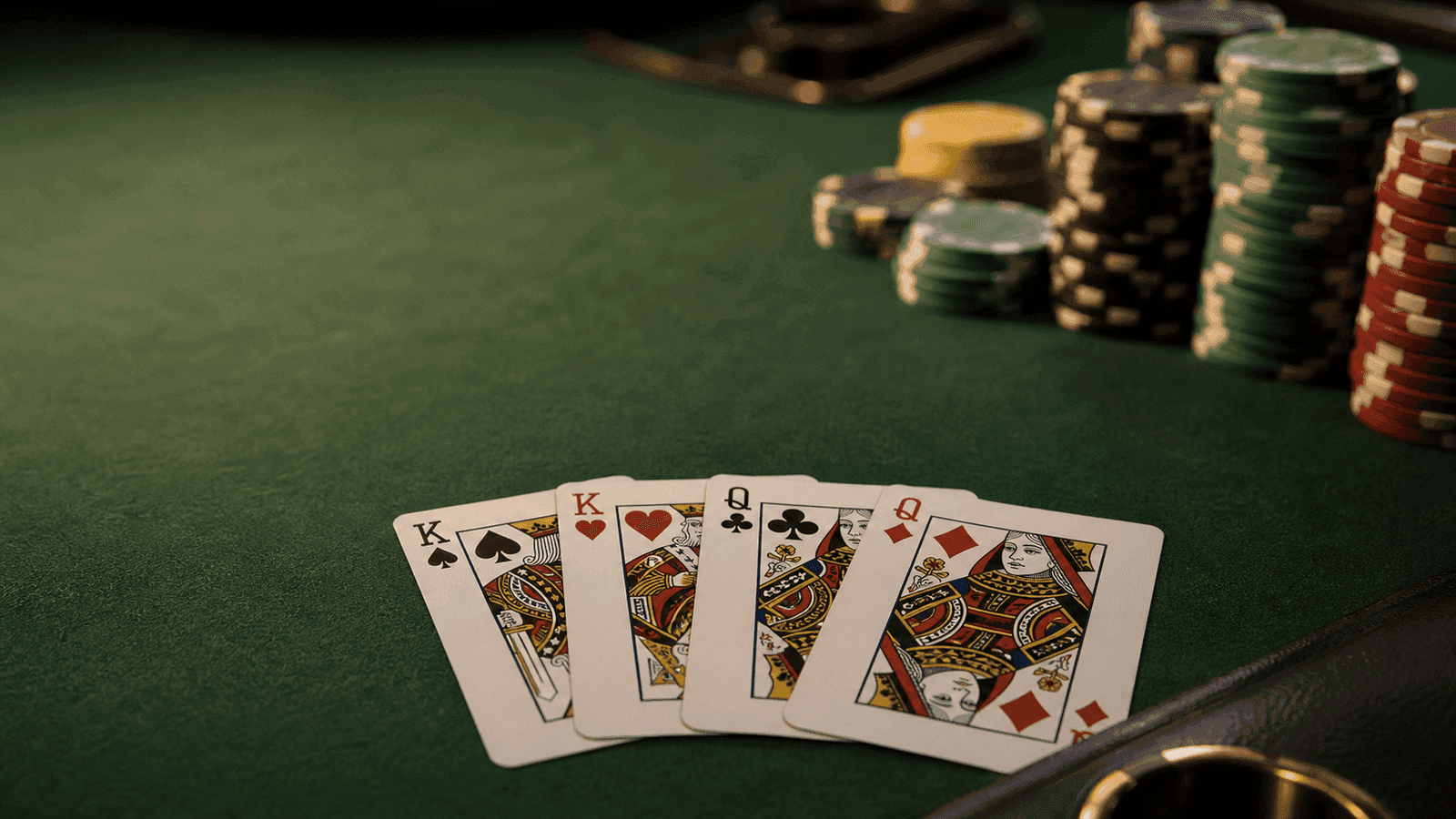
Double pairs look orderly before the flop, which is exactly why they cost PLO players money. K♠K♥Q♠Q♥ is a real hand. 7♣7♦4♣4♦ is usually a reverse-implied-odds receipt waiting to print. This guide uses 6-max, 100bb cash-game defaults: adjust for rake, stack depth, and opponents, but start from the same filter every time.
If you are still building the baseline, start with best PLO starting hands and what makes a good PLO hand. Double-paired hands are a narrower class: they look powerful because they can flop sets, but the lower versions often behave like the small-pairs problem in PLO with extra decoration.
Sort Double-Paired Hands In The Right Order
Evaluate double paired hands PLO players actually profit with in this order:
- Pair height: AA/KK-led hands are true premiums; QQ-led hands can be strong but need suitedness or board coverage; JJ through 88 are medium; 77 and lower start as traps.
- Suitedness: double-suited beats single-suited by a lot because it adds real nut-flush paths. Rainbow versions need much more pair height to compensate.
- Pair-rank structure: adjacent pairs like KKQQ, QQJJ, and JJTT cover high straight boards better than disconnected pairs like 9977 or 7744.
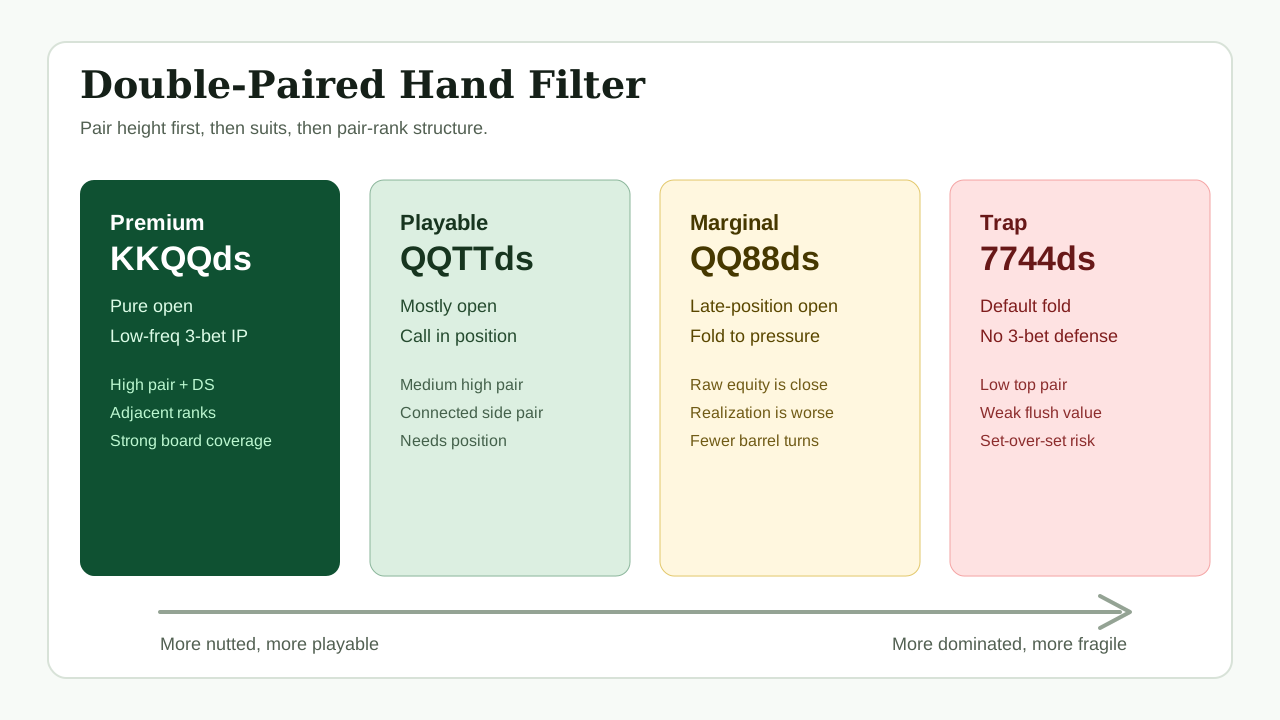
The important point is that raw equity is not the whole decision. In a local Monte Carlo check against a cutoff opening range, Q♠Q♦T♠T♦ showed about 61.5%, while Q♠Q♦8♠8♦ showed about 59.3%. That gap looks small until the flop arrives: QQTT has more high-card straight coverage and better barrel turns, while QQ88 makes more bluff-catchers and dominated set spots. Use the PLO equity calculator to check exact hand-versus-hand spots, then use the preflop charts for the range shape.
The Default Preflop Matrix
These are defaults, not commandments. Low-Freq 3-bet means mostly CO/BTN versus wider opens or against players who overfold. Continue IP Only means fold most out-of-position continues and most non-double-suited versions facing a 3-bet.
| Tier | Unopened EP/MP | Unopened CO/BTN | Facing open | Facing 3-bet |
|---|---|---|---|---|
| AA/KK-led DS adjacent or one-gap | Pure Open | Pure Open | Low-Freq 3-bet | Continue IP Only |
| AA/KK-led SS or rainbow | Mostly Open | Pure Open | Call IP | Fold to 3-bet |
| QQ/JJ/TT/99/88 DS adjacent or one-gap | Mostly Open | Mostly Open | Call IP | Fold to 3-bet |
| Medium weak or disconnected | Fold | Mostly Open | Fold | Fold to 3-bet |
| Low DS borderline | Fold | Continue IP Only | Fold | Fold to 3-bet |
| Low weak | Fold | Fold | Fold | Fold to 3-bet |
At 150bb or deeper, tighten the right side of the table. Double-paired hands make sets, but the weak ones make expensive second-best full houses and non-nut flushes when stacks stay deep enough for three streets.
Three Worked Cutoffs
CO, K♠K♥Q♠Q♥, unopened. Open every time. Versus a loose HJ or CO open, this becomes a credible low-frequency 3-bet because it blocks premium king-heavy continues and keeps high-board coverage. Compare it with K♠K♥9♠9♥: both have similar raw preflop equity against random hands, but KKQQ performs better on Q♣J♠4♠, K♦T♣9♦, and broadway-heavy turns because it can make top set plus stronger straight pressure. Tier: AA/KK-led DS adjacent or one-gap. Default line: Pure Open.
BTN, Q♠Q♦T♠T♦, unopened. Open and usually call in position versus a normal open. The close comparison is Q♠Q♦8♠8♦. The 8s version is not garbage, but it loses barrel quality on J-9-x, K-J-x, and T-9-x boards, where QQTT can pick up wraps, blockers, or pair-plus-draw continues. Out of position, or versus a tight 3-bet, both drop quickly because the made hands are strong but rarely invulnerable. Tier: QQ/JJ/TT/99/88 DS adjacent or one-gap. Default line: Mostly Open.
HJ, 7♣7♦4♣4♦, unopened. Fold. Compare it with 8♠8♥7♠7♥ on the button in a passive game: 8877ds at least has adjacent rank coverage and can steal some late-position pots, while 7744ds makes too many low sets, weak flushes, and disconnected turns. On 7♠6♣2♣, the hand looks alive but is often playing a bloated pot against bigger wraps, higher sets, and nut clubs. Tier: Low weak. Default line: Fold.
How These Hands Realize After The Flop
The hands that "actually play" are the ones that keep options after the first continuation bet.
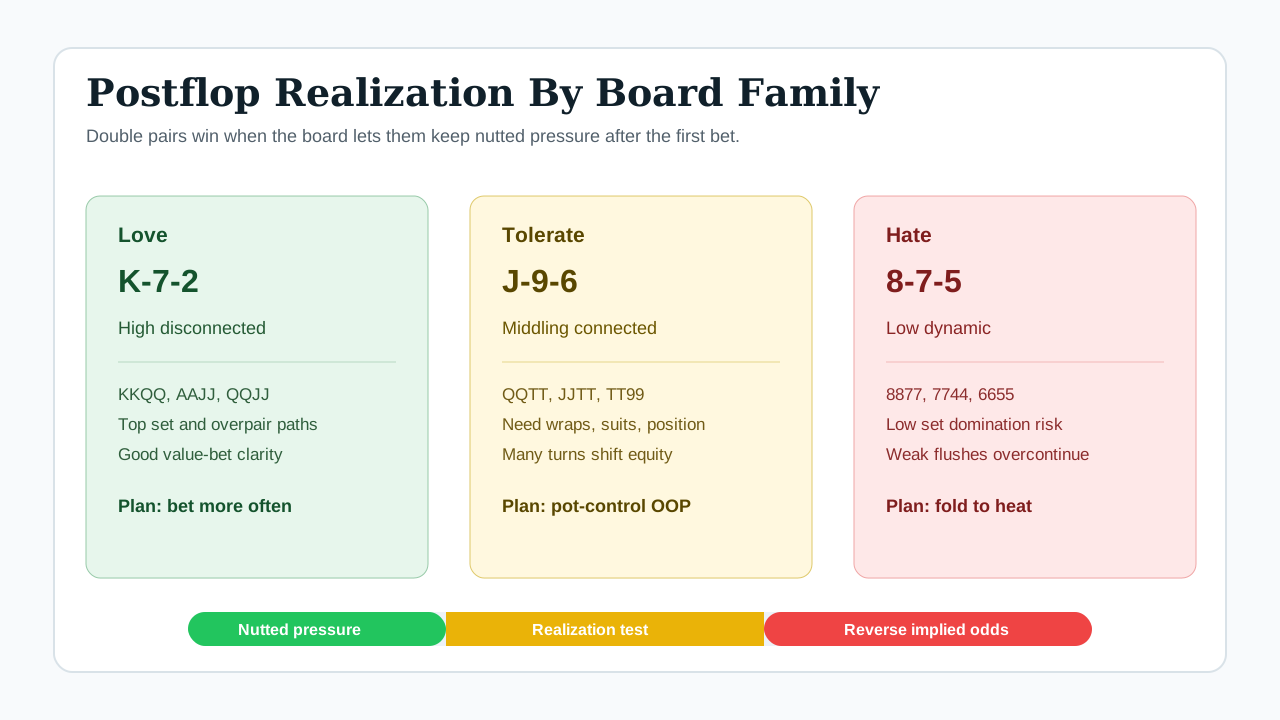
High disconnected boards reward high pairs. On K-7-2 or Q-8-3, KKQQ-style hands make top set, overpair-plus-backdoors, and credible blocker pressure. They can bet more often because worse pair-plus-draw hands continue.
Middling connected boards punish weak structure. On J-9-6 or T-8-5, medium and low doubles need position, clean suits, or extra straight coverage. Without that, they become call-once hands or folds, not pot-building hands.
Monotone and paired boards split the class. A high double-suited hand with the nut suit can pressure. A low double pair with a weak flush draw should not pretend that "I have a flush draw" means "I have a stack-off." For the baseline mistake, review non-nut flushes in PLO.
Low sets need redraw discipline. Bottom set from a low double pair is not the same asset as top set from a high double pair. If the turn pairs the wrong card or completes the front-door suit, the low hand often pays off exactly the range it hoped to stack.
Practical Adjustments
- Move one tier tighter out of position. Button opens are not UTG opens with better scenery.
- Defend less versus 3-bets when not double-suited. High rainbow doubles can open, but they do not earn automatic 3-bet-pot continues.
- Upgrade against wide, folding pools; downgrade against sticky pools. Low-frequency 3-bets need fold equity and postflop clarity.
- Rake matters. In high-rake games, medium disconnected flats lose value because they win too many small pots and lose too many large ones.
- Deep stacks punish domination. The weaker your suit and pair height, the less you should chase thin set or flush value.
The shortcut is simple: high pair first, double-suited second, adjacent structure third. When one of those pillars is missing, the hand needs position and a soft lineup. When two are missing, it usually belongs in the muck before symmetry talks you into a pot.
FAQ
Are double-paired hands good because they can flop sets?
Only the better ones. High connected double pairs can make top set with backup equity. Low disconnected double pairs make too many bottom sets, weak flushes, and expensive second-best full houses.
Is KKQQ always better than KK99?
Usually, yes. KKQQ keeps more high-board coverage and creates stronger barrel turns. KK99 still has pair strength, but the lower pair contributes less to broadway boards and creates more awkward middling textures.
Should I 3-bet double-paired hands?
Only the top tier, mostly in position or versus players who overfold. AA/KK-led double-suited adjacent structures can mix 3-bets; low and medium disconnected versions usually prefer folding or opening only in soft late-position spots.