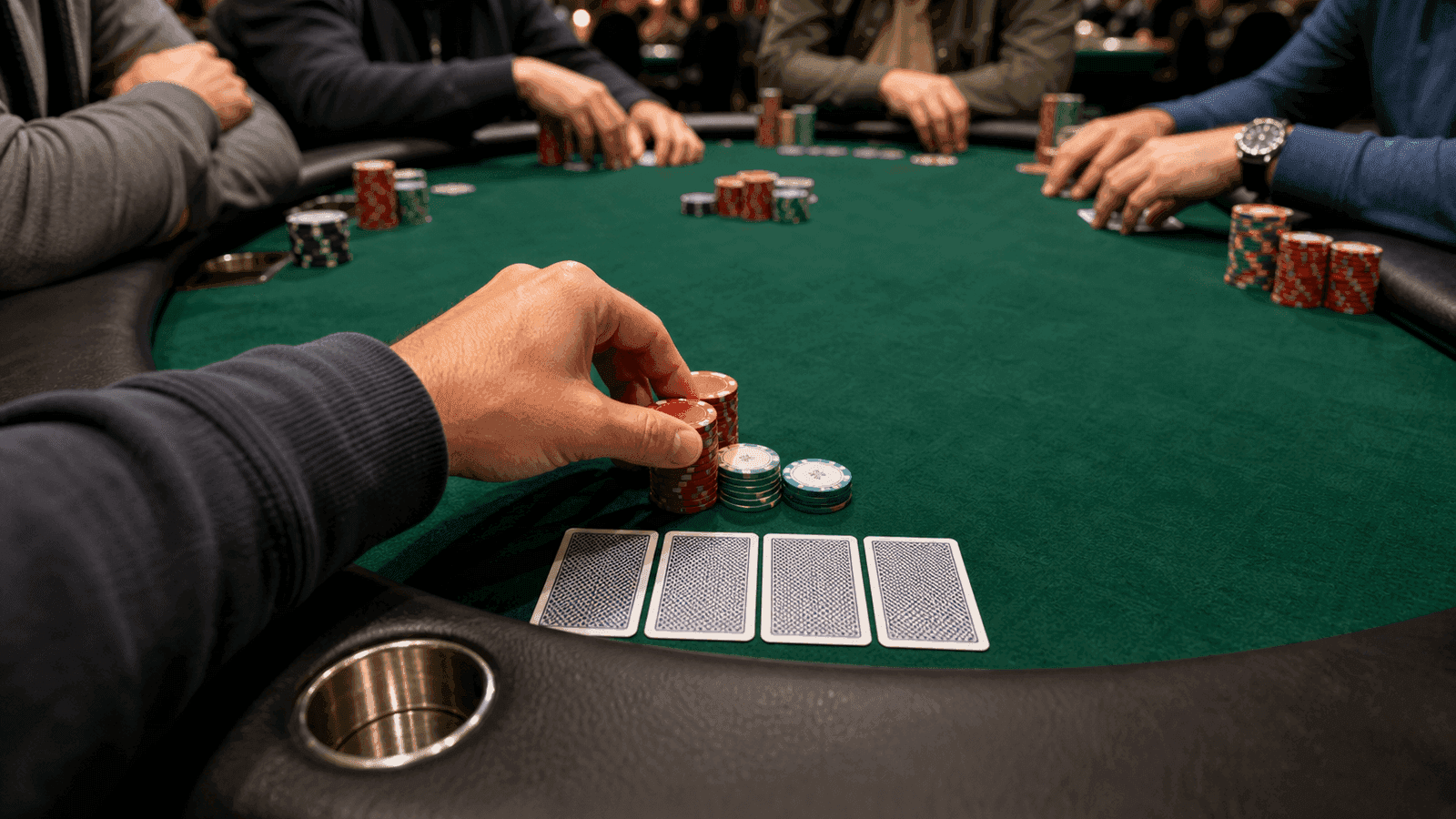
The common live PLO leak is not opening obvious trash. It is opening a hand like K♣J♣8♦5♦, getting three callers, and then pretending the flop will play like a heads-up solver sim. That hand looks pretty in your fingers. In a multiway field, it often makes second-best flushes, dominated straight draws, and two pair that cannot stand heat.
That is the adjustment: judge every open by what happens after two players call. In live PLO open raising, raw connectedness matters less than whether your hand can make the nuts, keep backup equity, and avoid dominated payoffs.
If the room's drop is a major part of the game, layer this article with the live PLO rake strategy guide so you tighten the bottom of your open-raising range before the pot gets taxed.
If the game adds a live straddle, run the same hand through the straddled and single-blind PLO preflop tree before using your normal open-raising defaults. A 100bb stack can become a 20-straddle stack quickly.
The Multiway Filter
Use three checks before opening.
Nut potential: prefer hands that make nut straights and nut flushes. A♠K♠Q♥J♥ and Q♠J♠T♥9♥ welcome callers more than low double-suited danglers.
Backup equity: good live opens keep improving on turns. Overpairs with nut suits, wraps with redraws, and pair-plus-draw hands perform better when stacks create awkward SPR in PLO decisions.
Fragility: tighten when rake is high, stacks are closer to 100bb, or the blinds call anything suited. Marginal speculative hands lose value fastest when the pot is likely to go four ways.
Live Open-Raising Defaults
Use this as a seat-by-seat checklist, not a rigid chart.
| Hand class | UTG/HJ | CO | Button | Live reason |
|---|---|---|---|---|
| Premium AAxx with two suits: A♠A♥K♠Q♥, A♣A♦J♣T♦ | Open | Open | Open | Nut suits, high cards, domination |
| Premium two-suit broadway: A♠K♠Q♥J♥, K♠Q♠J♥T♥ | Open | Open | Open | Nut straights plus strong redraws |
| Strong two-suit rundowns: Q♠J♠T♥9♥, J♠T♠9♥8♥ | Mostly open | Open | Open | Connectivity still realizes multiway |
| One-suit high connectors: A♠K♠Q♦J♣, K♠Q♠J♦9♣ | Open tighter | Open if callers are weak | Open | Nut suit helps; backup is thinner |
| Middling double-suited danglers: K♣J♣8♦5♦, 9♣8♣6♦4♦ | Fold | Mostly fold | Open only in soft, deeper games | Suits hide poor structure |
| Single-suited or disconnected lows: 9♠8♠7♥4♣, T♣8♣6♦3♥ | Fold | Fold | Mix only in tight games | Poor nut coverage |
Sizing In Call-Heavy Games
Keep your baseline live open size when the raise can still thin the field. Size up the hands that actively want bigger pots: premium AAxx, nut-suited broadways, and top rundowns against dominated callers. Do not size up weak structure just to “buy folds”; if the table calls anyway, you have only built a bigger rake-sensitive pot with a worse hand.
For the default seat map, start with opening ranges by position, then adjust for whether the pot begins unopened or after limpers. When limpers are already in, the decision shifts toward iso-raising limpers in live PLO. After callers arrive, the postflop betting plan should still pass the multiway nut-advantage filter.
Four Live Examples
CO, 150bb, Q♠J♠T♥9♥ double-suited.
Action: open.
Why: the hand keeps nut-straight coverage, two playable suits, and strong wrap potential after overcalls.
Flop follow-through: on K♥8♠2♦, you can continue selectively because turns that bring an ace, nine, club-free straight card, or backdoor heart preserve real equity instead of forcing naked bluffs.
Adjust: upgrade versus sticky passive blinds; downgrade if the button squeezes often.
HJ, 120bb, A♠A♥K♠Q♥ double-suited.
Action: open, and use the larger end of your normal size when callers are loose.
Why: this is not “just aces.” The side cards dominate broadway calls, create nut-flush paths, and give you playable turns when one pair is not enough.
Flop follow-through: on Q♣7♠3♥, you have overpair value, top pair, backdoor nut spades, and enough visibility to barrel good turns.
Adjust: downgrade only when stacks are so short that every overcall creates a low-SPR pileup where weak players never fold.
UTG, 100bb, K♣J♣8♦5♦ double-suited.
Action: fold in call-heavy fields.
Why: the suits look attractive, but your flushes are rarely nut flushes and your straight draws often run into higher wraps.
Flop follow-through: on T♣9♦4♠, the hand has action-looking equity, but many clean-looking turns create reverse implied odds against QJ, J8, higher clubs, and better rundowns.
Adjust: upgrade only if the table behind is unusually tight and passive; downgrade further under high rake.
CO, 150bb, 9♠8♠7♥4♣ single-suited.
Action: usually fold; open only in unusually tight games.
Why: the 4♣ drags down the hand, the single suit removes backup, and many good-looking boards produce non-nut straights. If a spot feels close, compare it in the equity calculator against sturdier CO opens.
Adjust: upgrade if button and blinds overfold; downgrade when the game routinely goes four ways.
Fast Live Adjustments
- Tighten the weakest suited-connectivity opens first from UTG and HJ.
- Keep opening hands that still make the nuts with redraws after two callers.
- Size up premiums that welcome calls, not marginal hands that need folds.
- Track who overcalls, then widen only when position and hand quality survive the extra traffic.
When one raise keeps going three to five ways, stop opening hands that need the pot to stay heads-up.
FAQ
Should I open smaller in live PLO if everyone calls anyway?
Not automatically. If the raise does not reduce the field, smaller sizing can keep the pot manageable, but the bigger fix is hand selection. Open hands that still make nutted turns and rivers after multiple callers.
Are double-suited rundowns always good opens in live games?
No. High rundowns with clean suits are strong, but medium or low rundowns can make dominated straights and non-nut flushes. In sticky games, downgrade hands that need fold equity or heads-up realization.
What is the first adjustment when every open goes multiway?
Cut the weakest suited-connectivity hands from early and middle position. Keep hands with nut suits, top straight paths, and redraws; move fragile pretty hands into the overlimp or fold bucket.