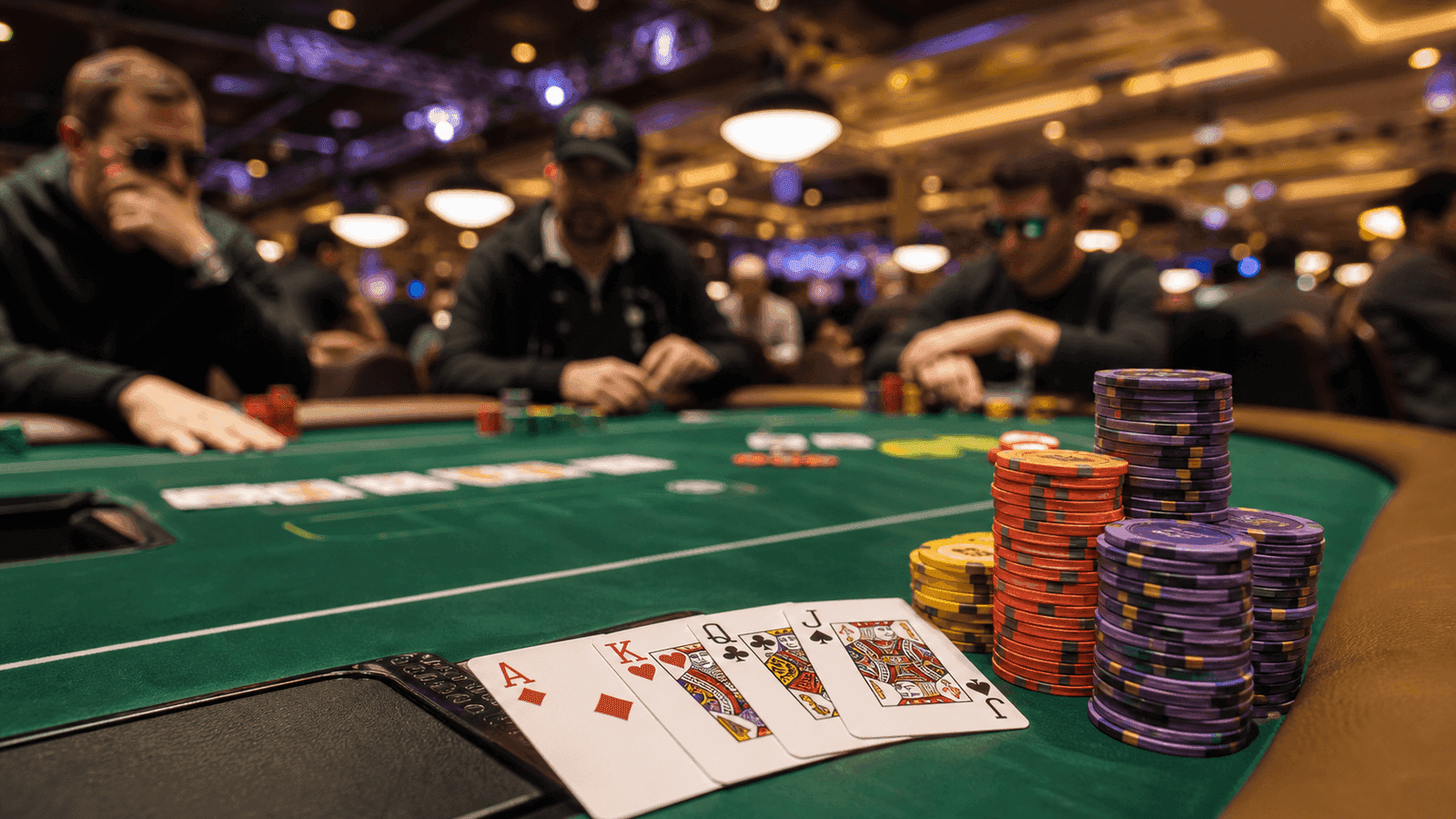
The costly WSOP PLO mistake is not showing up under-studied. It is studying the wrong version of the game.
You spend a week drilling standard four-card spots, late-register a summer bracelet event, and then discover the first real decision is not the one you prepared for: a 6-handed blind battle, a five-card stack-off with a pretty but non-nut made hand, a mixed rotation where Big O just replaced high-only PLO, or a double-board bomb pot where your hand is only fighting for half.
That is why good 2026 WSOP PLO prep starts with the format, not the dream of playing "some Omaha events." The official 2026 WSOP schedule runs May 26 through July 15 and includes multiple PLO-adjacent lanes: $5,000 PLO, $1,500 PLO, five-card PLO, PLO Hi-Lo, Big O, mixed NLH/PLO, PLO double-board bomb pots, Pick Your PLO, and a late $3,000 6-handed PLO event.
Your edge is not trying to become excellent at every branch in a month. Your edge is identifying the two or three format changes that will punish autopilot fastest, then building your prep around those decisions.
If you want the broader calendar workflow before choosing events, use the WSOP summer PLO prep plan. If your main concern is field style once you sit down, add the WSOP bracelet-field adjustment guide.
Verify The Format Before You Study
Do this once before opening a chart, solver sim, or hand history folder. Confirm the event on WSOP.com or WSOP LIVE, then write the answers on one page:
- Card count: four-card, five-card, Big O, or mixed rotation.
- Player count: full-ring, 8-handed, 6-handed, or a special structure.
- Special rules: double-board, bomb-pot cadence, pick-your-variant rules, split-pot rules, re-entry rules.
- Stack pressure: starting stack, level length, expected late-reg depth, and how quickly the event can become 50bb or 30bb poker.
- Your lane: primary event, adjacent event, and one event you are deliberately skipping.
The last line matters. The 2026 schedule has enough Omaha to tempt you into fake completeness. If your main target is four-card PLO, five-card and bomb-pot study should protect you from obvious mistakes, not hijack the whole week. If your main target is Pick Your PLO, variant transitions are the core work, not a side note.
Use The Format Delta Matrix
After verification, rank the deltas. A delta is anything about the format that changes a default you already know.
| Format delta | What changes first | Prep task |
|---|---|---|
| Full-ring four-card PLO | More multiway pots, lower bluff success, more dominated draws | Review multiway single-raised pots and turn continuation thresholds. |
| 6-handed four-card PLO | Wider opens, wider blind defense, more heads-up barrels | Drill BTN/SB opens, BB defense, and c-bet turns after range advantage shifts. |
| Five-card PLO | Hand classes run closer; redraw density rises | Review non-nut sets, second-best flushes, dominated wraps, and stack-off filters. |
| PLO Hi-Lo / Big O | Low equity and quartering risk become central | Drill A2/A3 quality, counterfeit protection, and when high-only hands are traps. |
| Double-board bomb pots | Preflop comfort disappears; scoop pressure matters | Classify boards as scoop pressure, half protection, or dominated chase. |
| Mixed / Pick Your PLO | Carryover habits become the leak | Build one transition rule per variant before studying deeper trees. |
This is the difference between studying hard and studying usefully. "Review PLO" is not a task. "Find ten spots where I overcontinued non-nut wraps in multiway pots at 50bb" is a task.
Full-Ring PLO: Respect Density
The early $5,000 PLO, the $1,500 PLO, the $1,000 PLO, and the $10,000 PLO Championship are not identical events, but the full-ring strategic problem is similar: more players see flops, and attractive hands lose value when they make second-best equity.
The adjustment is not simply "play tighter." It is to move hands down when they rely on implied odds, non-nut suits, or fragile one-pair value.
Take A♠A♥T♦9♣ on J♠8♥4♣ in a multiway pot. The common tournament mistake is betting as if aces plus a gutter are still the story. They are not. Against several ranges, you are often facing sets, two pair, stronger wraps, pair-plus-draw hands, and backdoor equity that can pressure turns. Your preferred line is smaller-pot discipline: bet less often into multiple players, continue more when you have nut redraws or fold equity, and avoid turning one pair into a stack-off hand just because it started as aces.
Now compare Q♠Q♦T♥8♥ on J♣9♠3♠. The wrap looks active, but it is not a clean nut engine. You can make straights that are not always best, you do not own the spade suit, and your pair is not doing much. Multiway, this is a candidate for price-sensitive continuing, not automatic pressure. In review, tag these as "pretty but dirty" hands.
Full-ring prep priority:
- Multiway single-raised pots.
- 3-bet pots where stacks fall below 50bb.
- Turn cards that improve you but improve stronger ranges more.
- River value bets where non-nut blockers look tempting but opponents are not folding enough.
6-Handed PLO: Do Not Bring Full-Ring Fear
Event #96 on the official schedule is a $3,000 6-handed PLO event. That does not mean you should start blasting weak hands. It means your full-ring caution has to be recalibrated.
In 6-handed PLO, the blinds fight more, button opens widen, and heads-up flop pressure matters more. Hands with position, connected high-card structure, and clean backdoor coverage gain value because ranges are wider and pots become heads-up more often.
The trap is going too far. K♣J♦8♠5♠ does not become a mandatory open just because the table is short-handed. Weak suits, bad side-card coordination, and dominated king-high flush paths still matter.
6-handed prep priority:
- Button and small-blind open ranges.
- Big-blind defense versus wide late-position opens.
- Flop c-bets that retain good turn barrels.
- 30bb and 40bb 3-bet pots where fold equity matters more than deep implied odds.
Five-Card PLO: Stop Worshipping Pretty Hands
The official 2026 schedule lists Event #53 as $1,500 Five Card Pot-Limit Omaha. Five-card PLO is where standard four-card instincts can become expensive fastest.
The fifth card gives everyone more coverage. More hands contain backup flush draws, blockers, wraps, two-pair interaction, and redraws. That means the made hand you would happily fast-play in four-card PLO may become a lower-equity stack-off in five-card.
The preferred adjustment is not folding sets in fear. It is ranking strong hands by backup:
- Premium stack-off: set plus nut-flush draw, set plus wrap/redraw, or strong blockers to top set.
- Caution continue: set with weak backup in a multiway pot.
- Trap candidate: non-nut flush draw, second-best straight draw, or bottom set facing bet-call-raise.
Five-card prep priority:
- Dominated wraps.
- Non-nut flushes.
- Set-over-set and redraw pressure.
- Preflop hands that look connected but make too many second-best outcomes.
For a deeper format-specific block, pair this with the five-card PLO tournament prep guide.
Mixed, Hi-Lo, And Big O: Quartering Is A Stack Leak
Event #14 mixes Pot-Limit Omaha Hi-Lo, Omaha Hi-Lo, and Big O. Other events on the schedule also add PLO Hi-Lo and Big O pressure. The big mistake is carrying high-only aggression into split-pot games without asking how often you are being quartered.
In split-pot Omaha, "I have low" is not enough. A weak low draw with no counterfeit protection can pay full price to win a quarter. A high-only hand that would be playable in PLO can become a liability if it has no realistic scoop path.
Mixed-game prep should be blunt:
- On PLO Hi-Lo streets, prioritize nut low, counterfeit protection, and high backup.
- On Big O streets, tighten high-only opens from early position unless they can make nut-heavy boards.
- On mixed rotations, write one reset line before each game: "What hand class did the last game overreward that this game punishes?"
That reset line saves chips because the leak is usually transition speed, not raw knowledge.
Double-Board Bomb Pots: Fight For Scoops, Not Comfort
Event #83 is listed as $1,500 Pot-Limit Omaha Double Board Bomb Pot. That format changes the first decision completely: you are not choosing whether to enter preflop. You are deciding what kind of postflop equity deserves money when everyone has reached the flop.
The strongest bomb-pot filter is this:
Prefer one-board nuttedness with real scoop or freeroll potential over medium-strength equity on both boards.
Suppose you hold A♥K♥Q♦T♣. Board 1 is K♠9♥4♥; Board 2 is J♦7♦2♣. On Board 1 you have top pair and the nut heart draw. On Board 2 you mostly have overcards and backdoor shape. This is not a scoop monster. It is a half-protection hand that can call smaller bets and value-bet when checked to in some lines, but it should not behave like a hand that owns both boards.
Now change the hand to A♥K♥Q♦T♦ and Board 2 to J♦8♣2♦. The plan changes because you now have meaningful equity on both boards. You can continue more aggressively against sizing that still lets dominated one-board hands and weaker diamond draws make mistakes.
Bomb-pot prep priority:
- Classify each board before looking at your whole hand.
- Ask whether you can scoop, freeroll, or only fight for half.
- Treat one-board medium strength as showdown value, not a license to build the pot.
- Fold dominated chases earlier when action is multiway and loud.
The related double-board PLO bomb pot study article is worth reviewing before Event #83 specifically. For live table decisions, use the more practical live PLO bomb-pot strategy filter.
Stack Depth Decides Which Format Mistakes Hurt
Format matters, but stack depth decides the price of being wrong.
At 100bb, you can realize more equity with position and nut-heavy structure. At 50bb, speculative flats start burning money because the flop SPR is too low for elegant maneuvering. At 30bb, many pretty hands become jam-or-fold candidates, and calling preflop can remove your fold equity.
Use this stack filter:
| Stack depth | Main question | Hands to downgrade |
|---|---|---|
| 100bb+ | Can this hand make nutted turns and rivers in position? | Weak suits, disconnected Broadway, low pairs with poor backup. |
| 50bb | Does calling create an awkward SPR? | Pretty flats, weak single-suited gappers, non-nut rundowns out of position. |
| 30bb | Does this hand realize cleanly if stacks go in? | Implied-odds hands, dominated ace-suits, low rundowns without fold equity. |
For full-ring PLO, stack compression makes multiway caution more important. For 6-handed PLO, it increases the value of fold equity and blocker-driven 3-bets. For five-card PLO, it punishes dominated hands because people arrive with more equity when stacks go in.
If you need one baseline study link before all formats, review SPR in PLO. Most tournament punts happen when the player studies a hand in isolation and ignores the stack-to-pot ratio they are about to create.
A 7-Day 2026 WSOP PLO Prep Plan
This is for a player with one or two target events, not unlimited lab time.
| Day | Task | Output |
|---|---|---|
| 1 | Verify event details and build the Format Delta Matrix | One-page sheet with card count, player count, special rules, and top two deltas. |
| 2 | Baseline preflop review | Opens, flats, 3-bets, and folds by position for your target stack depths. |
| 3 | Format-specific preflop block | 6-handed blind battles, five-card hand compression, split-pot open quality, or bomb-pot board classes. |
| 4 | Postflop decision block | Ten hands tagged by bet/check, continue/fold, or stack-off/not. |
| 5 | Live-field adjustment block | Three opponent tags and the hand classes you move up or down against each. |
| 6 | Short practice session | One focused session with a single rule, such as "no light multiway stack-offs without nut redraws." |
| 7 | Final checklist | Three preflop reminders, three postflop reminders, one bankroll rule, one re-entry rule. |
The Day 4 output is the most important. Do not write "study five-card." Write "bottom set facing bet-call at 45bb is not an automatic stack-off without redraws." Do not write "study bomb pots." Write "one-board top pair plus nut draw is half protection until the second board improves."
The Live-Field Adjustment Layer
Once the event starts, replace schedule assumptions with table evidence.
| Live read | What it changes | Adjustment |
|---|---|---|
| Over-calling preflop | More multiway flops; lower bluff success | Upgrade nut suits and connected premiums; downgrade dominated Broadway and weak single-suited hands. |
| Rare 3-bets | More playable flats in position at deep stacks | Flat premium connected hands more at 100bb; stop carrying that habit to 50bb. |
| Medium stacks protecting chips | More fold equity in some 3-bet spots | 3-bet linearly with strong AAxx, supported KKxx, and premium connected Broadway. |
| Variant tourists | More format-specific mistakes | Value bet cleanly; let them overpay for half pots or non-nut redraws. |
| Strong PLO regulars | More pressure on capped ranges | Tighten weak flats out of position and avoid obvious blocker punts. |
This layer keeps the plan alive. The schedule tells you what format you entered. The table tells you which adjustments are actually worth money.
FAQ
What is the first thing to study for 2026 WSOP PLO events? Start by verifying the exact format, then rank the biggest deltas: player count, card count, split-pot or bomb-pot rules, and stack depth. After that, study the spots those deltas create most often.
Is 6-handed PLO much different from full-ring PLO? Yes. Opens widen, blind defense matters more, heads-up flop pressure becomes more common, and some hands that are too thin multiway become playable in position. The mistake is using full-ring fear in short-handed spots or using 6-handed aggression with weak, dominated hand classes.
How should I prepare for five-card PLO if I mostly play four-card? Study redraw discipline first. Five-card hands run closer, and more opponents hold backup equity. Focus on dominated wraps, non-nut flushes, vulnerable sets, and preflop hands that look connected but rarely make the nuts.
What is the biggest double-board bomb-pot leak? Treating medium equity on both boards like a value hand. In multiway double-board pots, prioritize scoop potential, one-board nuttedness, freerolls, and nut blockers. A hand that is only protecting half should not build the pot like it owns both boards.
Arrive With A Narrow Plan
A 10/10 WSOP PLO prep plan is not a giant notebook. It is a narrow plan that matches the event you are actually playing.
Verify the format. Rank the deltas. Drill the decisions those deltas create. Then adjust to the table in front of you. That is how you avoid the most expensive summer mistake: playing one version of PLO while the event is testing another.